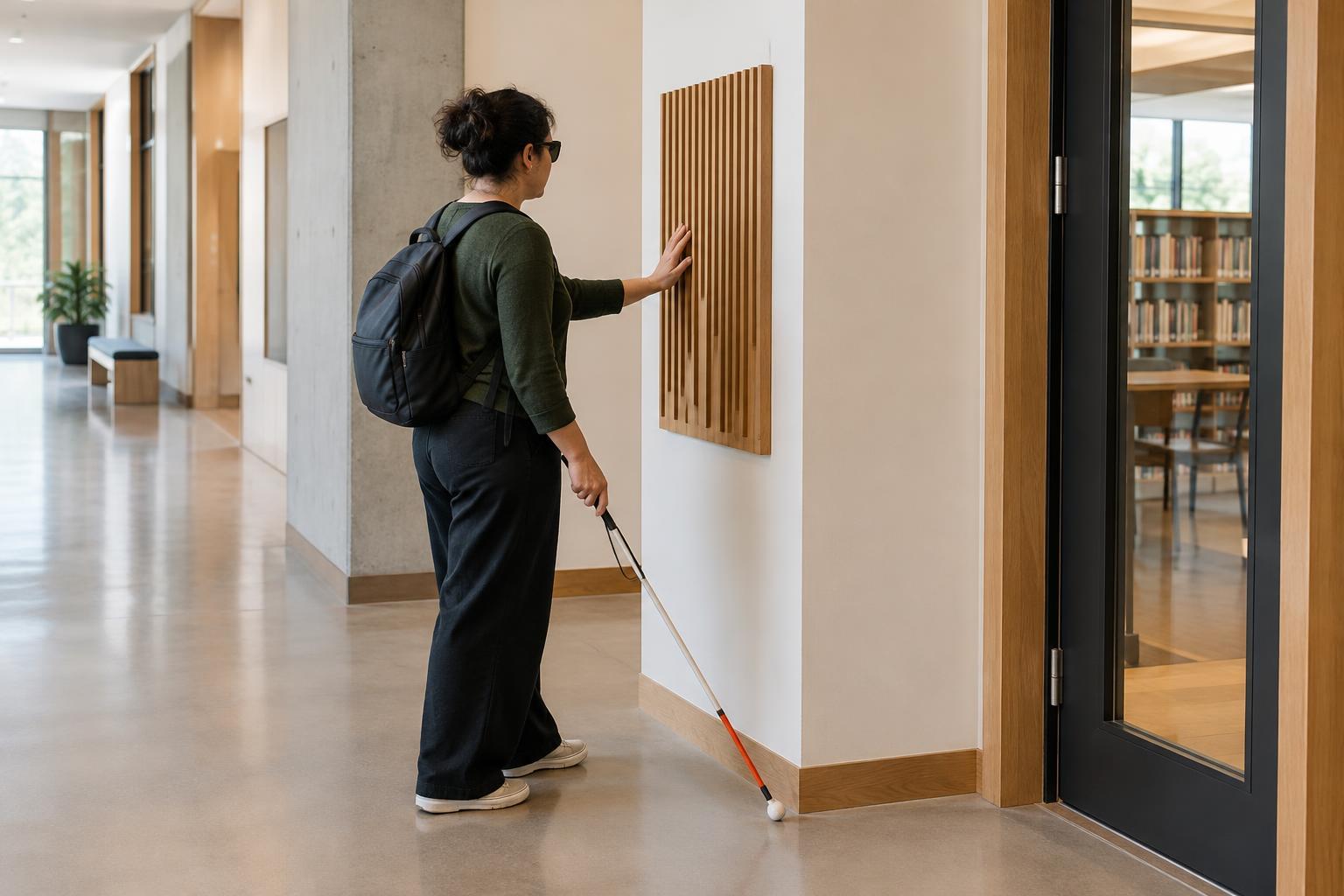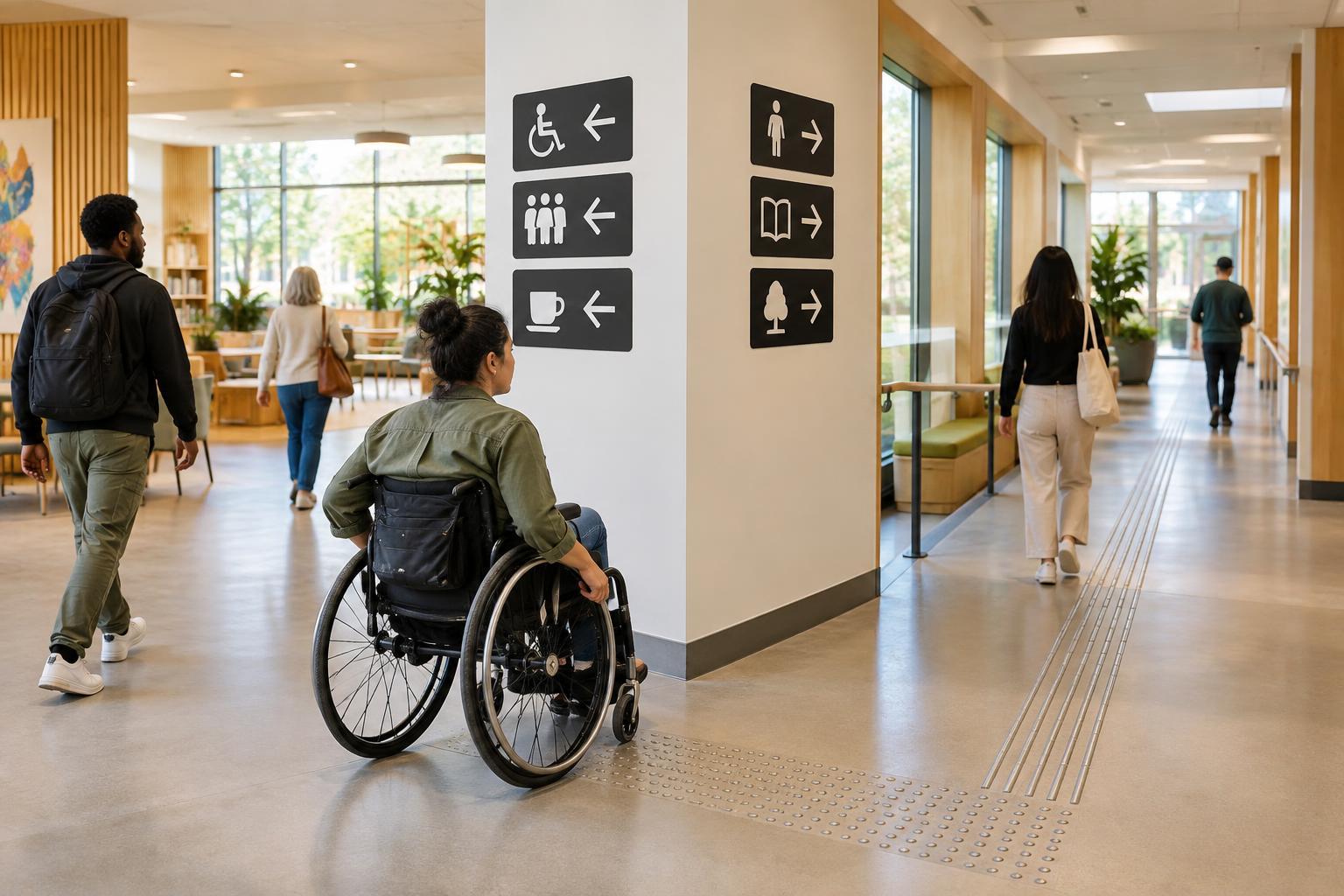
Start with what people need to notice
Visual contrast is the difference that makes one surface stand out from another. In a room, it can help someone locate a light switch, recognize the edge of a step or distinguish a handle from the door behind it. This can be useful for people with low vision, people adjusting to a new space and anyone moving through a room in uneven light.
Begin by walking through the space and looking for features that disappear into their surroundings. A white switch on a white wall, a pale handrail against a pale wall or a step edge that matches the flooring are good places to look. Pay particular attention to entrances, changes in floor level and features people need to use quickly. The aim is not to make everything stand out equally; it is to give the most useful features a clear visual cue.
Think beyond color
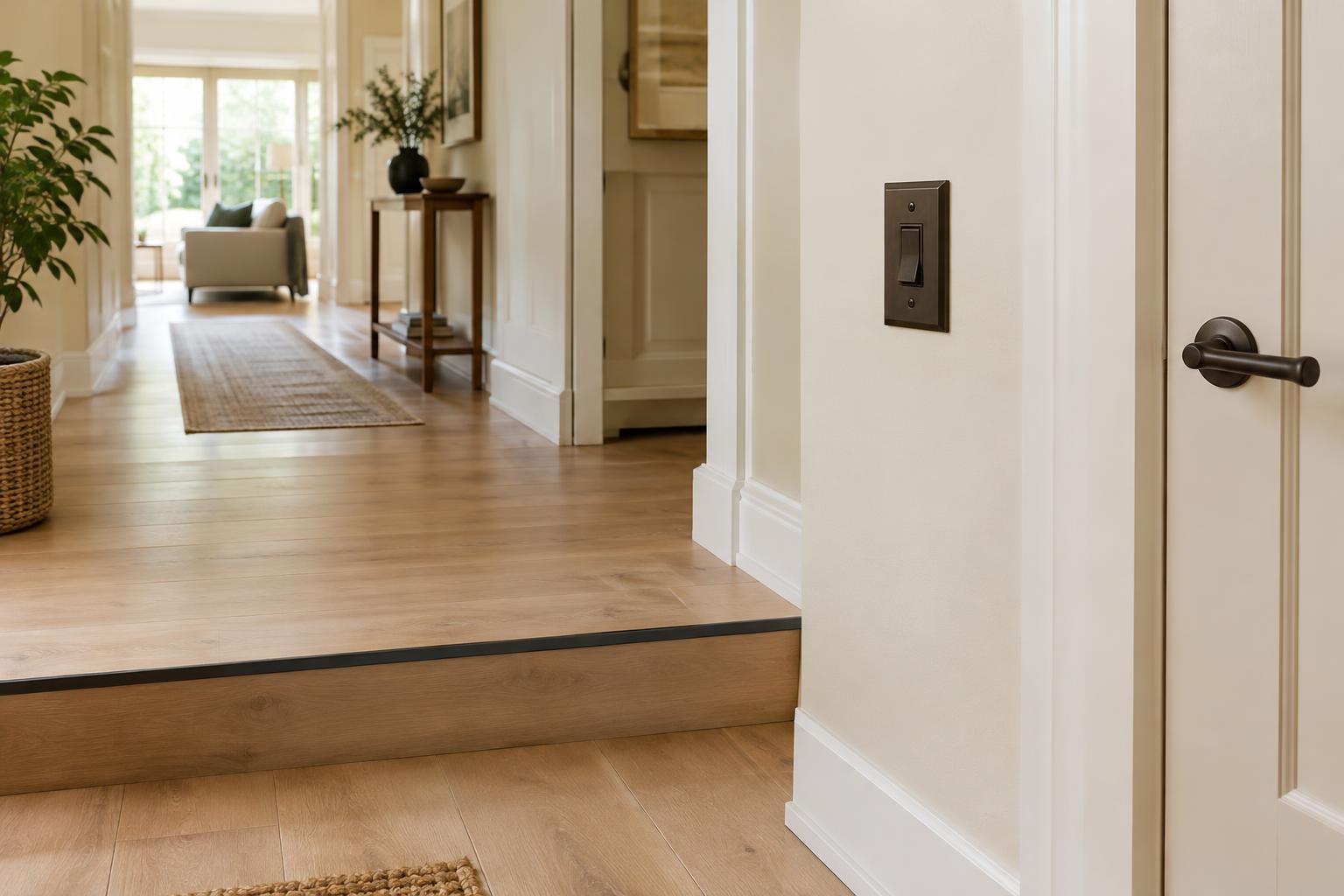
A strong difference between light and dark is often more dependable than a difference in hue alone. Two colors may look distinct to one person yet blend together for another, especially under dim or changing light. For example, a dark switch plate on a light wall may be easier to locate than a switch plate in a different but similarly pale color.
Look at contrast where surfaces actually meet. A dark handle can stand out against a light cabinet door, while the same handle may disappear on a dark door. Finishes matter too: glare on a shiny surface can obscure an edge or detail. Where possible, compare options in the space itself, at the times and lighting levels when people normally use it. Contrast works best alongside clear lighting, not as a substitute for it.
Make switches and fixtures easier to locate
For a hard-to-find switch, consider a contrasting switch plate or a neatly applied border around the plate. Keep the switch itself easy to distinguish from its surround. If several switches sit together, consistent labels can help people understand what each one controls; use clear, readable text rather than relying only on colored stickers. Avoid covering the moving parts of a switch or making it harder to operate.
The same principle applies to door handles, taps, cabinet pulls and other frequently used fixtures. A handle that contrasts with its door is easier to spot, and a contrasting backing plate may help when replacing the handle is not practical. In shared kitchens or bathrooms, check whether controls and fixtures remain clear against nearby tiles, counters and cabinets. Choose changes that are durable, easy to clean and appropriate for the surface.
Give steps and level changes special attention
A step deserves a cue that makes its edge easier to recognize. A contrasting strip or nosing at the front edge can help distinguish one tread from the next, particularly when the steps and surrounding floor have similar tones. Keep the treatment consistent across a flight of stairs so people can understand the pattern. Contrasting handrails can also make the route easier to follow.
Choose materials with care. Loose tape, a raised edge or a slippery finish could create a new problem while trying to solve another. If a permanent change is needed, seek advice from someone qualified to assess the stairs and installation. In a rented or shared property, ask permission before altering surfaces. A temporary option should still be secure and regularly checked for wear.
Test the result with the people who use the space
After making a change, step back and look from the approaches people normally take. Can the switch be found from the doorway? Is the step edge visible when approaching and descending? Does a fixture remain easy to identify when shadows fall across it? Check that new markings do not add visual clutter or make similar features appear to have different purposes.
Invite the people who use the space to tell you what helps and what remains confusing. Their experience may reveal an issue that is not obvious in a quick visual check. Small, consistent improvements are often a useful starting point: identify a feature, improve its contrast, then see how it works in everyday use before applying the same approach elsewhere.