Start with the journey, not the texture
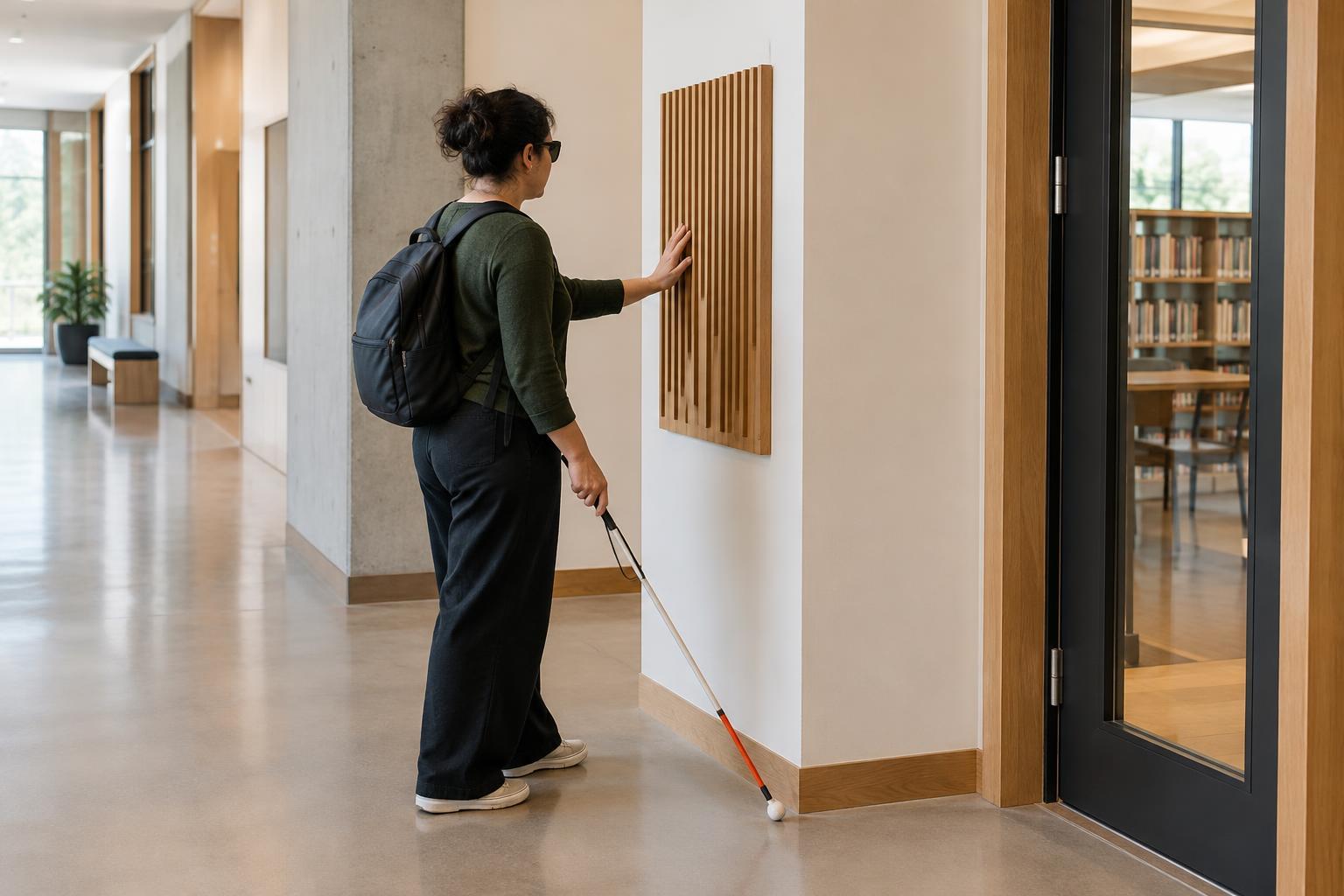
A tactile landmark is a feature someone can recognize by touch and use as a point of reference. It might be a distinctive handrail detail near a lift, a raised symbol beside a door, or a change in wall finish at an important turn. Its purpose is not simply to add texture. It should help answer a useful question: Where am I, and what comes next?
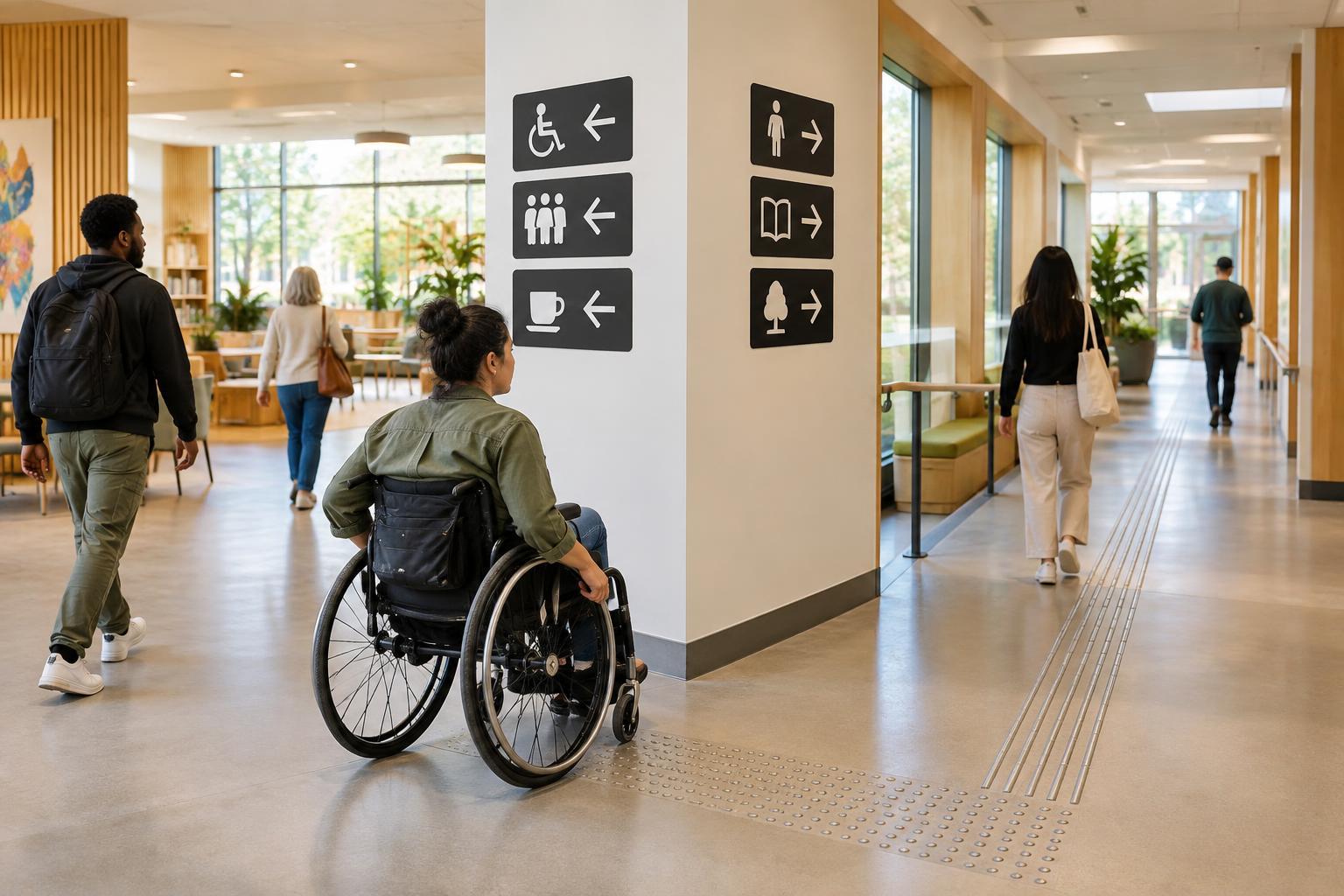
Walk through the routes people are most likely to take, such as from the entrance to reception, from reception to lifts, and from shared corridors to toilets or meeting rooms. Note the places where a person must choose a direction or confirm that they have reached a destination. These are usually more valuable locations for landmarks than long stretches with no decisions. Consider the return journey too; a feature that helps on the way in may be harder to find from the opposite direction.
Make landmarks easy to find and distinguish
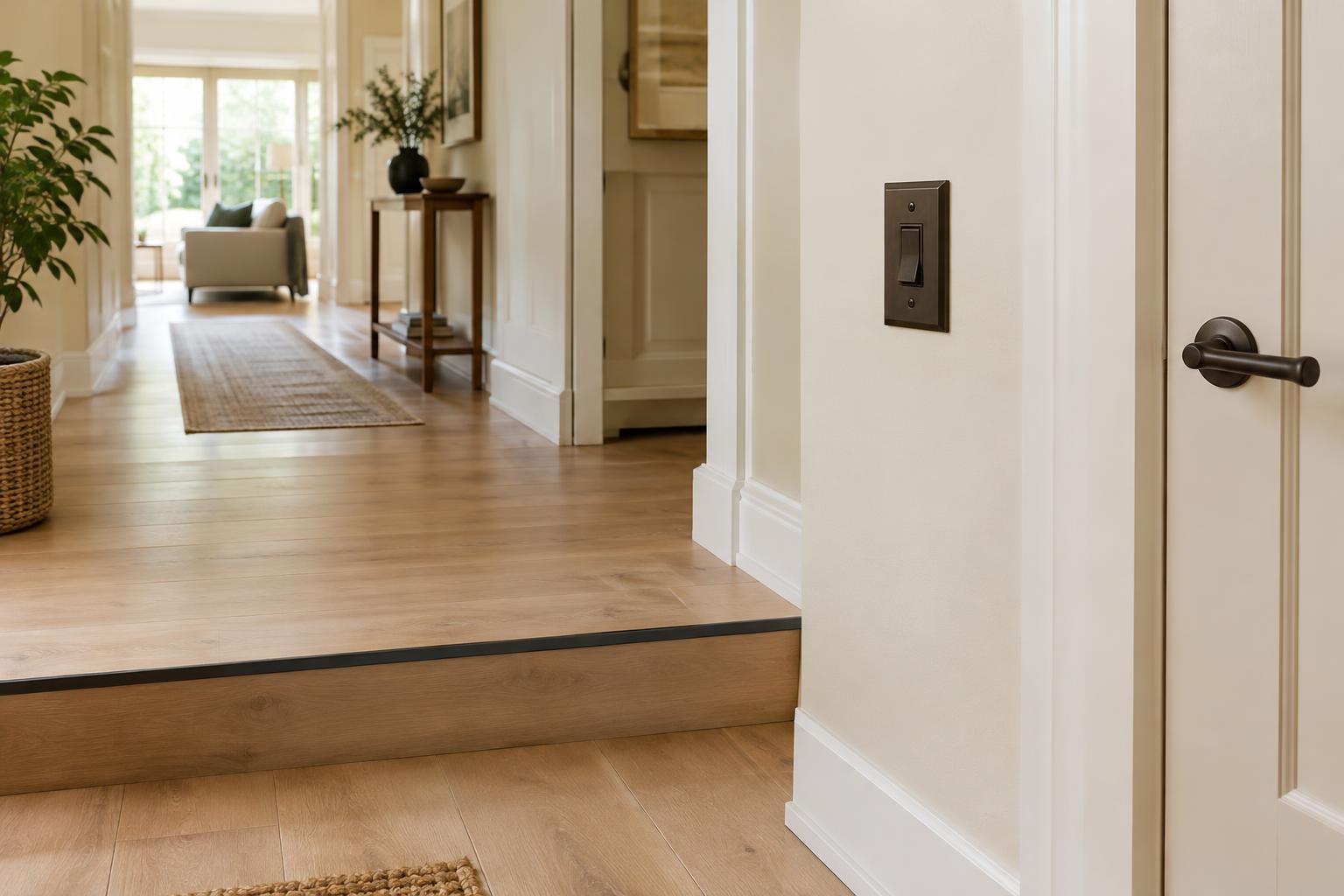
Place touchable information where someone can encounter it without searching across a large surface or stepping into a doorway. Near a door, a consistent location on the wall or frame can help people know where to look. Along a route, a handrail may offer a dependable place for a tactile cue. Keep the surrounding area free of protruding objects and other obstacles, and avoid features with sharp edges or surfaces that are unpleasant to touch.
Give different landmarks clear meanings. If the same raised pattern marks both a lift and a toilet, it may create confusion rather than confidence. A small, repeatable set of cues can be easier to learn than a different texture at every room. Pair a tactile symbol or raised lettering with readable visual text so more people can use the same information. Where Braille is included, it should complement other cues rather than serve as the only way to identify a place.
Use a consistent language throughout the building
A landmark becomes more useful when people can predict where it will appear. If destination markers are beside doors on one floor, place them in the same relative position on other floors where practical. If a handrail cue signals an approaching junction, use it for that purpose consistently. Keep paths to important destinations logical, and avoid placing a marker so far from its destination that its meaning is uncertain.
Think about how the cues fit with the building’s other navigation features. Tactile landmarks can reinforce clear signs, contrasting door frames, good lighting, simple floor plans, and spoken directions from staff. They cannot make an unclear route clear on their own. A visitor should be able to receive a direction such as “follow the handrail to the lift marker” and find that the physical route matches the description.
Test the route with people who will use it
Before settling on a design, ask people with different navigation preferences to try the route and describe what helps or gets in the way. Include people who navigate by touch as well as people who rely on vision, mobility aids, or another person’s guidance. Their experiences may reveal that a marker is hard to reach, blends into nearby surfaces, or appears only after someone has already passed the turn.
Give participants a real task, such as finding reception from an unfamiliar entrance, rather than asking only whether they like a particular texture. Watch for pauses and wrong turns, then ask what information would have helped at those points. Invite feedback without assuming one person’s preference represents everyone’s needs. A small trial on one route can make it easier to adjust locations and meanings before using the same approach elsewhere.
Keep the system reliable over time
A landmark is trustworthy only if it still points to the right place. Check cues when rooms change use, routes are temporarily closed, or signs are replaced. Cleaning, repairs, and furniture changes can also affect whether a feature remains noticeable and reachable. If a route changes, update both the tactile cues and the directions people receive from staff or printed materials.
For a new building or a substantial alteration, involve people with relevant accessibility and building-design expertise so the approach fits the space and its requirements. In an existing building, start with a clear, well-used route and make each landmark serve a specific decision. The goal is not to cover every surface with information. It is to give people dependable points of reference that support a more comfortable, independent journey.