Start by giving the animal room to work
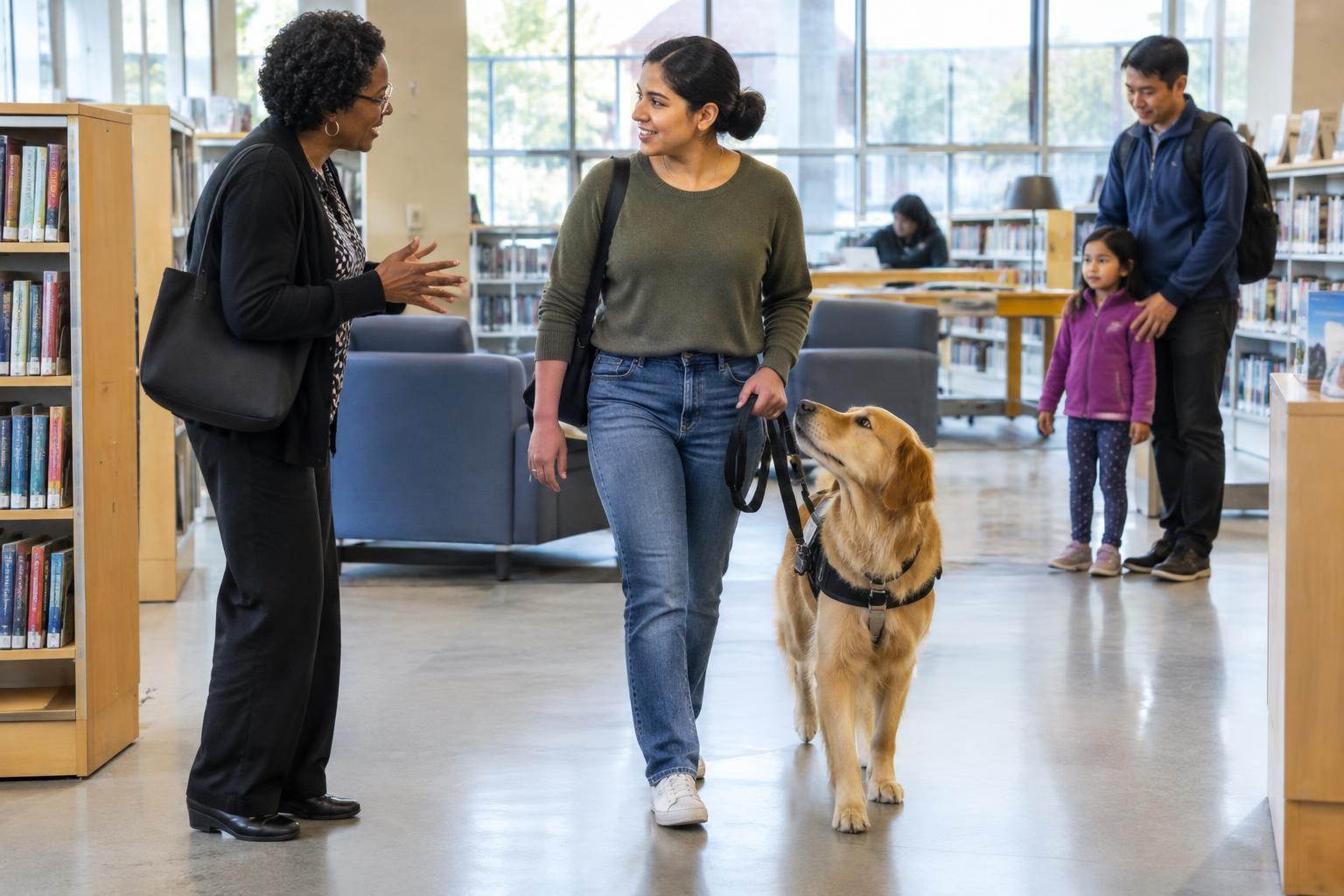
A service animal may look calm and approachable, but it is in a public space to support its handler. The simplest courtesy is to let the pair move together without interruption. Avoid petting, calling to, whistling at or offering food to the animal. Even friendly attention can make it harder for the animal to focus on its task.
If you need to pass in a narrow aisle, pause and leave enough space for both the person and the animal. Do not step over a leash, block the animal’s path or try to guide it yourself. In a queue, on transit or at a crowded event, a little extra room can help the handler choose where to stand or move. If you are unsure what to do, ask the person a brief, practical question such as, “Would you like me to make some space?”
Speak to the person, not through the animal
Address the handler as you would anyone else. If you are sharing a table, offering a seat or explaining where an entrance is, speak to the person directly rather than talking to the animal or asking someone nearby on their behalf. Do not assume that the handler needs help; an offer is more useful when it leaves room for a simple “no, thanks.”
Curiosity is understandable, but a public outing is not an invitation to ask about someone’s disability, the animal’s training or what tasks it performs. A person may be shopping, commuting or meeting a friend and may not want to discuss personal details. Focus on the interaction at hand. If you work in a public-facing role and need to address a practical concern, explain that concern politely without making the handler tell their story to a crowd.
Help children and other animals keep a comfortable distance
Children often want to greet an animal they see in a shop or on a sidewalk. Before getting close, explain in simple terms that this animal is working and needs space. Show children how to look without touching, calling or following. If a child reaches toward the animal, gently redirect them rather than expecting the handler to manage the moment.
If you are with a pet, keep it close and under control. Avoid allowing sniffing, play invitations or nose-to-nose greetings unless the handler clearly invites them. Give the pair room to pass, especially in doorways, lifts and other tight spaces. If your pet becomes excited, stepping aside for a moment can be more helpful than trying to introduce the animals. A vest or other visible gear is not a reliable guide to whether an animal needs your attention; the respectful default is to leave it undistracted.
Handle shared-space concerns without making assumptions
People sharing a space may have different needs, including allergies, fear of animals or a need for more distance. These concerns can be taken seriously without putting strangers on the spot. If you are a bystander, consider moving to another seat or taking a different route when that meets your needs. If the space is managed by staff, ask them quietly about available seating or another practical adjustment rather than confronting the handler.
Staff and organizers can help by keeping walkways clear, offering choices when space allows and discussing concerns privately. Rules about service animals can vary by place and setting, so avoid confidently telling someone where they are or are not allowed based on an assumption. Concentrate first on the immediate issue: whether there is room to move, whether an animal is being distracted, or whether someone needs a different place to sit.
Notice when help is useful—and when it is not
Sometimes an animal may appear to approach another person or draw attention. Rather than assuming it wants affection, give the handler space and pay attention to what is happening. If the handler seems to need assistance, ask a clear question such as, “Can I help you?” Follow their direction instead of grabbing the leash or moving the animal. If there is an immediate safety concern, alert nearby staff or emergency services as appropriate.
Most of the time, good etiquette is quiet and ordinary. Let the handler and animal travel together, keep your own pets and belongings out of their way, and speak up when you can make a shared space easier to use. Respect does not require knowing someone’s diagnosis or the animal’s task. It means making room for another person to participate in everyday life without an unnecessary interruption.