Start with the route laundry takes
Laundry can feel like one large chore, but it is a series of smaller tasks: collecting clothes, sorting them, loading the washer, moving wet items, drying, folding and putting everything away. Notice which step causes the most difficulty. A change that helps with carrying may not help with reaching into a machine, so it is worth adapting the particular steps that slow you down.
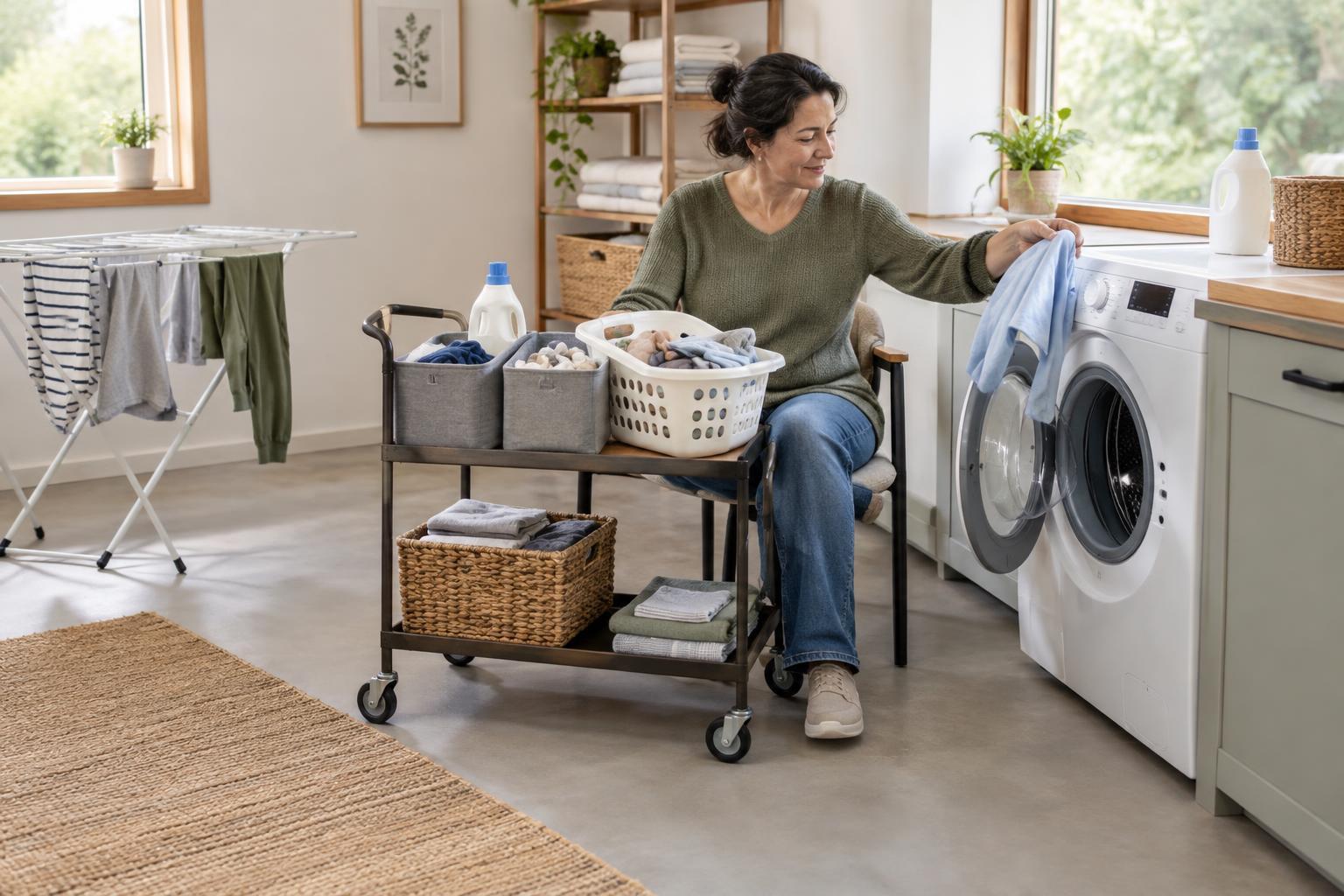
Look at the path between bedrooms, bathrooms and the laundry area. A hamper near where clothes are removed may prevent piles from building up. If laundry has to cross the home, a lightweight basket or a wheeled hamper can reduce the need to carry a full load. Keep the route clear, especially around doorways and appliance doors. Choose a container you can move and control comfortably rather than simply the largest one that fits.
Make loads smaller and supplies easier to reach
Smaller loads can be easier to lift into a machine, move while wet and take out to dry. They may also make it simpler to find a dropped item or separate clothes that need different care. If frequent loads are not practical, consider dividing one collection of laundry into smaller batches before moving it. A small basket or bag can make the amount you plan to handle at one time more obvious.
Keep detergent and other regularly used supplies near the machine at a height you can reach without stretching or bending sharply. A stable shelf or drawer may work better than storage above the appliances. Leave enough room to open containers and measure products without balancing them on a narrow edge. Follow product labels for use and storage, and keep supplies out of reach of children and pets. If a container is awkward to hold, a smaller original-package size may be easier to manage.
Simplify sorting before wash day
Sorting is easier when it happens a little at a time. Two or three clearly identified hampers can separate everyday items from delicates or clothes that need a different wash setting. The categories should reflect your household, not an elaborate system you have to remember. Labels with large text or distinct colors can help everyone use the same system, while care labels on garments remain the guide for washing instructions.
If multiple hampers take up too much room, try one hamper with removable bags or sort a small batch on a table before loading the washer. A table can offer a more comfortable working height than the floor. For shared laundry, agree on simple habits, such as emptying pockets and placing delicate items in a designated bag. That reduces the amount of checking one person has to do later.
Adjust loading, unloading and drying
Machine layout matters. A front-loading washer may be easier to access from a seated position for some people, while others may find its low opening difficult. A top-loading washer can avoid crouching but may require a long reach to the bottom. With either style, bring the basket close, take out a few items at a time and avoid twisting while holding a heavy bundle. If a dropped sock requires an uncomfortable reach, pause and use a suitable reach tool or ask for help rather than straining.
Wet laundry is often harder to handle than dry laundry. A basket placed beside the washer or dryer can shorten the transfer. For air-drying, a rack at a reachable height may be more useful than a high line, provided it is stable and does not block a walkway. Keep fabrics away from heaters and other heat sources, and follow appliance and garment instructions. If your setup repeatedly requires an unsafe reach, moving the task or changing the layout may be more helpful than relying on a tool alone.
Let folding and putting away be flexible
Laundry is still useful even if every item is not folded perfectly. Fold on a clear table or other stable surface at a comfortable height, and group clothes by where they belong. Open bins or shallow drawers can make frequently worn items easier to put away and retrieve. Hanging some garments may remove a folding step, but only if the rail is easy to reach. Place everyday clothes in the most accessible storage and reserve higher or lower spaces for items used less often.
It is also reasonable to split the job across the day or share particular steps. One person might load the washer while another handles items that are difficult to lift or reach. A routine built around smaller, manageable actions can make laundry more predictable without requiring anyone to complete every stage at once.