Start with the whole storage journey
A storage area can look accessible when it is empty but become difficult to use at the start of a busy event. People need to approach it, find a place for their belongings, open or reach that place, and leave without blocking someone else. Watch for pinch points near entrances and narrow aisles. A row of hooks beside a doorway, for example, may force people to stand in the route while removing a coat.
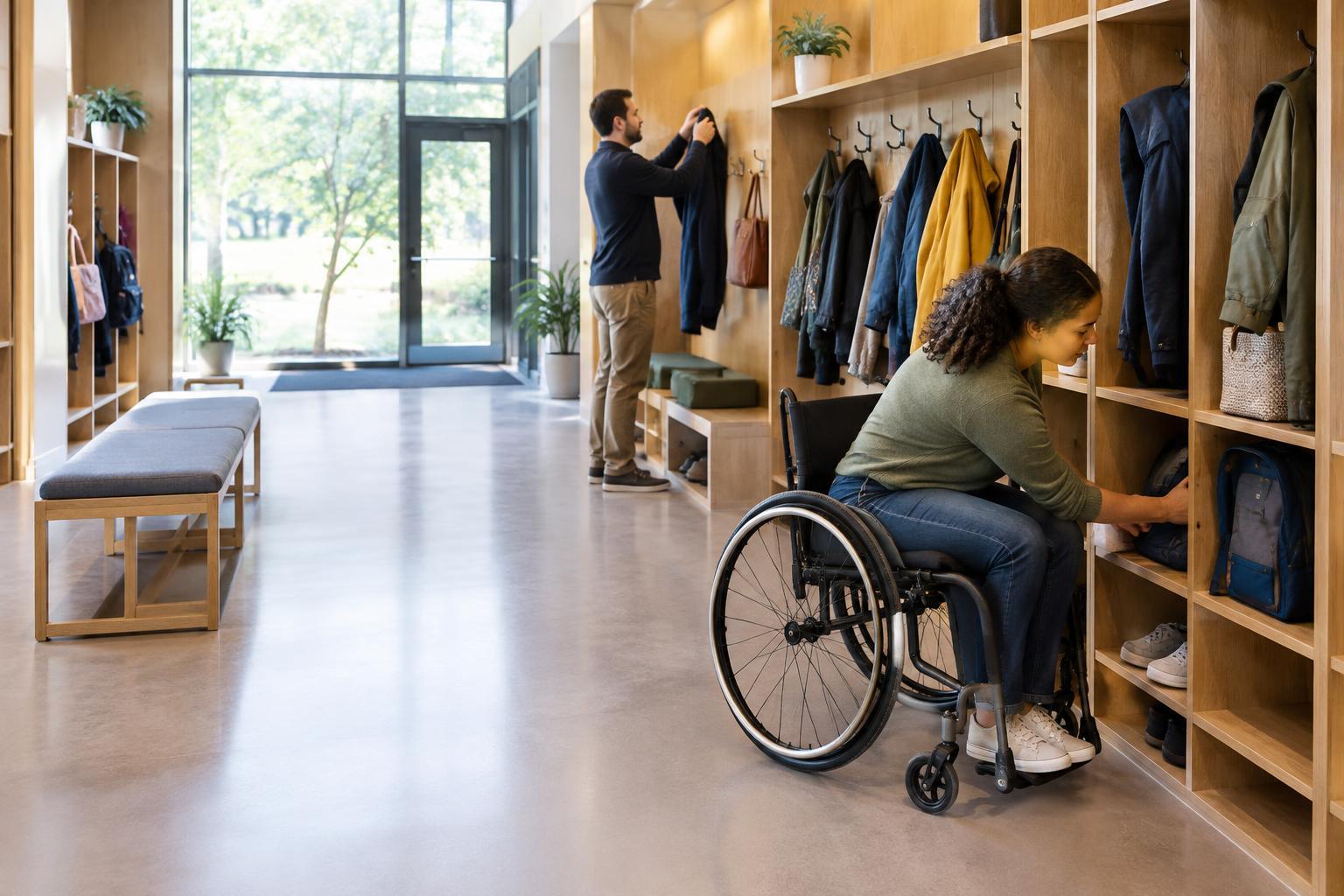
Consider what people bring as well as what they wear: bags, helmets, umbrellas, mobility aids or items they prefer to keep close. Not everything needs to fit in one type of compartment. A combination of hooks, shelves and larger spaces can serve different belongings. Keep the route to storage clear, with enough room for someone to pause and turn without having to move other people’s possessions. Where space is limited, a smaller number of well-placed options may be more useful than a crowded wall of identical hooks.
Offer choices in reach and operation
Storage placed at only one height assumes that everyone can reach and lift in the same way. Provide options at different heights, including places that can be used while seated. Check that lower storage does not require someone to kneel or reach far under a shelf, and that higher options are not the only places for commonly used items. A shelf can be convenient for a bag that is awkward to hang; a sturdy hook may work better for a coat.
The way a compartment opens matters too. Heavy doors, small latches and stiff locks can make an otherwise reachable locker hard to use. If locks are needed, consider whether the chosen mechanism is easy to see, grasp and operate, and offer a way to get help without making people explain personal needs in public. Test prototypes with the kinds of bags and coats people actually carry. An empty hook or shelf may reveal little about how it works once loaded.
Make spaces easy to find and use
People should be able to tell where to put belongings and how to find them again. Use short, clear labels for sections or compartments, and place them where they remain visible when the area is in use. Distinguishable numbers or names can help, but color alone may not be enough for everyone. In a staffed space, explain the storage arrangement when welcoming visitors rather than assuming they will spot a sign.
Avoid making the most convenient spaces available only to those who arrive first if some visitors particularly benefit from them. Depending on how the space operates, staff might keep a few reachable compartments available or make it simple to request one. At the same time, allow people to choose a different option when possible; an assigned location that works for one person may not suit another. Clear expectations about which items can be stored also help prevent an accessible shelf from filling with unrelated supplies.
Check the area during ordinary use
A design is only as useful as the habits around it. Look at the storage area when people are arriving and leaving, not just during a quiet walkthrough. Are loose bags spilling into the route? Do open doors project into the space where people move? Can someone retrieve a coat without reaching over another person’s belongings? Notice whether a queue forms at a single bench, mirror or check-in point, even when storage itself is plentiful.
Ask people using the space what causes friction, without expecting any one person to speak for everyone. Small adjustments may include relocating an umbrella stand, moving spare supplies out of a reachable locker, replacing an awkward latch or making labels easier to read. Assign someone to keep routes clear and repair damaged fittings. Shared storage rarely needs an elaborate system, but it does need choices that remain usable after the room fills up.