Start with the purpose, not the furniture
A busy building can offer plenty of places to gather but few places to step away. A quiet retreat is a space where someone can take a short break from conversation, movement or other stimulation while remaining welcome in the building. It might serve a visitor between activities, an employee during a break or a participant who wants a calmer way to stay involved.
Before choosing a room, consider how people will use it. Is it intended for silent rest, quiet conversation or both? Will people need to sit for a few minutes or spend longer there? A clear purpose helps guide decisions about seating, signs and occupancy. It also helps prevent the space from gradually becoming a meeting room or storage area. A retreat should be an option, not a place people are directed to because their needs or behavior make others uncomfortable.
Choose a location people can find and reach
The calmest room is not necessarily the most useful one. A retreat at the far end of an unfamiliar corridor may be difficult to find or feel disconnected from the activities people came to enjoy. Look for a location near shared areas but away from doors that slam, queues, loud equipment and regular through-traffic. Walk the route at a busy time, if possible, to notice sounds and obstacles that are easy to miss when the building is empty.
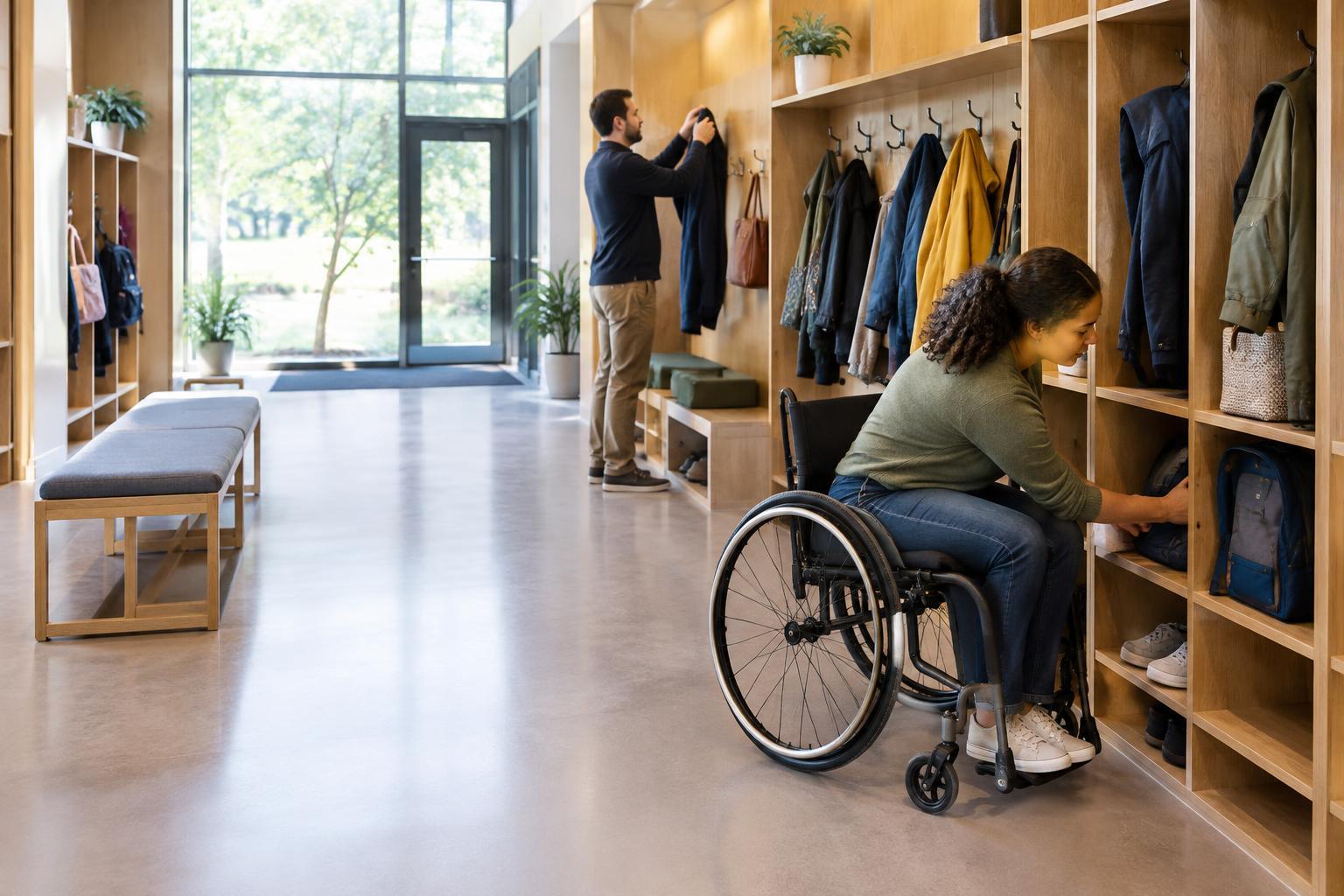
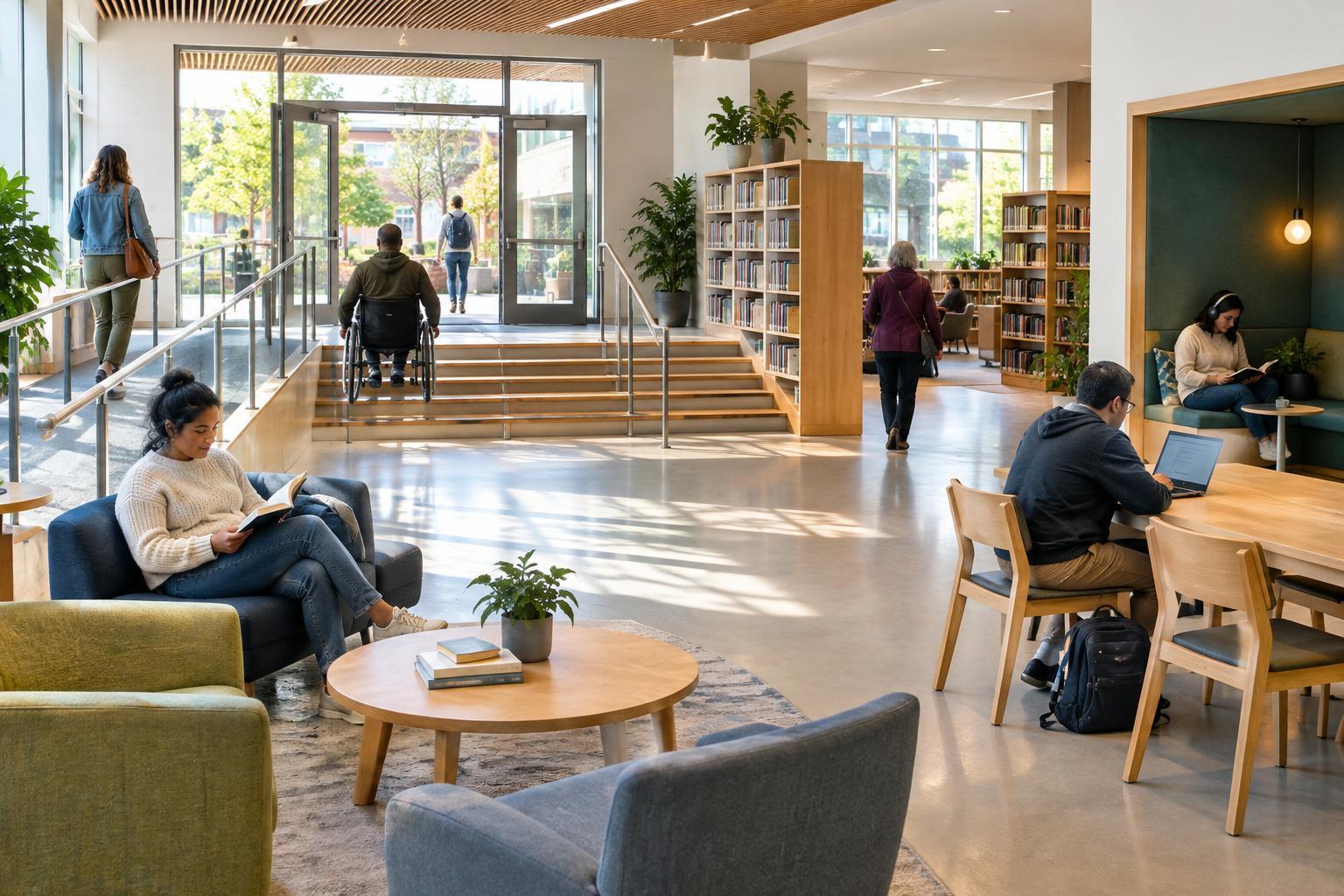
Make the route straightforward for people using different mobility aids. Check that doorways, turning space and furniture placement allow people to enter and use the room comfortably. Give the space a clear, consistent name on signs and in event information. If there is a step-free route, explain where it starts rather than leaving visitors to discover it. A retreat is more welcoming when people can choose it independently, without having to explain why they need it.
Reduce stimulation without making the room restrictive
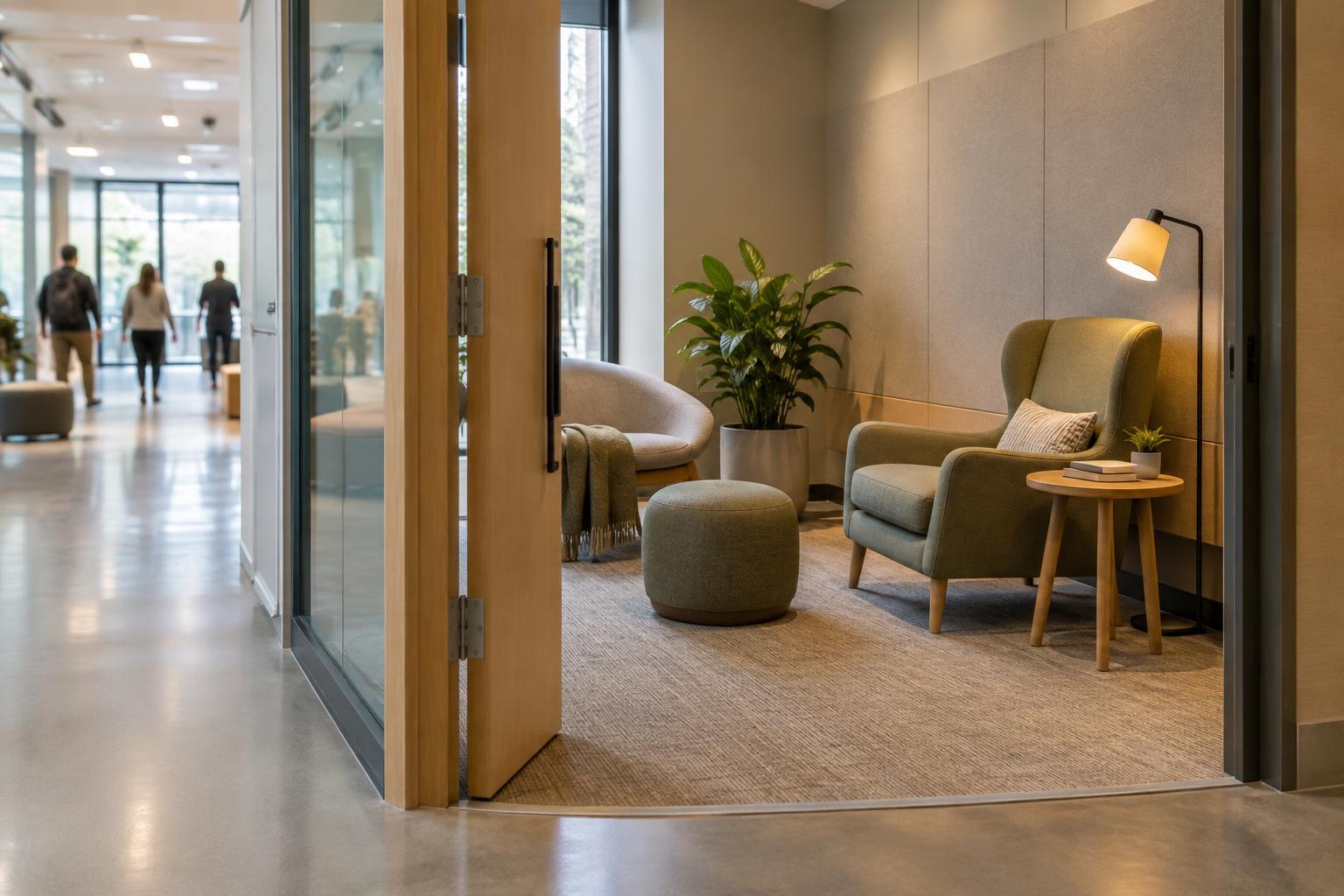
Small adjustments can make a room feel calmer. Soft furnishings may help reduce echoes, while door seals or a quieter location may limit noise from outside. Choose lighting that avoids harsh glare, and consider whether occupants can adjust it without making the room too dark to navigate safely. Keep visual clutter low and avoid strongly scented products; a pleasant scent to one person may be distracting or unwelcome to another.
Offer a choice of seating when space allows, including chairs with supportive backs and room for someone to remain in a wheelchair or other mobility aid. Leave clear paths instead of filling every corner. Not everyone wants the same level of quiet or enclosure: some people may prefer a seat near the door, while others may want a more sheltered spot. Where possible, let the room offer both without creating hidden areas that feel unsafe.
Balance privacy with practical safety
A retreat should feel separate from the bustle, but its purpose and rules should be easy to understand. A simple sign can say whether conversation, phone calls, food or group use are welcome. If the room has limited capacity, state that plainly and provide another nearby place to pause when it is full. Avoid signs that imply people must prove a need to enter; many reasons for seeking quiet are not visible.
Think through how staff will respond if someone needs assistance. People should be able to leave easily and know how to ask for help without being routinely interrupted. The right balance depends on the building: an open doorway may work in one setting, while another may benefit from a door that closes to reduce sound. Whatever the arrangement, explain it to staff so they can point people toward the space, respect their privacy and keep exits clear.
Keep it useful after opening day
A retreat only works if it remains available. Assign responsibility for keeping it clean, checking lights and seating, and making sure it does not become a convenient place to leave supplies. Include its location in welcome materials or event notices so people can plan ahead. Staff and volunteers should know that using the room is an ordinary choice, not an interruption to be questioned.
Invite feedback in a low-pressure way, such as a short comment card or an option to speak with a building contact. Ask whether people could find the space, enter it easily and use it as intended. Then make manageable changes. The aim is not to create one perfect room for everyone, but to offer a reliable, dignified choice within a building that can otherwise feel busy.