Set up the task before you start
Hard-to-open packaging is not just a matter of grip strength. A smooth lid may slip, a tiny tab may be difficult to find, and an awkwardly shaped container may be hard to hold still. Before applying more force, place the item on a stable, uncluttered surface with good lighting. Dry your hands and the container if either is damp. Sitting down can give you more control, especially if opening several items at once is tiring.
Look for the part designed to open first: a tear notch, lift tab, perforation or marked edge. Turn the package so that your stronger or more comfortable hand can do the precise movement. If the task causes pain, stop and try a different method rather than repeatedly straining your fingers. Taking a short break or asking someone to help is a practical choice, not a failure.
Get more grip without squeezing harder
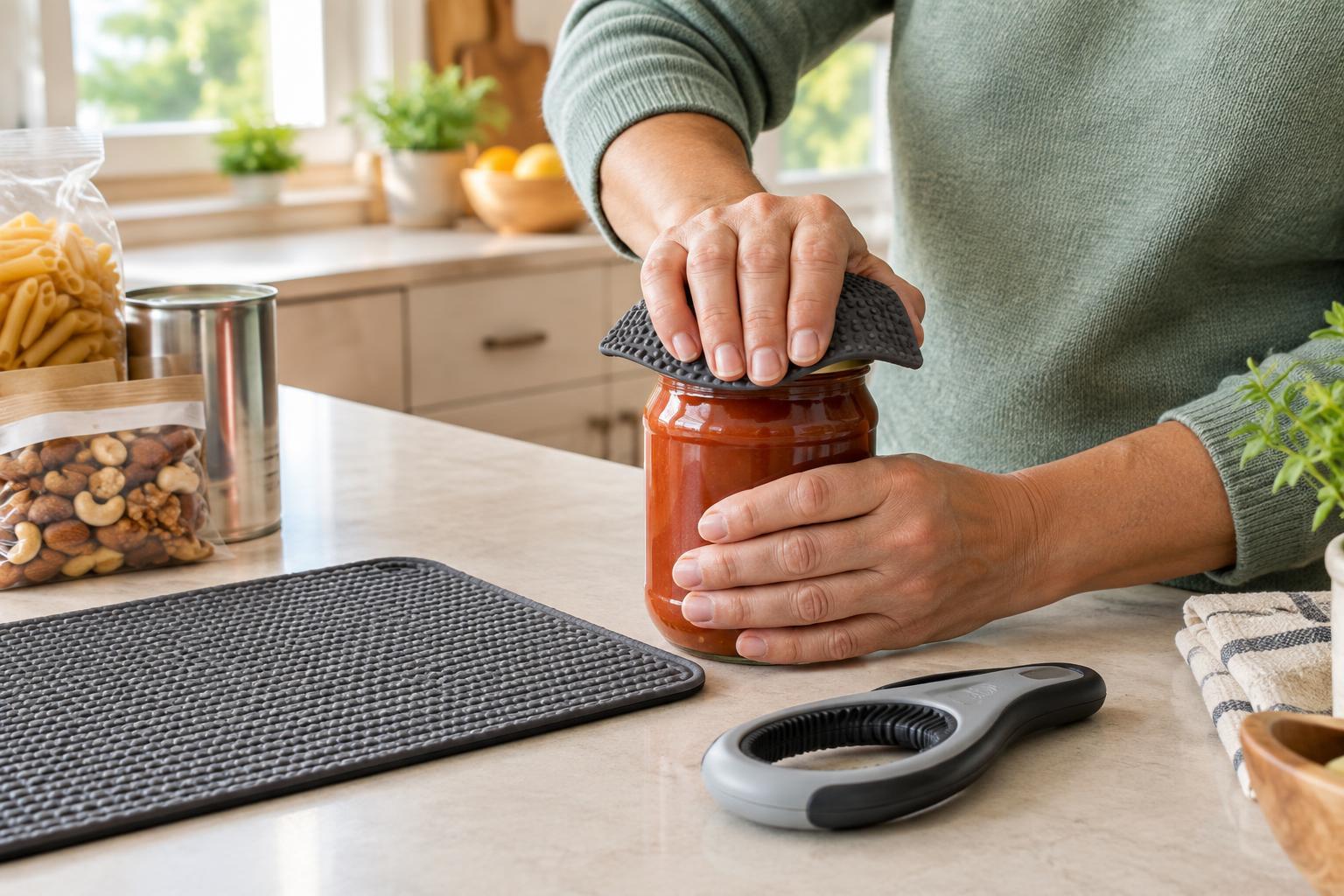
For screw-top jars and bottles, start by making both the lid and your hands dry. A rubber jar gripper, a piece of non-slip shelf liner or a clean silicone mat can help you hold the lid with less effort. Set the jar on a non-slip surface so your other hand does not have to work as hard to steady it. Choose a tool that fits the lid well; one that slides around may make the job more difficult.
Some lids have a vacuum seal. A jar-opening tool designed to release that seal may help, but follow its instructions and avoid striking glass or forcing a utensil under the lid. Warm water over a metal lid may also help in some cases. Keep the water at a comfortable temperature, avoid soaking labels you need to read, and dry the lid before trying again.
Match the method to the package
For bags with a tear notch, cut across the top with scissors if pulling the notch requires too much force. Put the bag flat on the counter first and keep the contents below the cutting line. A pair of easy-grip scissors or a purpose-made package opener may be more manageable than a small blade. Avoid cutting toward your hand, and take extra care with packaging that holds liquids or loose powder.
Pull tabs on cans and cartons can be difficult to lift. A pull-tab opener may give you a larger handle to hold; check that it suits the type of tab you use. For a stiff carton spout, follow the folds shown on the package and open it slowly over a sink or tray. If a container has both an outer seal and an inner foil seal, deal with one layer at a time so you can keep the container steady.
Make frequently used items easier to access
If the same product is difficult every time, think beyond the moment of opening it. When choices are available, compare container shapes, lid sizes and opening styles before buying. A wide cap or a package with a clear tear strip may work better for you than a smaller, cheaper-looking option. Keep a gripper or opener near the place where you usually unpack groceries, rather than searching for it when you are already frustrated.
After opening a food package, you may be able to move its contents into an easy-open, food-safe container. Keep any information you still need, such as ingredients, preparation directions or a use-by label, with the new container. Choose a size you can lift comfortably and a lid you can close securely. If you share a kitchen, agree on where these items belong so everyone can find and use them.
Know when not to improvise
A tool should make the task more controlled, not create a new hazard. Avoid using your teeth to pull seals or holding a container against your body while cutting it. If a package is damaged, leaking or unusually swollen, do not treat opening it as a test of strength. Follow the product’s handling instructions, and set it aside if you cannot open it without risking a spill or injury.
Some closures are deliberately designed to restrict access, including child-resistant medicine containers. Do not alter these or transfer medicine to another container simply for convenience. A pharmacist can explain how a particular closure works and discuss available packaging options while helping you preserve safe storage and clear labels. For everyday products, the best solution may be a different opener, a different package or a helping hand.