Start with the routes people use most
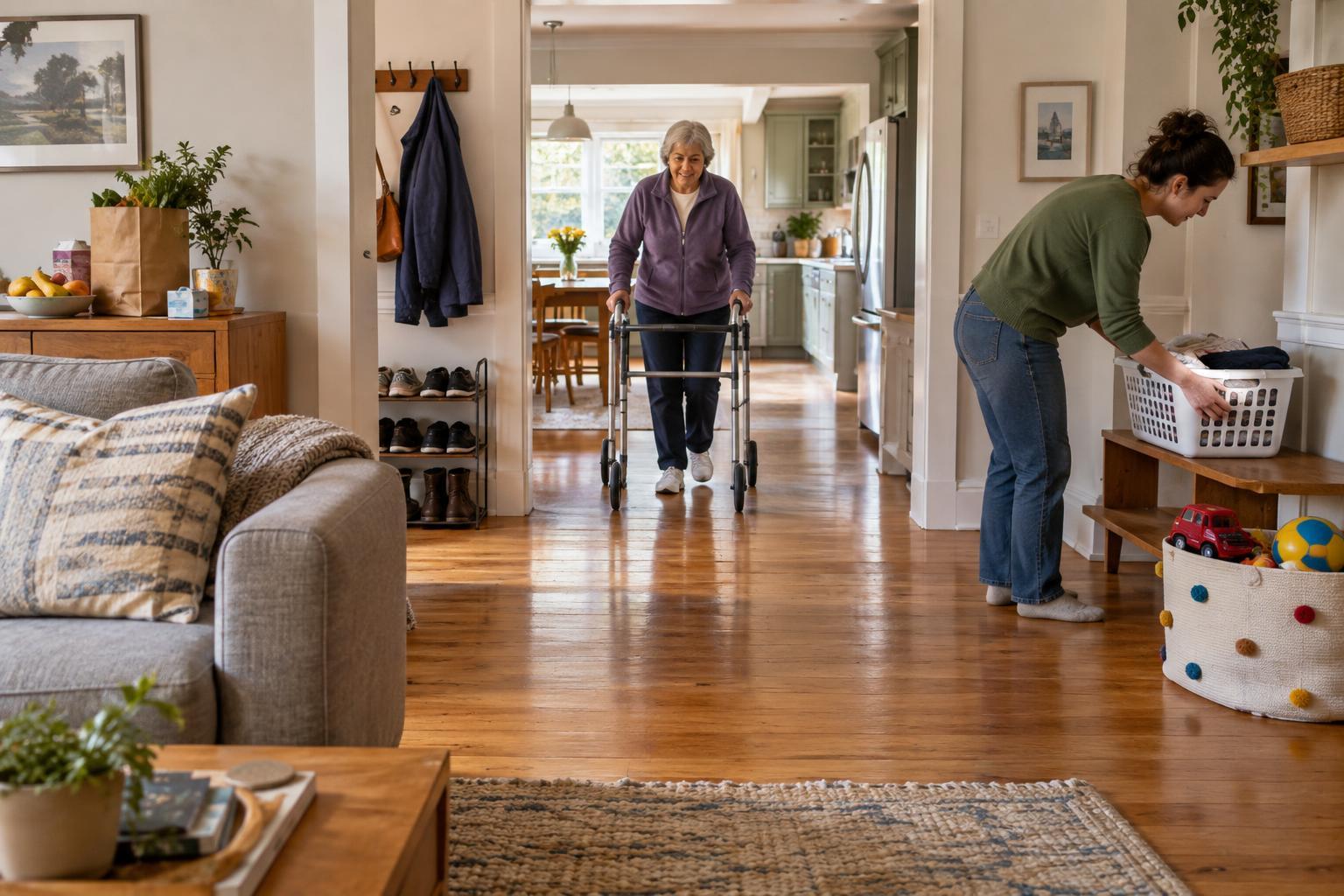
In a busy home, shoes by the door, a basket waiting to go upstairs and a chair pulled away from the table can quickly turn a familiar route into an obstacle course. Clear paths matter to everyone, but they may be especially important for someone using a cane, walker or wheelchair, or for anyone who has difficulty seeing or balancing. The aim is not to make every room look empty. It is to make everyday movement more predictable.
Walk through the home as people normally use it, beginning at the entrance. Notice the routes to the bathroom, kitchen, bedrooms and exits. Look at turns, doorways and places where people have to step around furniture. If someone in the household uses a mobility aid, involve them in deciding which routes need attention; what looks passable to one person may not work for another. Choose a few priority paths rather than trying to reorganize the entire home at once.
Give everyday items a place off the path
Clutter often collects where an item is needed, not where it belongs. A small shoe rack beside the entrance, hooks for bags or a shelf for incoming mail can be more useful than a rule to “put everything away.” Place storage within comfortable reach for the people who use it. Avoid solutions that require someone to bend, stretch or open a heavy container every time they need an item.
Pay attention to temporary objects as well as permanent ones. Deliveries, laundry baskets, pet toys and charging cables can block a route even when they are only there for a few minutes. Pick a designated spot for things waiting to be sorted, and keep it outside the main walking area. If a cable must cross a room, consider whether the device or furniture can move instead. A floor covering that bunches up or curls at the edge can also interrupt a path, even when the floor itself is clear.
Make the clear route easy to recognize
A path is easier to maintain when its boundaries make sense to everyone. Arrange furniture so there is an obvious way through a room, with enough space for the people who use it to turn and pass comfortably. Check what happens when cupboard doors, dining chairs or appliance doors are open. A route that works only when everything is closed may need a different layout.
Good visibility helps too. Make sure commonly used routes have lighting that household members can turn on before entering a dark area. Keep switches and lamps easy to find and reach. If furniture is moved, tell others who may rely on a familiar layout. In a shared home, predictability can be just as valuable as extra floor space.
Build a routine that fits real life
Even a well-planned path can fill up during a hectic day. A short reset at a natural transition, such as after dinner or before bedtime, is often easier to sustain than constant reminders. Household members can return shoes, move bags and check the most-used routes in a few minutes. In homes with children, a clear place for toys near the play area can make cleanup more manageable.
Agree on a simple rule for items that cannot be put away immediately: move them to the designated holding spot, not the hallway. Share the task according to each person’s ability and schedule, rather than leaving one person to monitor everyone else. If the same object keeps returning to a walkway, treat that as information. Its storage place may be inconvenient, or the household may need a different one.
Talk about access without blame
Requests to clear a route can sound like criticism if the household has not discussed why it matters. Be specific and practical: “Please keep this route to the bathroom clear” gives people something they can act on. Ask the people who use the space what gets in their way and which changes would help. Avoid assuming that one person’s preferred layout will suit everyone.
Needs can change when guests visit, a family member is recovering from an injury or daily routines shift. Revisit the arrangement when a path stops working, and make small adjustments together. Keeping walkways clear is not a test of tidiness. It is a shared way to make movement through the home easier and more welcoming.