Start with the tasks that cause trouble
An easier kitchen begins with noticing which parts of meal preparation take the most effort. For one person, the challenge may be retrieving a heavy pan from a low cupboard. For another, it may be standing long enough to chop vegetables or keeping track of several cooking steps. Walk through a familiar meal from start to finish and note where you have to stretch, bend, grip tightly, carry something heavy or pause to remember what comes next.
Pick one recurring difficulty to address first rather than reorganizing the whole kitchen at once. If making breakfast means crossing the room repeatedly, try placing the foods, dishes and tools you use together within comfortable reach. A small change to a routine you follow every day may be more useful than a major change to a task you rarely do.
Put frequently used items within easy reach
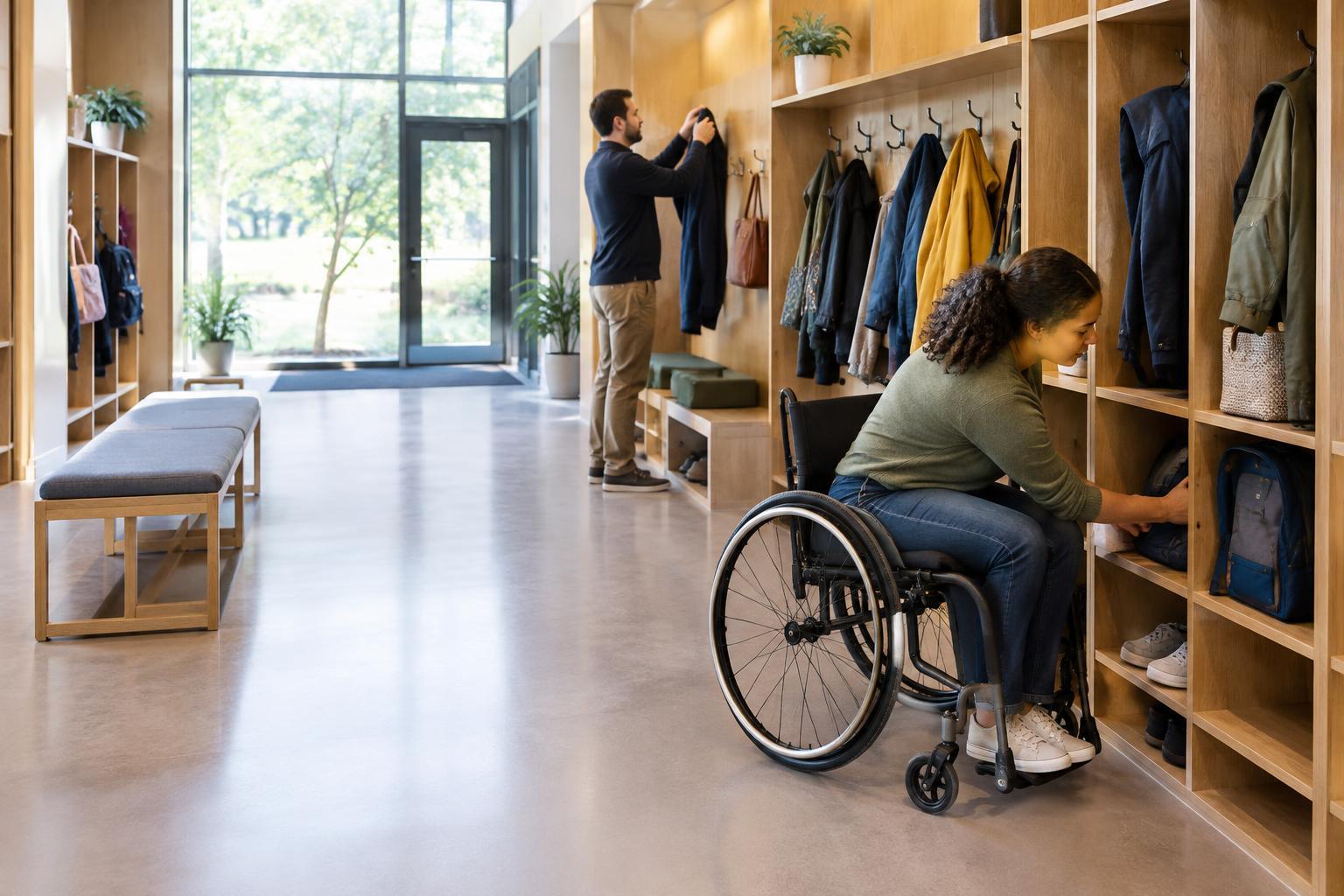
Store everyday dishes, ingredients and utensils at heights you can reach without straining, whether you usually stand or sit while cooking. Reserve harder-to-reach shelves for lightweight items used less often. On deep shelves, a shallow tray or basket can bring small items forward together, so you do not have to search at the back. Keep heavier items where they can be lifted with as little awkward movement as possible.
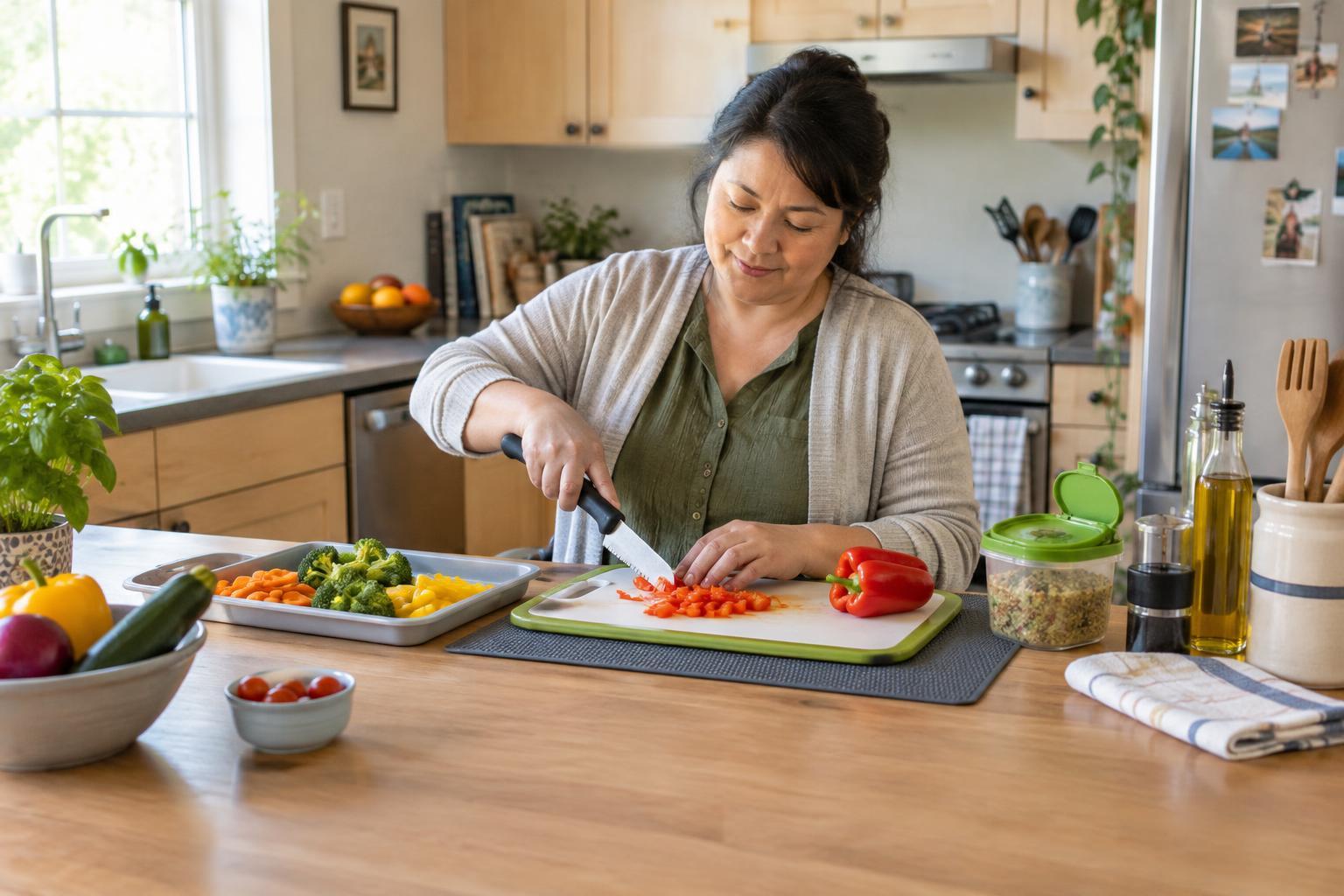
Try setting up a preparation area with the items needed for one task: a cutting board, a bowl for ingredients and a container for scraps. If counter space is limited, clear only enough room for the task at hand. A stable, uncluttered surface makes it easier to set items down between steps and reduces the need to hold several things at once.
Reduce difficult gripping and carrying
Opening jars, holding slippery foods and moving full pots can demand more grip than expected. Choose containers with lids you find manageable, and consider transferring frequently used dry ingredients into containers that are easier for you to open. A nonslip mat beneath a bowl or cutting board can help keep it in place. Tools with handles that feel comfortable in your hand may also make repeated tasks less tiring.
Think about how much you need to move at one time. Instead of carrying a full pot of food to the table, you might serve smaller portions from a stable spot. A lightweight tray can help group cool items, but keep it lightly loaded and make sure you can see your path. For hot food and liquids, prioritize a clear route and a secure place to set them down; do not rush a transfer to keep to a schedule.
Make the sequence easier to follow
A simple order of operations can reduce the effort of switching between tasks. Before turning on the stove, gather the ingredients and tools you need, then place them where they will be used. If a recipe has several stages, break it into short steps and clear away items you have finished with. This can make the work surface easier to navigate and help you see what still needs doing.
Written reminders can be practical without being elaborate. A short note such as “wash, chop, cook, serve” may be enough for a familiar meal. If you use a timer, choose an alert you can reliably notice and set it at the point you need a reminder. Preparing one component in advance, when it suits your routine, can also make the busiest part of cooking less crowded.
Keep the setup flexible
An arrangement that works for breakfast may not work for a shared dinner, and different people may need the same kitchen set up differently. If others use the space, agree on a few consistent places for essentials and leave room to adjust a work area temporarily. Ask before moving someone else’s tools or supplies; predictable placement can be an important part of making a kitchen usable.
After trying a change for a few meals, check whether it actually helped. Did it reduce reaching, make an item easier to find or create a new obstacle elsewhere? Keep what works and revise what does not. Everyday accessibility is often less about finding one perfect gadget than about arranging ordinary tasks so they fit the people doing them.