Start with what people need to see
A shared room has several lighting jobs at once. People may need to find an entrance, read a sign, recognize a face, prepare food or work at a table. One bright ceiling light rarely serves all these activities equally well. A useful starting point is to walk through the space at the times it is normally used and notice where people pause, move and concentrate.
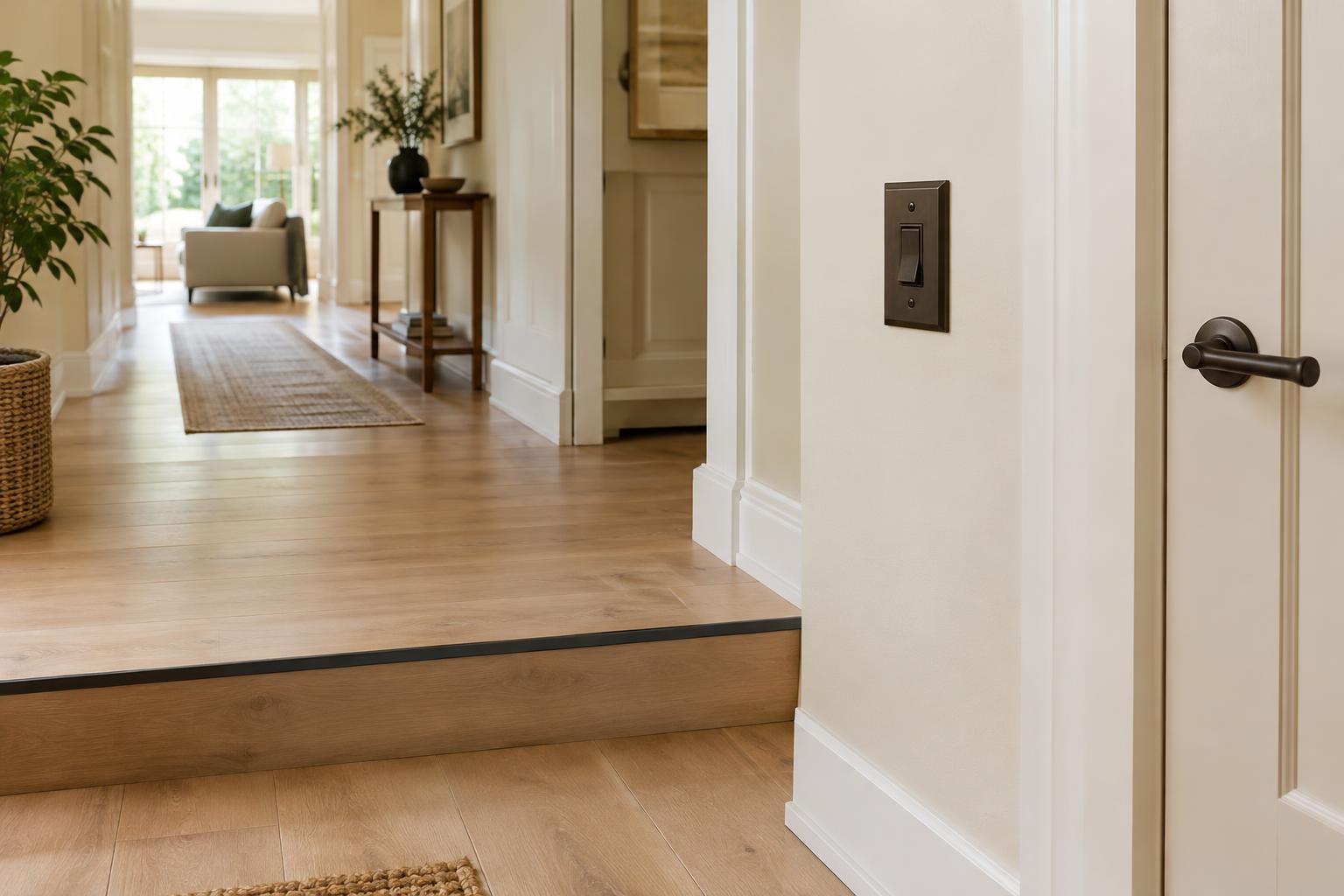
Look from different positions, including seated height. Can someone see the edge of a step or a change in floor level? Does a person standing at a counter cast a shadow over the work surface? Is a notice readable without moving directly beneath a lamp? These observations help separate general lighting, which supports movement and orientation, from task lighting, which illuminates a particular activity.
Reduce glare without making the room dim
Glare can come from an exposed bulb, a bright window behind a speaker or light reflected off a glossy table. It can make a space uncomfortable even when darker corners still need more light. Check common sightlines: from chairs toward screens, from an entrance toward a reception desk and across tables where people talk face to face.
Small changes may help. A shade or diffuser can keep a bulb out of direct view, while moving a lamp can keep its reflection off a screen. Blinds or curtains can soften strong daylight without blocking it completely. Matte finishes on frequently used surfaces can reduce distracting reflections. When adjusting a room, avoid solving one person’s glare problem by turning off the only light someone else needs to read or move safely.
Light routes and tasks without harsh shadows
Dark patches can make it harder to judge where a doorway, chair or step begins. They may also leave faces in shadow during conversation. Aim for a reasonably even path of light through entrances, corridors and gathering areas, with particular attention to changes in level and places where people make decisions about where to go.
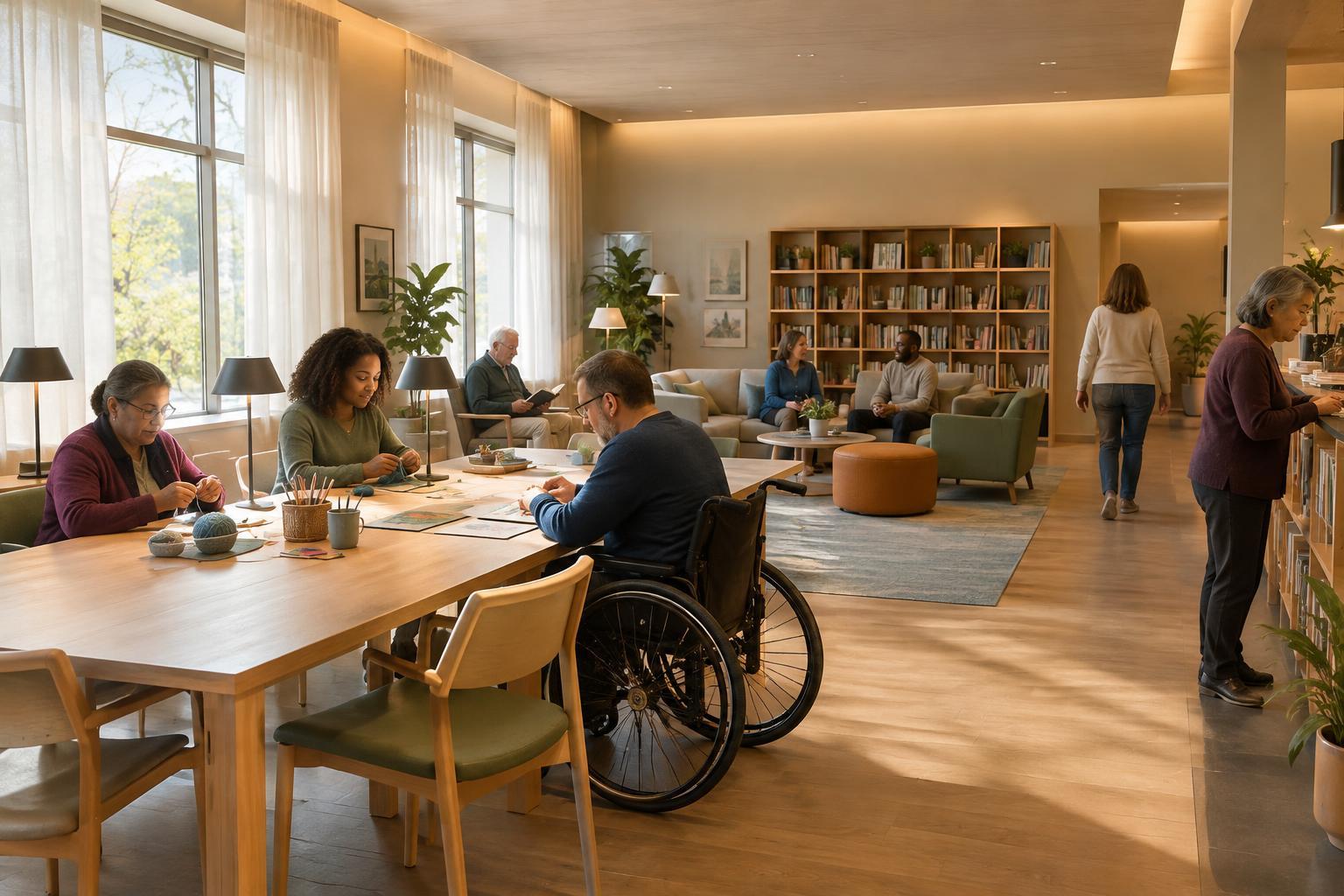
For focused work, place light where the task happens rather than relying on brightness across the whole room. An adjustable lamp at a shared table, for example, lets someone illuminate paper or a craft project without flooding the room. Position it so a hand or the person’s body does not block the light. A combination of gentle general light and well-placed task lights often offers more flexibility than a single intense source.
Give people useful control
People’s preferences can differ. Someone may want brighter light for reading fine print, while another may find that level uncomfortable during a conversation. Where possible, divide lighting into zones so a meeting table, walkway and quieter corner do not all depend on one switch. Adjustable lamps and window coverings can offer further choice without requiring a major renovation.
Controls should be easy to find and understand. Label switches plainly if their purpose is not obvious, and keep them reachable rather than hiding them behind furniture. In a workplace or community venue, ask regular users what makes tasks easier or harder, then test changes during normal activities. A brief trial can reveal that a lamp helps readers but shines into the eyes of people across the table.
Keep the arrangement working
Even a thoughtful setup can become less useful when a lamp is moved, a shade collects dust or a bulb stops working. Include lighting in routine checks, especially along routes and at shared work surfaces. When replacing a bulb, consider how its brightness and color appear alongside nearby lights; a noticeable mismatch may be distracting in a small area.
Treat lighting as one part of an accessible space, not a complete solution on its own. Clear routes, readable signs and furniture with enough room to move still matter. The best arrangement is one people can navigate comfortably, adjust for the task at hand and discuss without having to justify their individual needs.