Start with the whole play experience
A playground can have an accessible entrance and still leave some children watching from the edge. Inclusive design looks at the whole visit: arriving, finding a place to play, moving between activities, joining other children and taking a break. The aim is not to make every child use every feature in the same way. It is to offer meaningful choices so children with different bodies, senses, ages and preferences can take part.
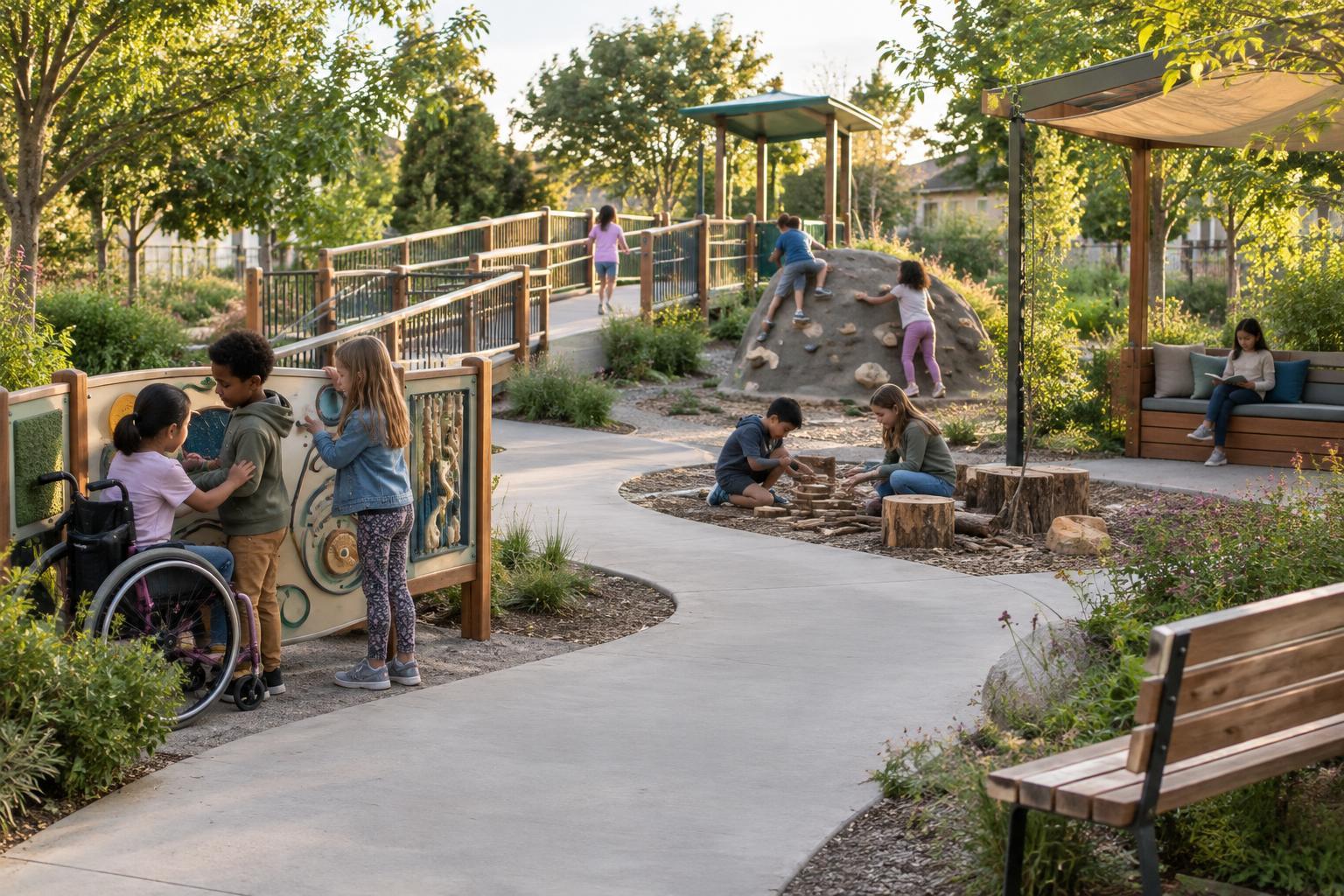
Think of play as more than climbing or sliding. Some children enjoy speed and height; others prefer building, storytelling, balancing, exploring textures or repeating a familiar activity. A strong design places these experiences throughout the playground rather than separating a single “accessible” area from everything else. When children can choose activities near one another, it becomes easier to invent games together.
Make routes part of the play
The journey between features matters. Firm, even routes can help people using wheels or walking aids, as well as adults pushing strollers. Routes should connect the entrance, play features, seating and other amenities without requiring someone to double back through a difficult surface. Enough room to pass or turn can make a busy playground feel easier to navigate.
Consider what happens at each destination, not just along the path. Can a child approach an activity, stop beside a friend and reach something interesting? Can companions stay close without blocking the route? Play features at different heights, and activities that can be enjoyed from standing or seated positions, create more possibilities. Clear sightlines can also help caregivers keep track of children while giving them room to explore.
Offer variety without overwhelming visitors
Variety can invite children into play, but it does not have to mean making every corner loud, bright and crowded. A playground might combine active movement areas with quieter places for pretend play, tactile exploration or conversation. Grouping related activities can help visitors understand what is available while leaving room to choose a different pace.
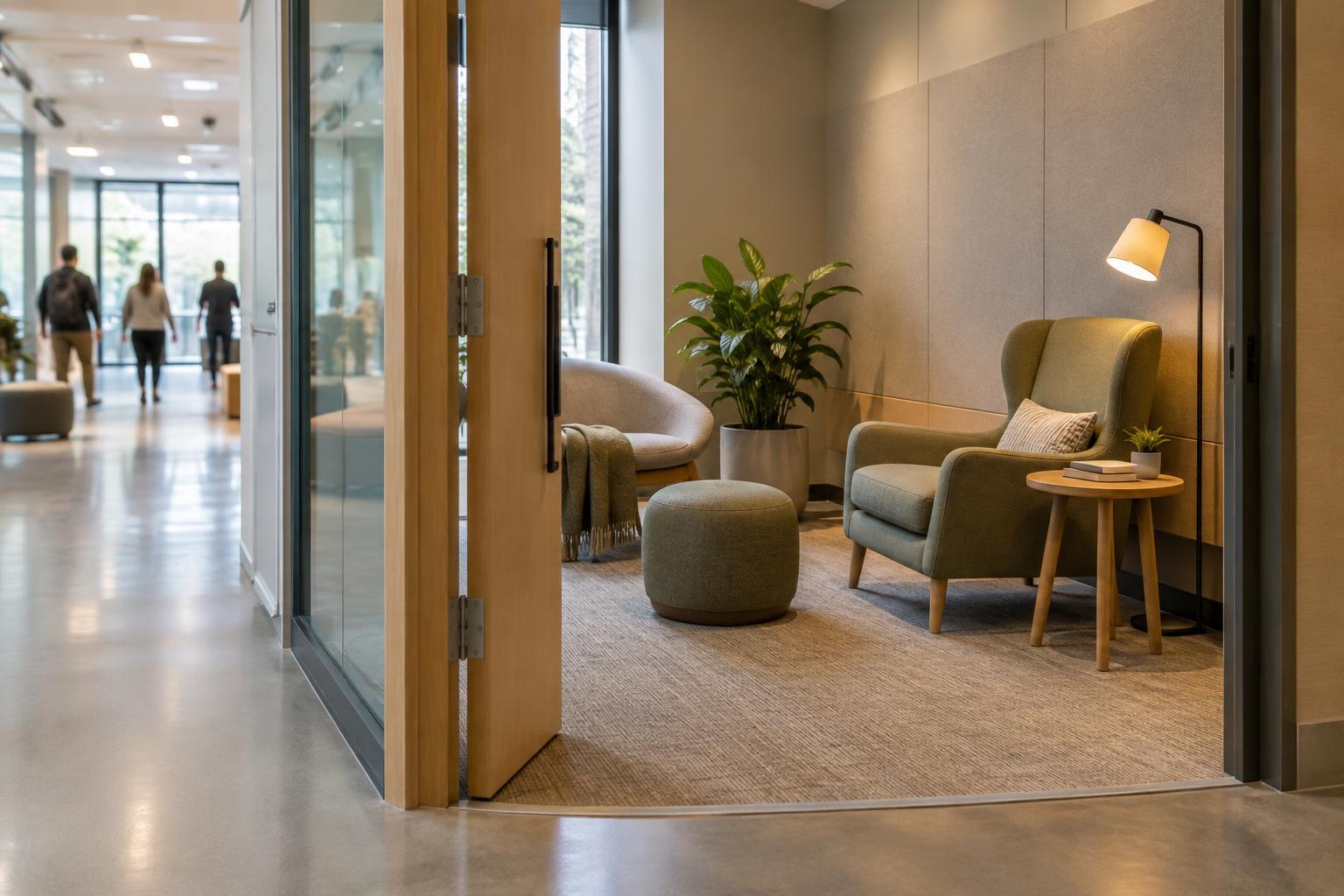
Sensory experiences work best when they offer options. Textures, sounds and moving parts can be engaging, but some visitors may want distance from them. A calmer spot with seating and a view of the play area lets a child pause without feeling removed from the group. Shade and comfortable places to sit can help companions stay longer, too. Where space is limited, even a small quiet edge can provide a useful alternative to constant activity.
Design for children to meet and collaborate
Playing alongside someone is not always the same as playing together. Features with room for more than one child can encourage shared games: a wide play surface for making patterns, a pretend shop with several roles or a musical feature that children can use from different sides. Activities with no single “right” way to participate allow children to contribute in different ways.
Transitions between play areas deserve attention as well. A child might watch a game before joining, or prefer a small group to a busy structure. Open spaces near activities give children room to gather, wait and negotiate what happens next. Seating placed within sight and sound of play lets a child take a break and still feel involved. These choices support social connection without assuming that every child wants to interact all the time.
Keep listening after the playground opens
Children and caregivers can notice barriers that are easy to miss on a plan. If a playground is being designed or improved, invite people with varied access needs to respond to proposed routes and activities. Ask concrete questions: Where would you begin? Which features could you use with a friend? Where would you rest? Make room for different answers rather than treating one person's experience as representative of everyone.
Inclusion also depends on upkeep. A route may become harder to use if its surface deteriorates or equipment blocks it. Seating, signs and quieter spaces need attention alongside the most popular play features. Checking how people actually use the playground can guide modest improvements over time. The most welcoming playgrounds are not defined by one special feature, but by many thoughtful choices that let children find their own ways to play together.