Three approaches with a shared purpose
A step-free entrance, a meeting with captions and a sign written in clear language can all help more people take part. You may hear these choices described as accessibility, universal design or inclusive design. The terms overlap, and people sometimes use them differently, but each offers a useful way to think about who can use a space, service or activity.
Accessibility asks whether people, including disabled people, can get in, understand what is offered and participate. Universal design aims to make an environment or product usable by as many people as possible from the start. Inclusive design pays particular attention to whose needs have been overlooked and brings a range of people into the design process. None is a substitute for listening to the people who will use what you create.
Accessibility: removing barriers to participation
Accessibility focuses on barriers and the practical changes that remove them. A doorway may be too narrow for someone using a mobility aid. A video without captions may exclude someone who cannot hear its audio. A registration form with confusing instructions may prevent someone from joining an event. Looking for barriers makes the question specific: what stops a person from taking part, and what would help?
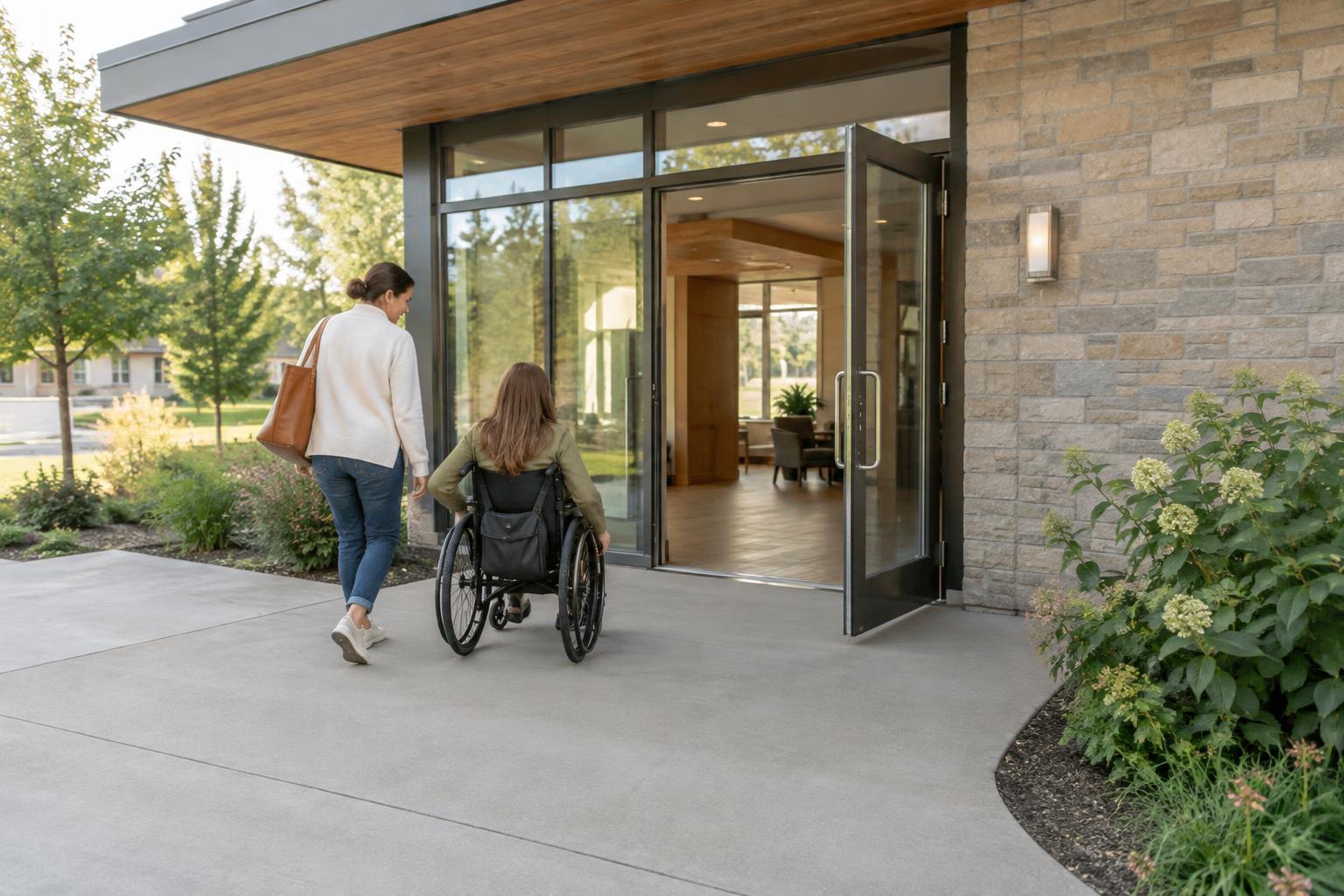
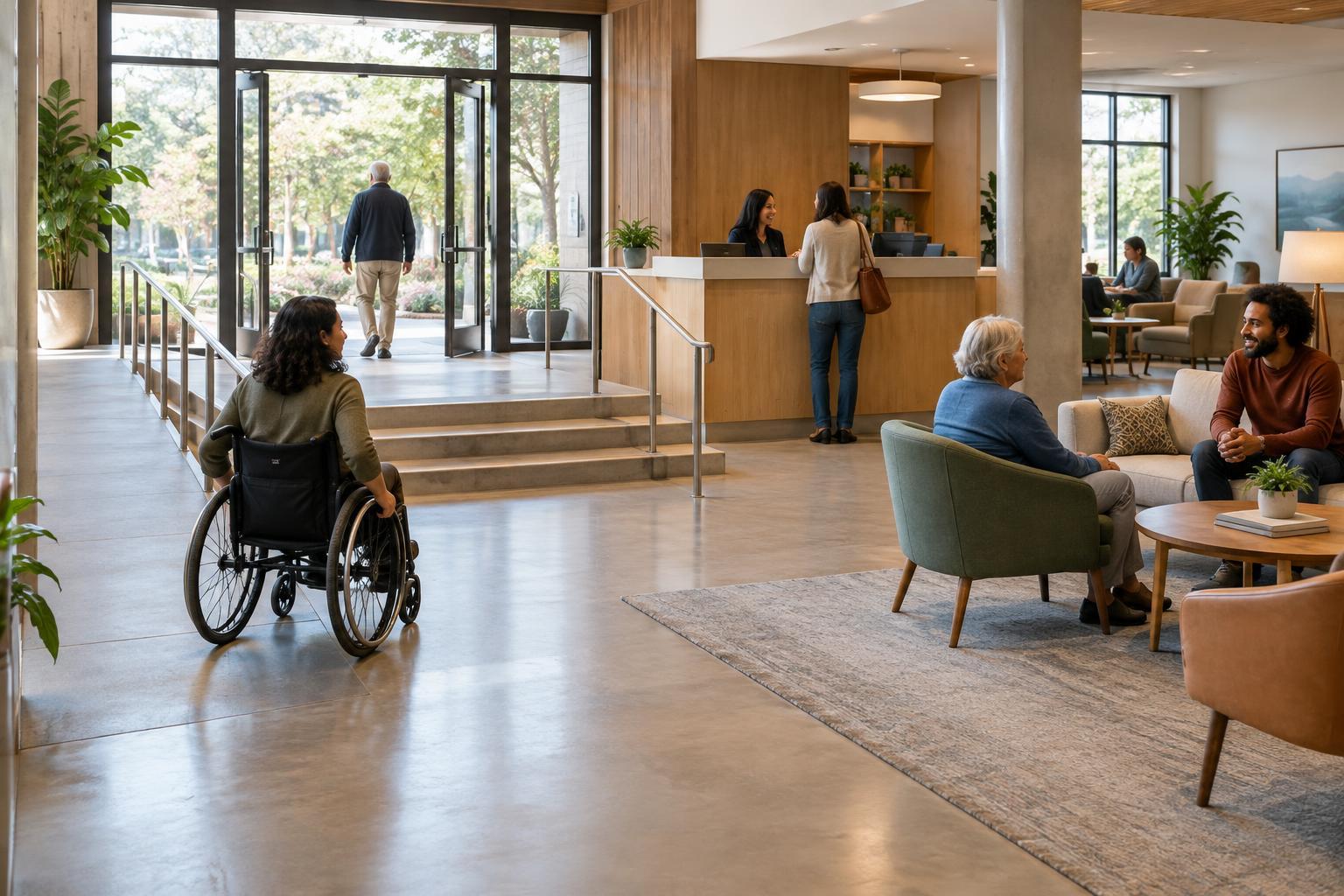
Accessibility is not limited to one type of disability or one type of place. It can involve physical layouts, information, communication and the way an activity is organized. Providing a ramp matters, but so does ensuring that it leads to the same welcoming entrance as the stairs. Offering information in more than one format can help people choose what works for them. Because needs differ, an accessible choice often involves several options rather than a single fix.
Universal design: planning for broad use from the beginning
Universal design starts with the idea that everyday spaces and products should work well for a wide range of people, without requiring a special version for each person. A lever-style door handle, for example, can be easier to use than a round knob for someone carrying bags, someone with limited grip and someone opening a door with an elbow. Clear signs with readable text and helpful symbols can assist visitors who are unfamiliar with a building as well as those who find dense text difficult.
The strength of this approach is that it treats variation as ordinary. People may be tired, injured, distracted, new to a language or using different devices. Planning for that variety early can prevent barriers that would be harder to address later. Still, no single design works for absolutely everyone. A quiet room may help one person focus, while another may need conversation or assistance nearby. Universal design is a broad goal, not a promise that individual needs will disappear.
Inclusive design: asking who has been left out
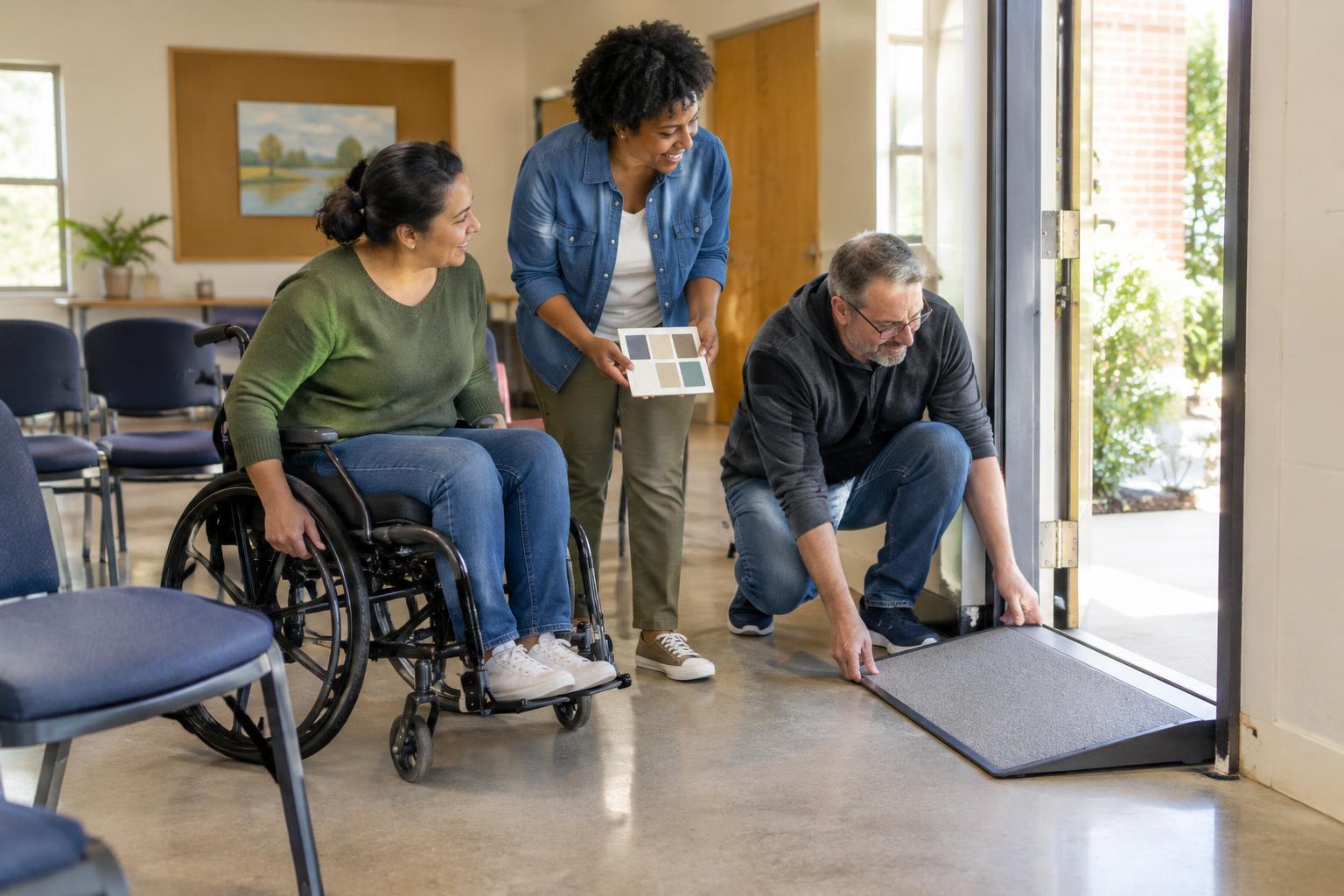
Inclusive design is as much about the process as the finished result. Instead of assuming that a design team already knows what people need, it invites those affected to describe their experiences, test ideas and point out problems. That might mean asking residents with different mobility needs to review a shared entrance, or inviting staff who use assistive technology to try a new workplace tool before it is adopted.
This approach also asks who is missing from the conversation. A community event may look welcoming to regular attendees but feel difficult to join for someone who cannot travel in the evening, needs a place to sit or does not know the local customs. Hearing from those people can reveal choices that a checklist alone may miss. Participation should be meaningful: explain what can change, offer accessible ways to give feedback and report back on what you did with it.
Using the approaches together
Imagine planning a neighborhood workshop. An accessibility review might identify a step at the entrance, hard-to-read directions or a presentation without captions. Universal design would encourage you to choose an easy-to-reach venue, provide clear information in advance and offer more than one way to follow the session. Inclusive design would prompt you to ask potential participants what makes attending difficult, including people who have not joined previous events.
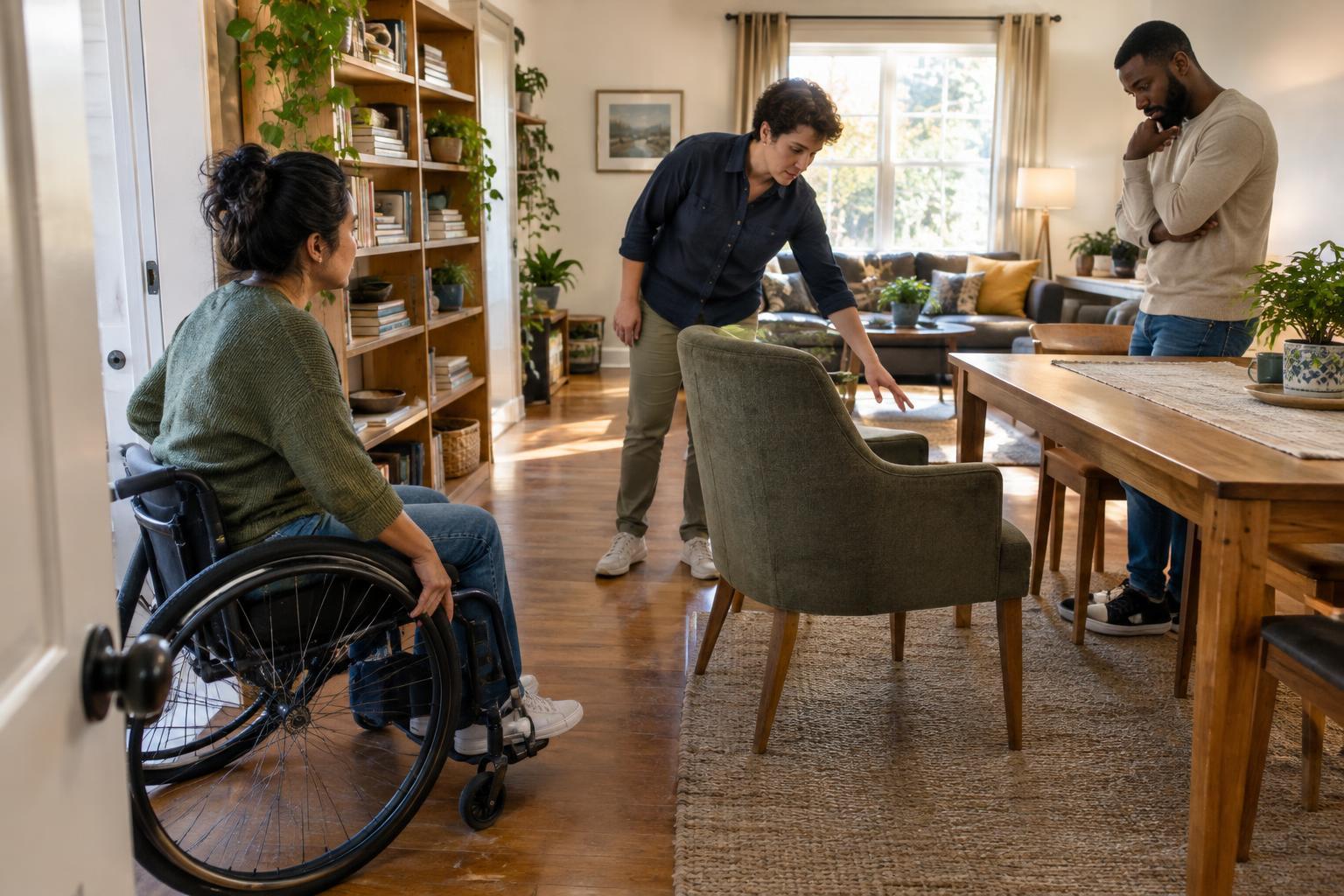
A useful starting habit is to ask three questions: What barriers are present? How can the main experience work for a wider range of people? Whose perspective do we still need? Then make a practical change, invite feedback and be willing to revise it. Whether you are arranging furniture at home, planning a staff meeting or hosting a local activity, the aim is not to find a perfect label. It is to make participation easier, more dignified and more flexible for the people involved.