Start by asking, not assuming
A neighborhood potluck can be a relaxed way to meet people, but the usual invitation—bring a dish and show up—may leave some neighbors wondering whether they can take part. Before settling the details, ask a few open questions: What would make the gathering easier to attend? Are there access needs the organizers should plan for? Give people a way to reply privately, and make clear that sharing personal information is optional.
Choose a time and format that leave room for different schedules and energy levels. An afternoon gathering with a stated start and end time, for example, lets people plan a brief visit. Keep contributions optional: preparing food costs money and time, and some people may not have a kitchen they can use. A guest who brings nothing should still be warmly welcomed.
Choose a space people can use
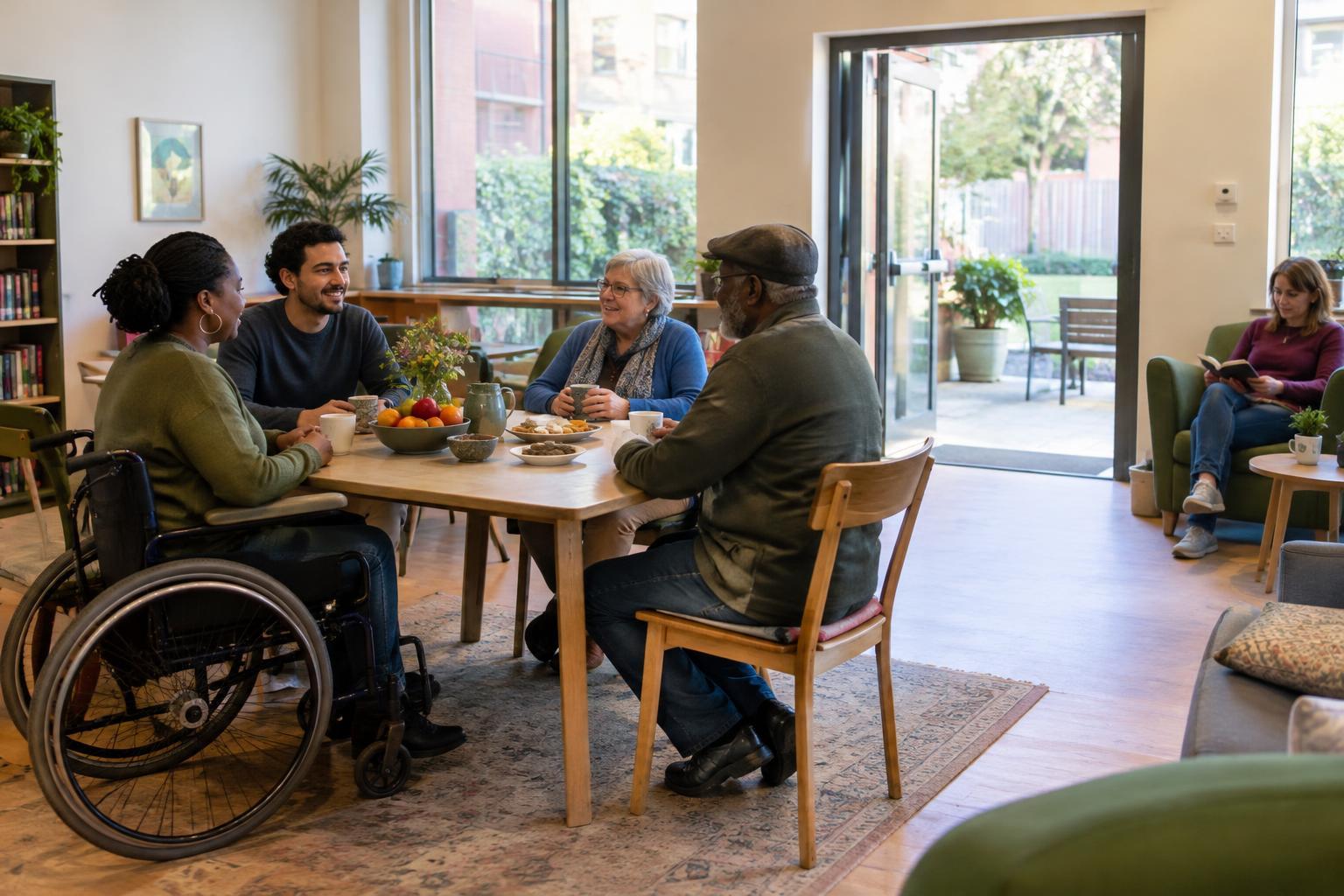
Look at the venue from the route in, not just at the table where food will be served. Is the entrance step-free? Can someone move comfortably between tables and chairs? Is there seating with backs, a nearby toilet people can use, and a place to pause away from the busiest area? If you are considering a park, check the paths and consider how weather could affect them. If the first choice has barriers you cannot address, another location may be more welcoming.
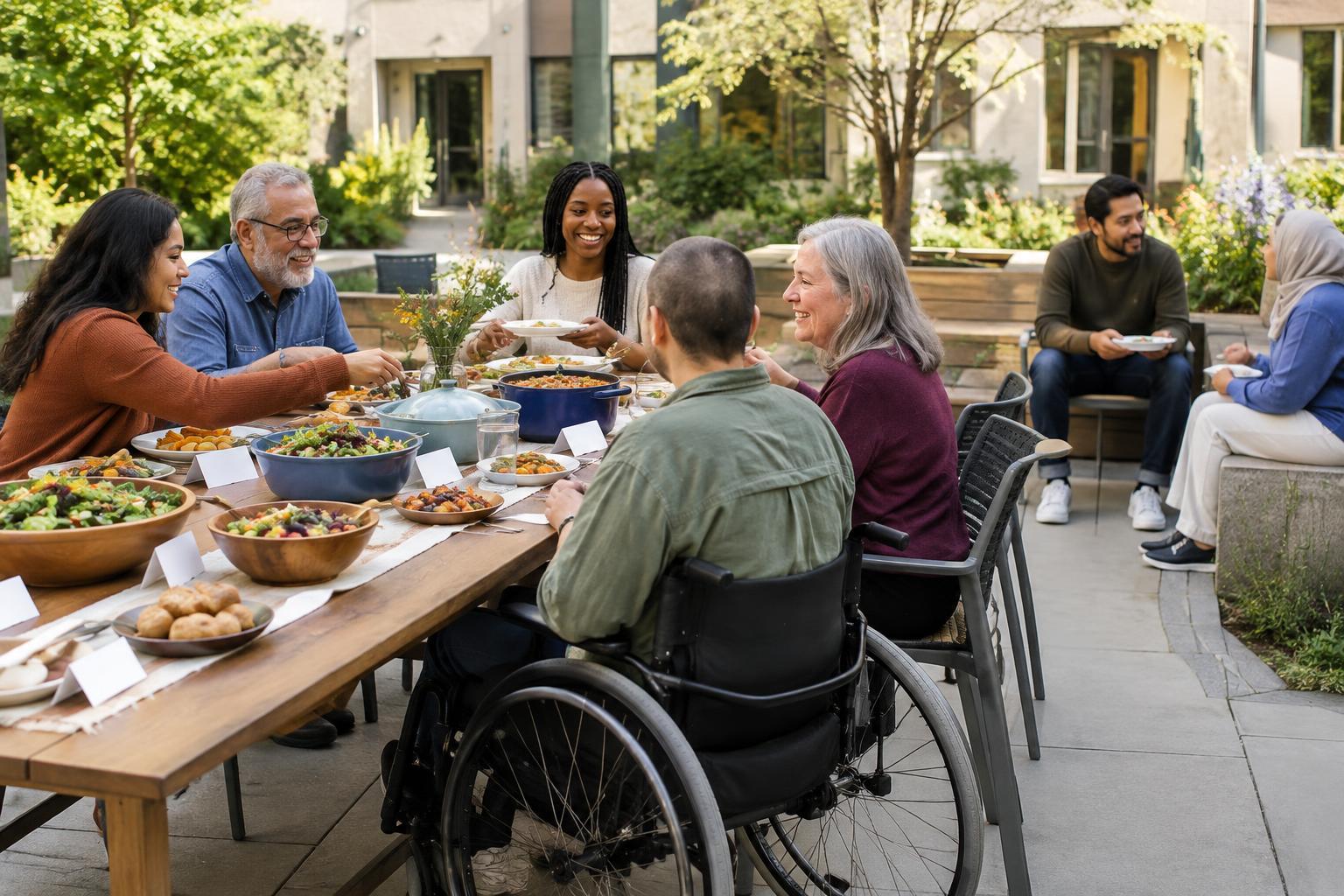
Arrange the space so people can reach food and conversation without navigating a crowded line. Keep pathways clear, put serving items within easy reach, and offer a mix of seating rather than assuming everyone wants to stand. A quieter corner can help anyone who needs a break from noise. Share practical venue details in the invitation so guests can decide what works for them or ask a follow-up question.
Make food choices clear without putting anyone on the spot
Invite cooks to bring a short written list of ingredients and to note anything they are unsure about. Set out labels beside dishes, rather than relying on guests to track down the person who made each one. It helps to identify dishes that are vegetarian or contain common allergens, but do not call a dish allergy-safe unless its ingredients and preparation can genuinely support that description. Home kitchens and shared utensils can introduce cross-contact.
Offer a few simple options, such as plain fruit or packaged items with their original labels, alongside homemade dishes. Keep serving utensils with their own dishes and have spare utensils available. If someone needs to bring food they know they can eat, treat that as an ordinary choice, not a problem to solve publicly. Food traditions can be a lovely part of a potluck, but no one should be expected to represent a culture or explain a dish.
Invite people in more than one way
Write an invitation that answers the basic questions: where and when the event is, whether it costs anything, what guests may bring, and whom to contact about access. Use straightforward language and send it in formats neighbors commonly use, such as a printed notice and a digital message. If your neighborhood includes people who prefer different languages, ask whether a neighbor can help make the key details understandable; do not assume one person is available to translate for everyone.
Offer several ways to participate. Someone might contribute a dish, help set up chairs, bring a game, welcome arrivals or simply attend. Avoid assigning jobs based on what you think a person can do. Asking, “Would you like a task, or would you rather just come?” gives people a choice without requiring an explanation.
Help connection happen, then learn for next time
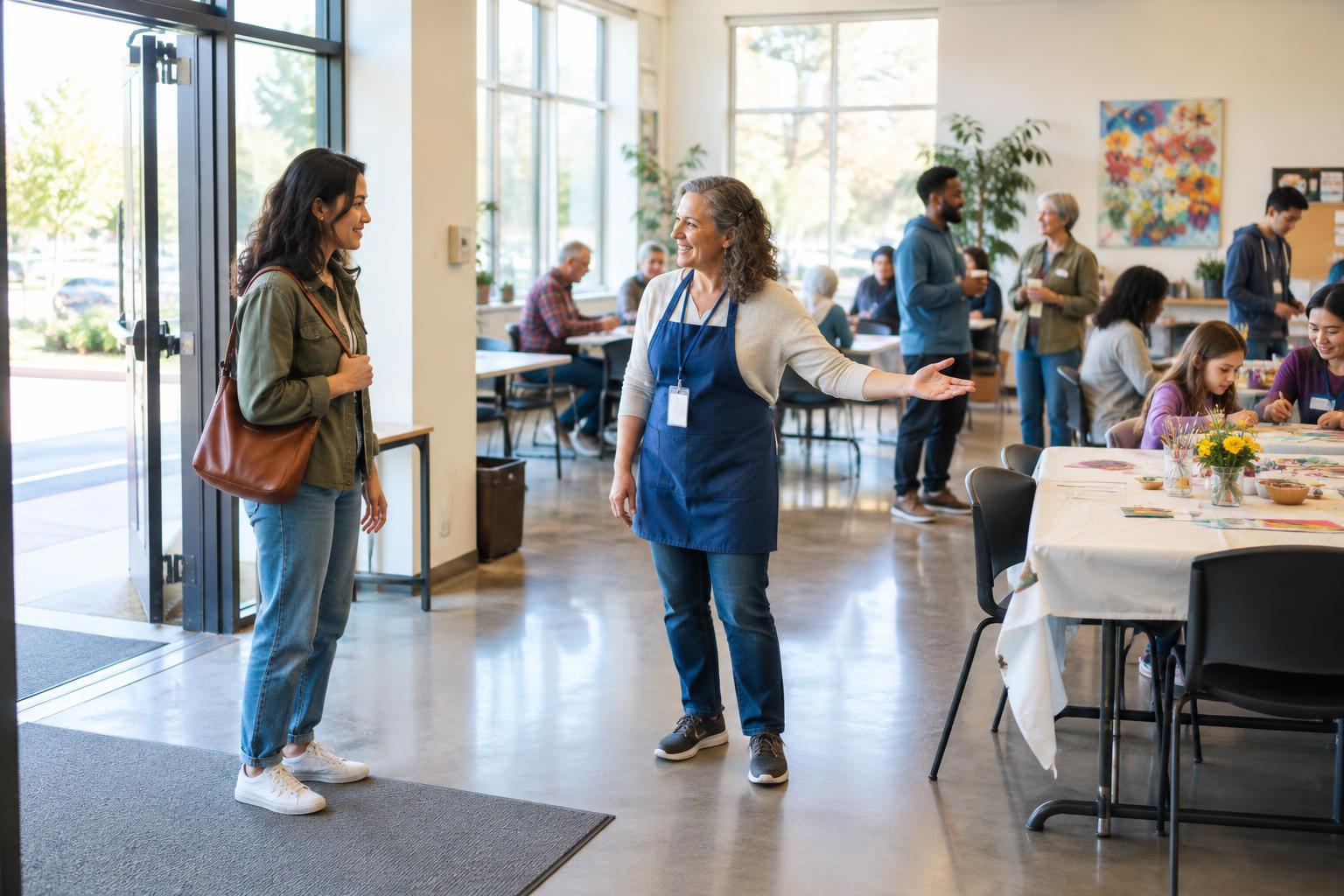
At the gathering, greet people and briefly explain where to find food, seating, toilets and the quieter area. Name tags can help, but keep them optional. A few low-pressure conversation prompts or a table activity can make introductions easier without turning the meal into a compulsory group exercise. Let guests join conversations, take breaks or leave early without drawing attention to it.
Afterward, thank everyone who attended or helped. Ask what worked and what would make a future gathering easier, without asking people to disclose why. You may not be able to meet every need at once, but listening and making specific changes show that welcome is more than a message on an invitation. The aim is a shared meal where neighbors can participate in ways that work for them.