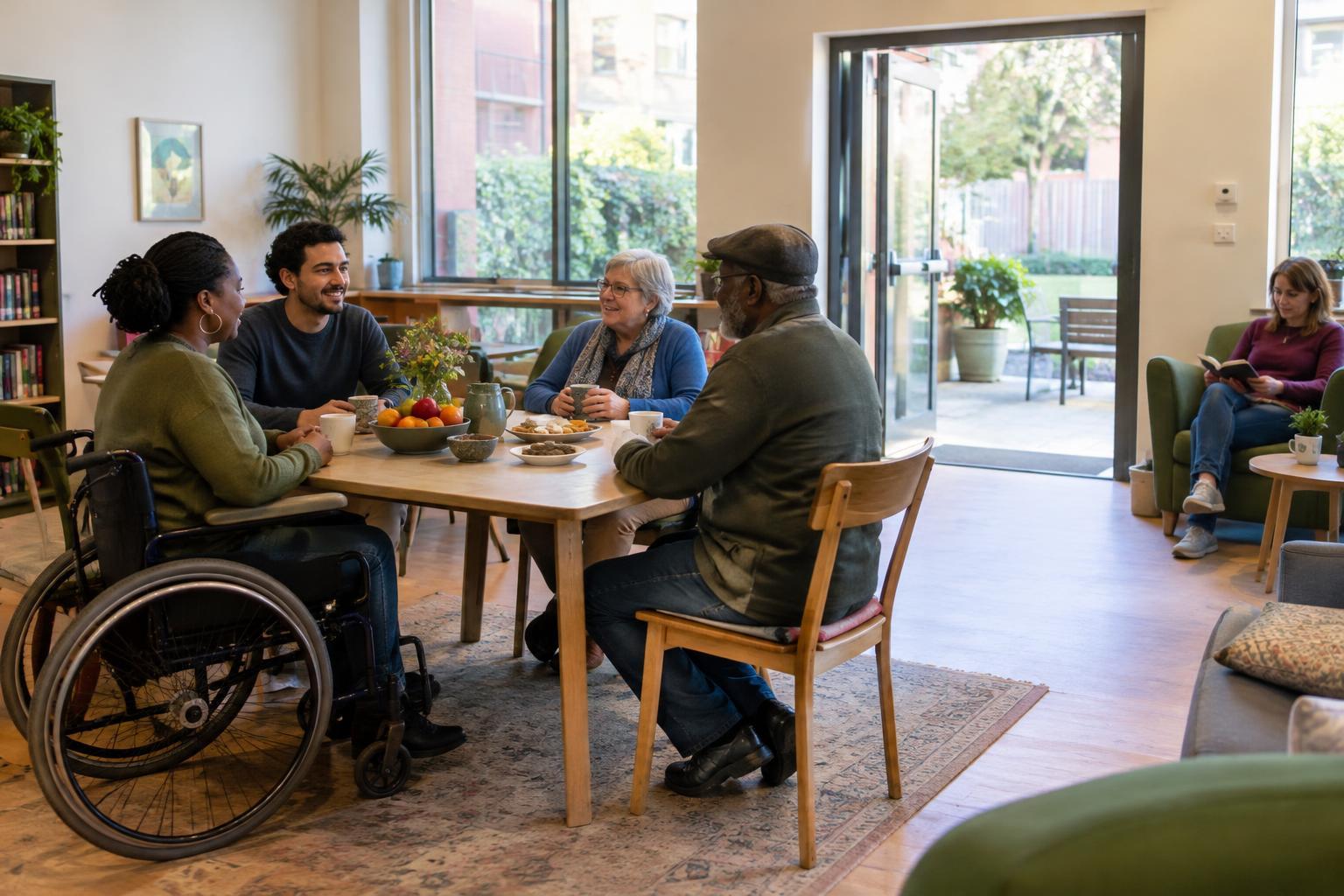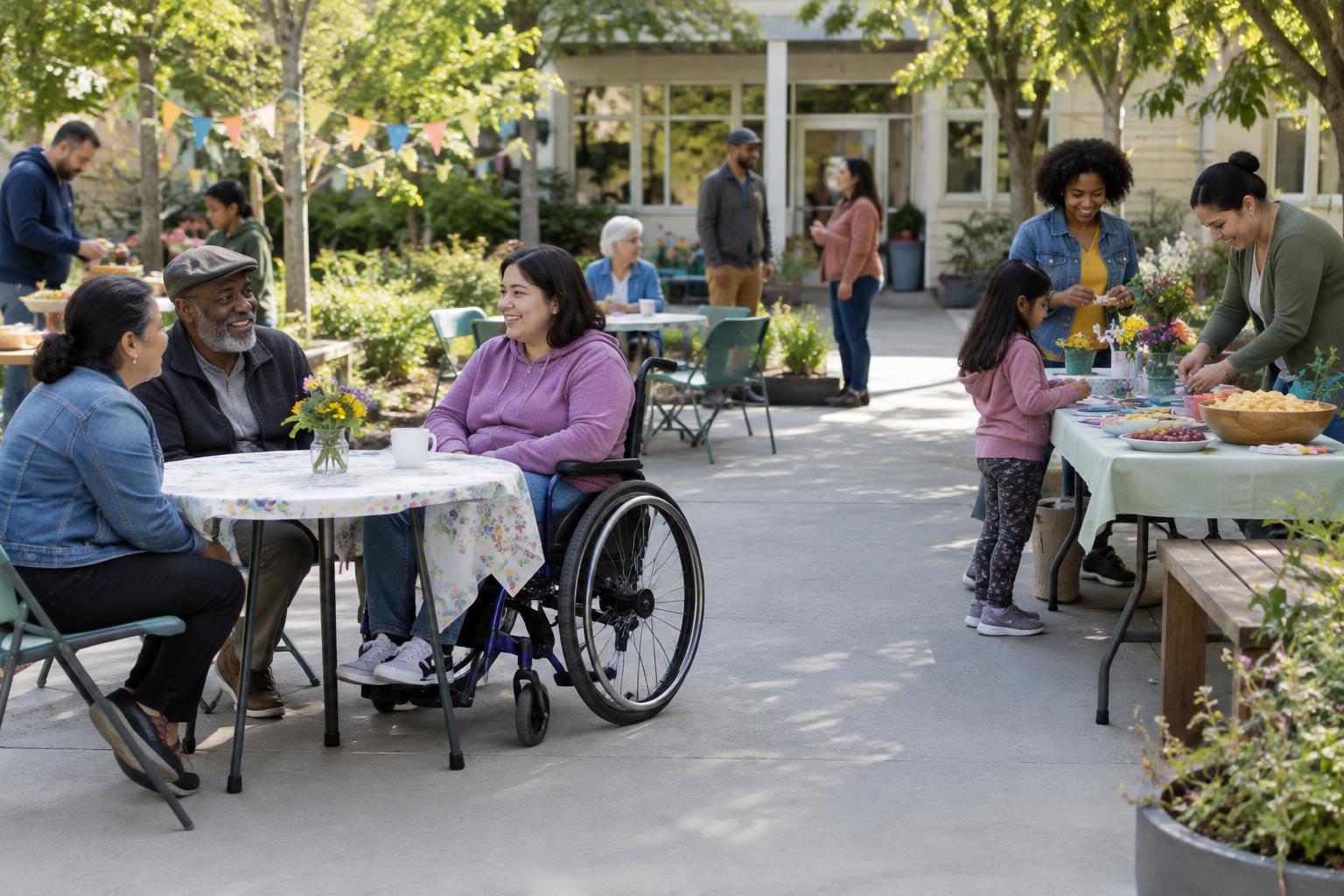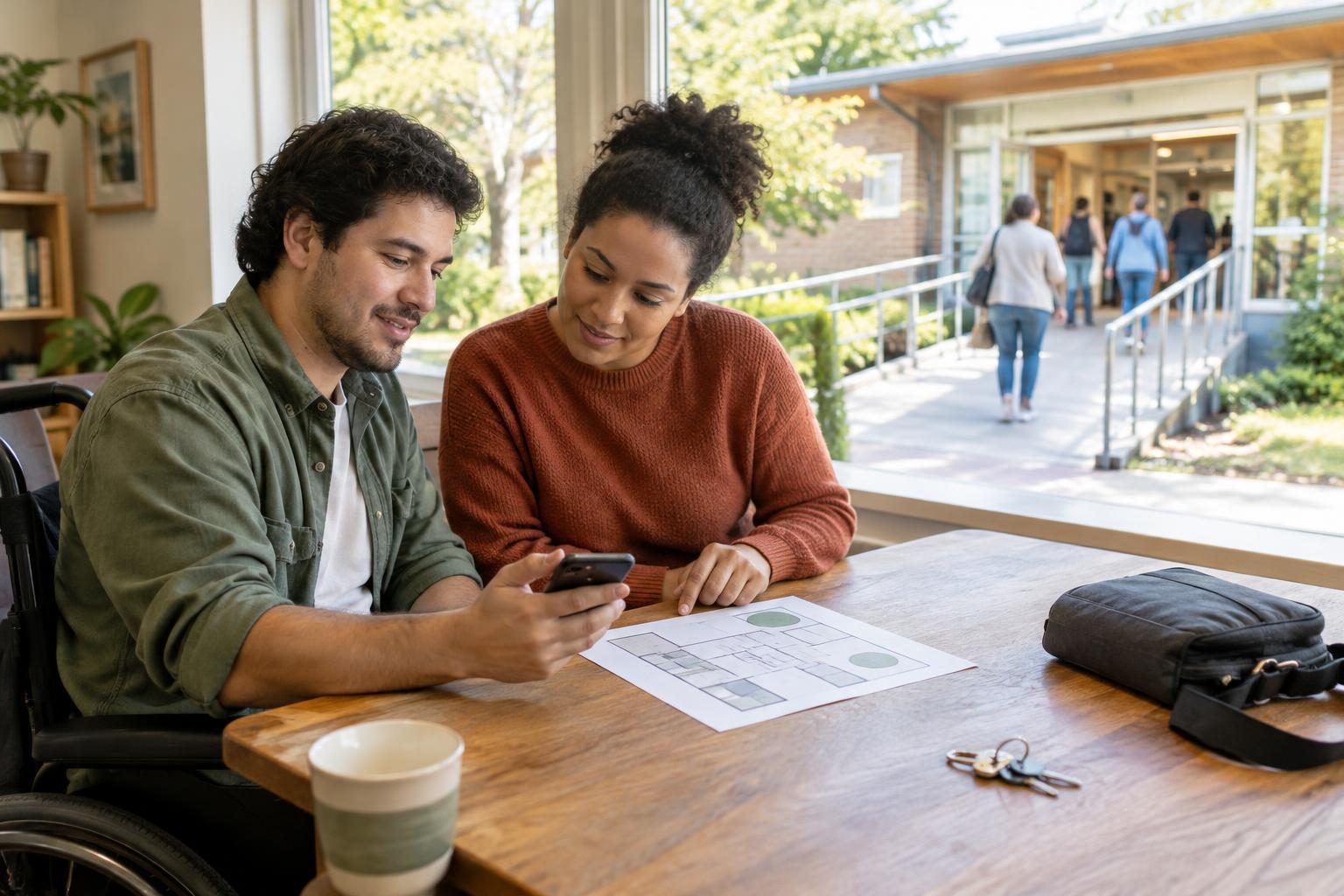
Start with what you need to know
“Accessible” can mean different things to different people. A step-free entrance may be essential for one visitor, while another needs clear written directions, a quieter place to sit, or enough time to move between activities. Before looking up an event, make a short list of what would help you attend and participate. Separate essentials from preferences so you know which answers you need before deciding whether to go.
Think through the whole visit, not only the event room. Consider the journey there, the route from the entrance, seating, toilets, food or drink, and the journey home. If you are going with someone else, compare needs early. You may find that one question, such as whether visitors can leave and re-enter, matters to several people for different reasons.
Look beyond the event listing
Start with the event page, organizer’s contact details and any venue information available. Look for specific descriptions rather than a general accessibility label: which entrance has step-free access, whether there is a lift, where an accessible toilet is located, and whether seating is available throughout the event. Photos or a venue map may help you form questions, but they may not show temporary layouts or obstacles.
Check whether booking is required and whether access arrangements must be requested in advance. A ticket page might also tell you if there are reserved seats, companion tickets, captions, interpretation or a way to submit questions without speaking publicly. If the information is missing, that does not necessarily mean an option is unavailable. It does mean you will need to ask before relying on it.
Ask questions that invite useful answers
Contact the organizer or venue using the method that works best for you, if one is offered. A focused message is easier to answer than “Is this accessible?” For example: “I use a wheelchair. Is there a step-free route from the public entrance to the event space and an accessible toilet on the same route?” You can ask about a practical feature without explaining a diagnosis or sharing more personal information than you wish.
For communication access, ask whether presentations will have captions or interpretation, whether materials can be provided in advance, and how audience participation will work. For sensory access, you might ask about amplified sound, flashing lights, crowd size, lighting, and whether there is a quieter space. If you need flexibility, ask whether you can arrive late, step out and return, or choose a seat near an exit.
If the answer is vague, follow up with a narrower question. “The building is accessible” is less helpful than knowing which door to use and whether it will be open when you arrive. For a multi-site event, confirm that the access details apply to your specific session. If arrangements are promised, keep the reply handy so you can refer to it if staff on the day have different information.
Check the journey and the day-of details
An accessible venue may still be difficult to reach. Look at the route from your transport stop or parking area to the correct entrance, including distance, surfaces and crossings where those details are available. If you depend on a particular entrance, ask for its address or a clear landmark. Find out whether the event takes place entirely in one room or includes a walk, outdoor activity or change of location.
Some details can change between planning and arrival. Temporary signs, queues and furniture may alter a route; a busy room may feel different from an empty one. If a feature is essential, consider checking with the organizer again shortly before you go. Allow time to find the entrance, and save the contact number or email in case you need help locating it. A backup plan, such as knowing when you can leave or where you can pause, can make the outing less stressful.
Decide with the information you have
You do not have to settle for guesswork, and you do not owe anyone an explanation for choosing not to attend. If an organizer cannot confirm an essential feature, it is reasonable to treat that as an unknown rather than an assurance. You might ask whether another session, format or location would work better. If you decide to go, tell a companion about any arrangements you would like them to know about, while keeping the rest private.
Afterward, consider sharing concise, constructive feedback. Tell organizers which details helped you plan and which were hard to find. Specific suggestions, such as naming the step-free entrance on future listings or explaining the seating layout, can help other visitors too. Clear access information makes community events easier to choose, not just easier to enter.