Make the invitation easy to understand
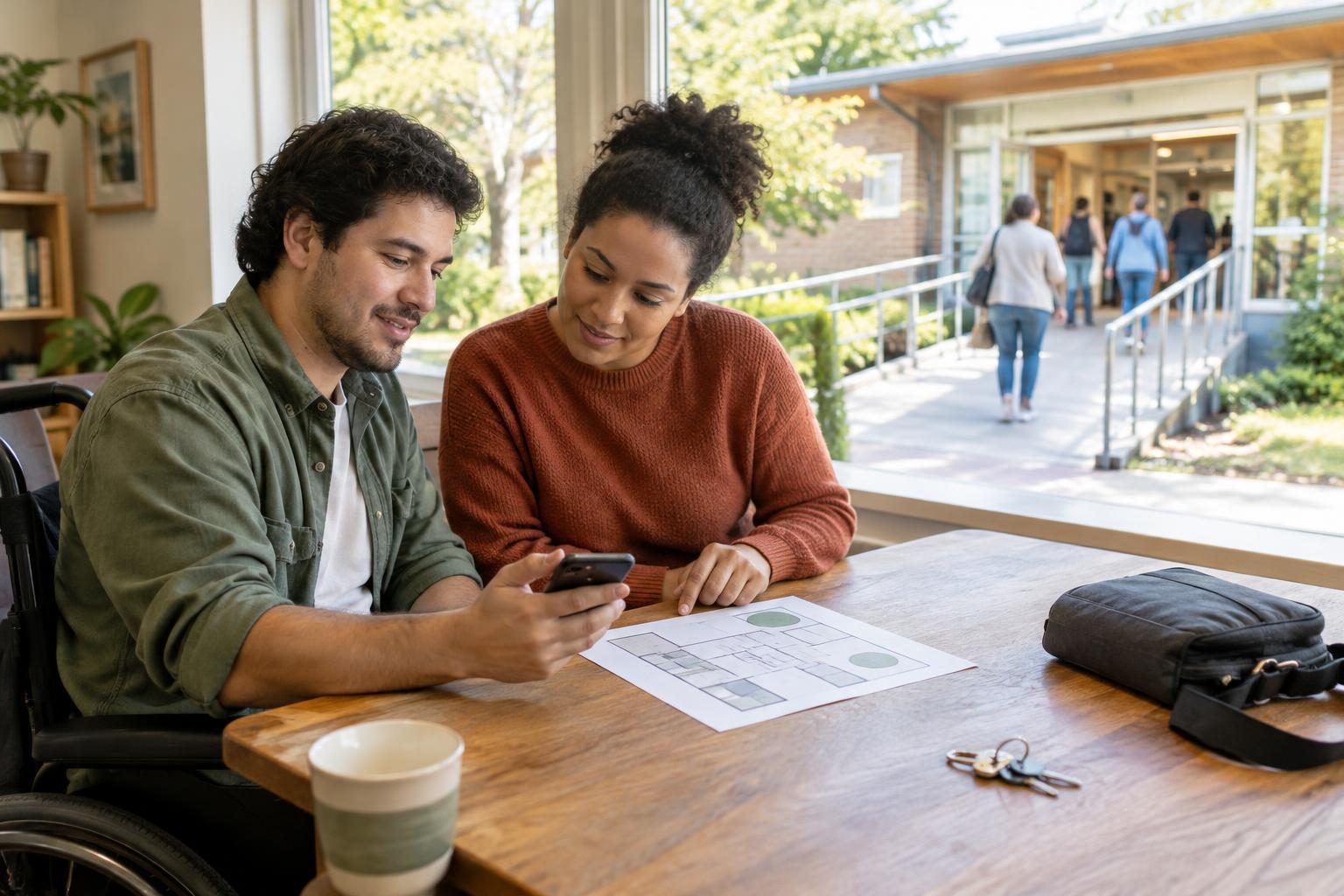
A welcoming experience starts before anyone reaches the door. In the event description, explain what will happen, how long it will last and whether people need to register. Say if there is a cost, what to bring and whether someone can join after the start. Details that regular attendees take for granted can make a first visit much easier to plan.
Describe the social format as well as the activity. Will people sit together, move between stations or listen to a speaker? Is conversation optional? A simple line such as “You are welcome to come on your own, and you can take part at your own pace” makes room for different preferences without treating solo attendance as a problem. If there is a contact person for questions, include how to reach them.
Give people a clear first step
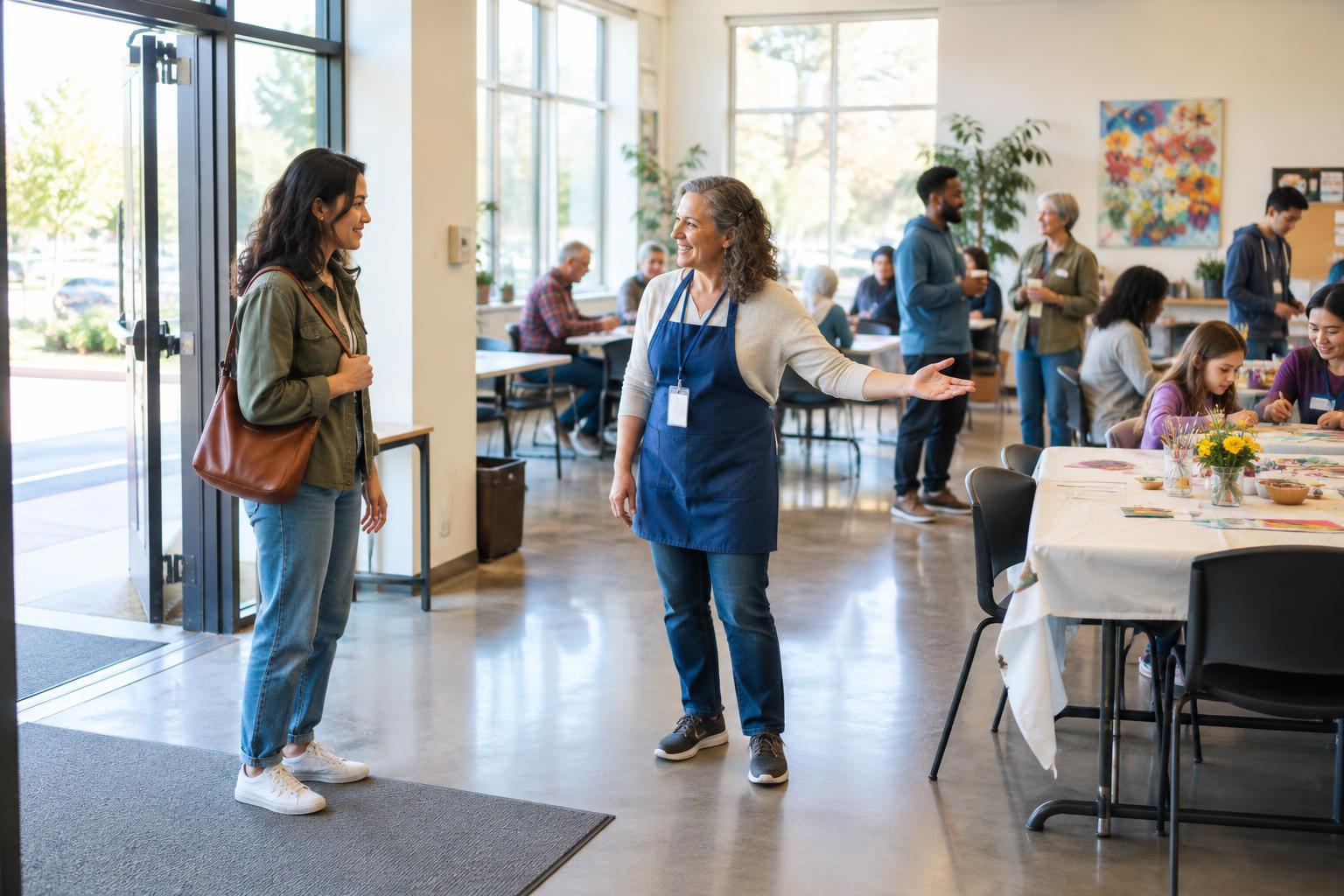
Arriving can be the hardest moment when everyone else seems to know where to go. Put a visible sign near the entrance and, when possible, have someone ready to greet attendees. A useful greeting is brief and practical: welcome the person, explain where coats or bags can go, point out refreshments and tell them what happens next. Offer a name tag if others are using them, but do not make it a requirement.
Give greeters a way to help without putting anyone on the spot. They might ask, “Would you like a quick introduction to the space?” rather than “Are you here alone?” If the venue has more than one room, clearly mark the event area and any quieter place where people can step away. Clear directions support everyone, including people who prefer not to ask a stranger for help.
Build connection into the event, not onto one person
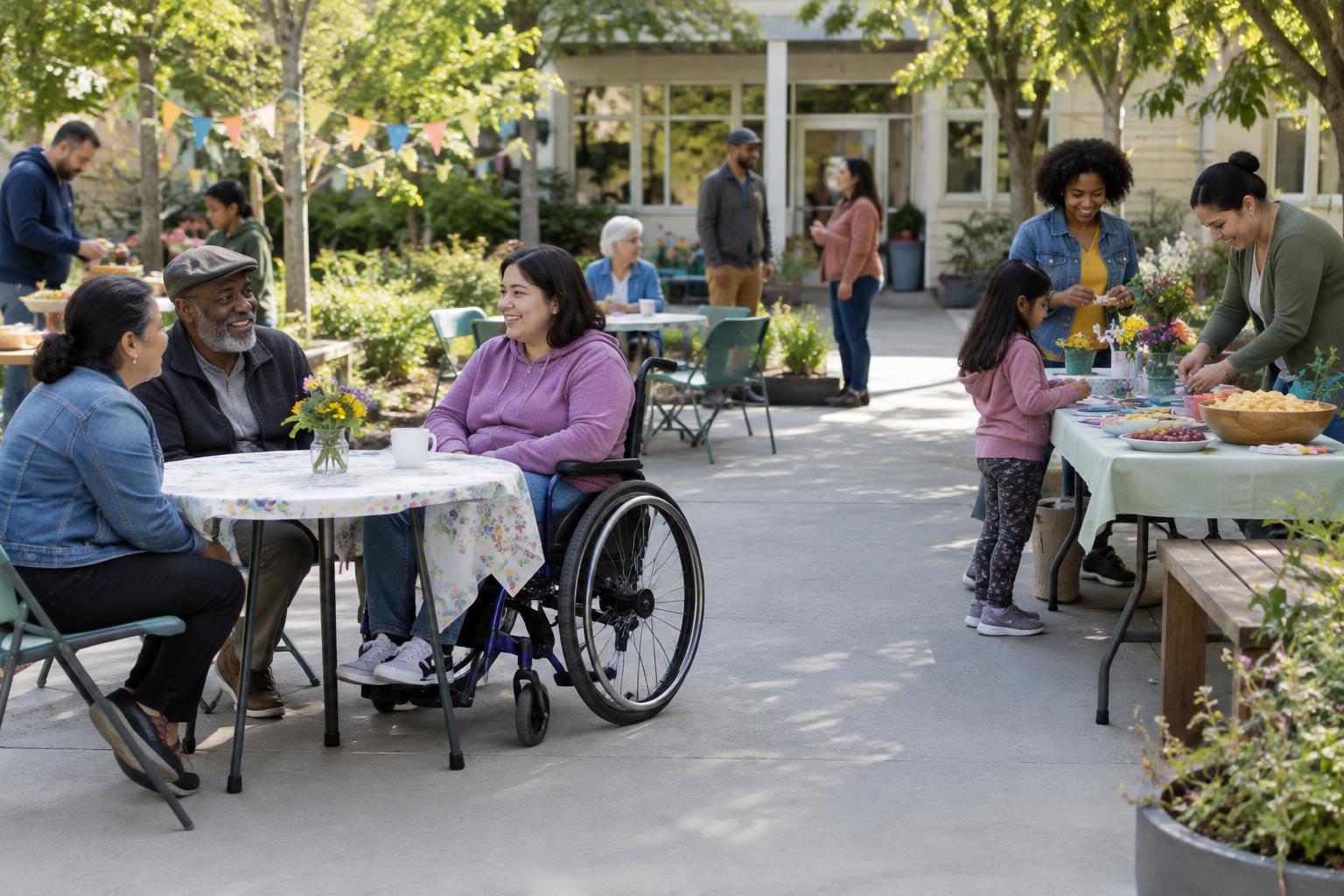
A host can make introductions, but a welcoming event should not depend on every newcomer being especially outgoing. Start with an activity that gives people something specific to do or discuss. At a neighborhood gathering, that might be choosing a topic for a small-group conversation. At a craft event, it might be a shared materials table. A common task gives conversation a starting point without demanding personal disclosures.
Offer more than one way to join in. Some people will enjoy a small group; others may prefer to listen first or work independently. If you use pairs or groups, explain the task and give people enough time to settle before reshuffling. Avoid asking attendees to find a partner in a crowded room. Assigning groups gently, or inviting people to join a marked table, can remove an awkward moment.
Invite without insisting
It is kind to notice someone standing apart, but being alone does not always mean they want company. A host or volunteer can offer a specific, low-pressure choice: “There’s a discussion starting at this table if you’d like to join,” or “You’re welcome to watch for a while.” Then let the person decide. Repeated invitations, public introductions or questions about why someone came alone may feel more exposing than welcoming.
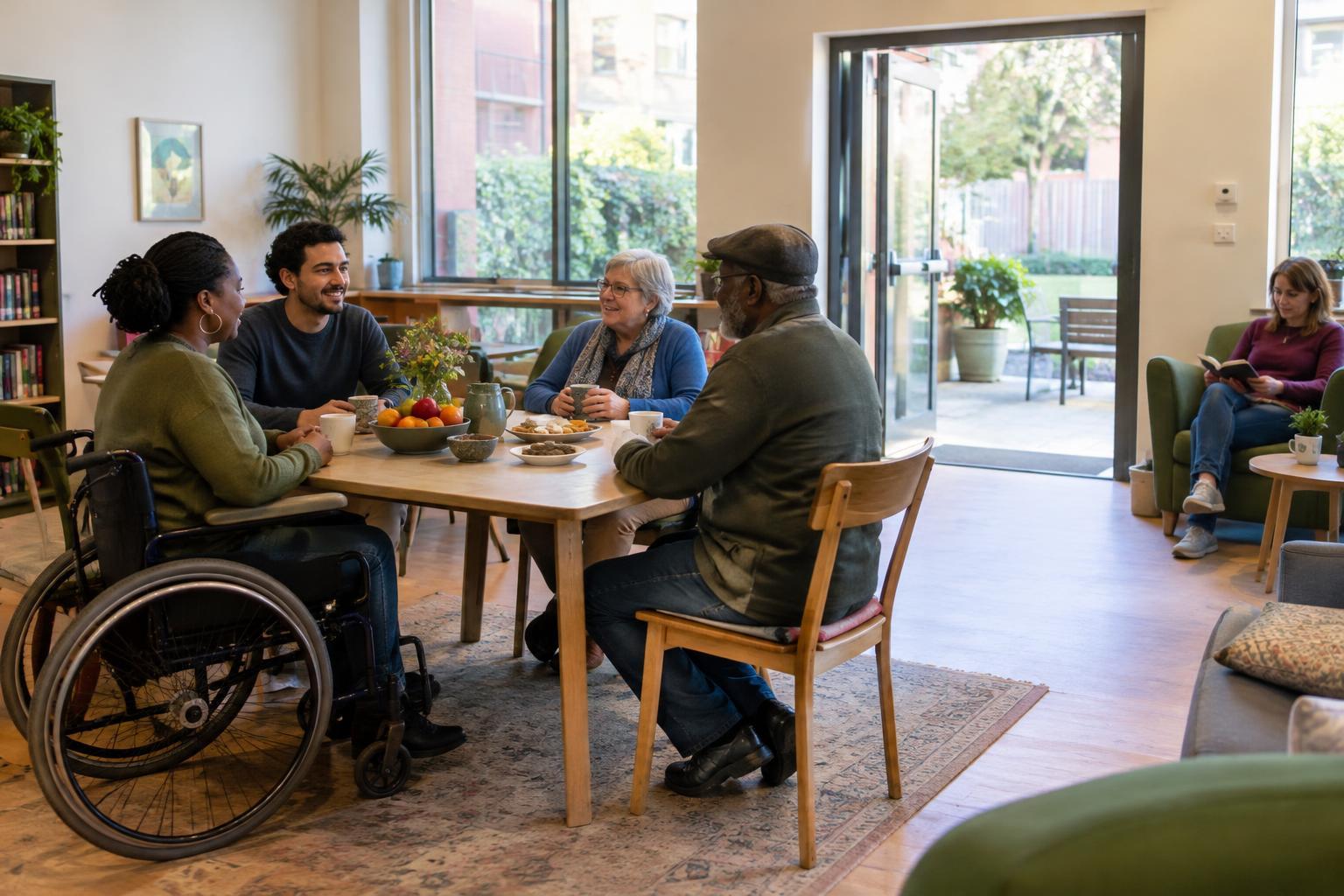
Pay attention to how established groups use the space. Friends catching up is part of community life, but they can leave little room for someone new. Invite regular attendees to leave open seats, explain inside references and include newcomers in conversations about the activity. The goal is not to appoint a stranger as someone’s companion. It is to make the room easier to enter socially.
Make it easy to return
Before people leave, share what happens next: another meeting, a way to hear about future events or a simple way to contribute. Let attendees choose whether to give their contact details. If you invite feedback, ask about practical parts of the experience, such as whether the entrance was easy to find or the activities were clear. That can reveal improvements without asking anyone to explain their personal circumstances.
After the event, reflect with helpers on moments that may have felt uncertain for a first-time visitor. Could someone tell where to go? Was there an easy place to sit? Did each activity offer a clear way in? Small adjustments often make the next gathering more comfortable. A good community event does not require people to arrive with a friend; it gives them the freedom to find their own place.