Start with a small, clear purpose
A low-pressure gathering works best when people know what to expect. Rather than promising a big community event, give it one modest purpose: meeting nearby neighbors, sharing a cup of tea or learning about the shared space. A short drop-in period is often easier to join than an event that asks everyone to arrive at once and stay until the end.
Before making plans, check who manages the space and what rules apply. A building lounge, courtyard or community room may require a reservation or have limits on noise, food and cleanup. Choose a time that does not assume everyone has the same work or care schedule. If you have flexibility, ask a few neighbors which times might work, while accepting that no single time will suit everyone.
Make the space easy to enter and use
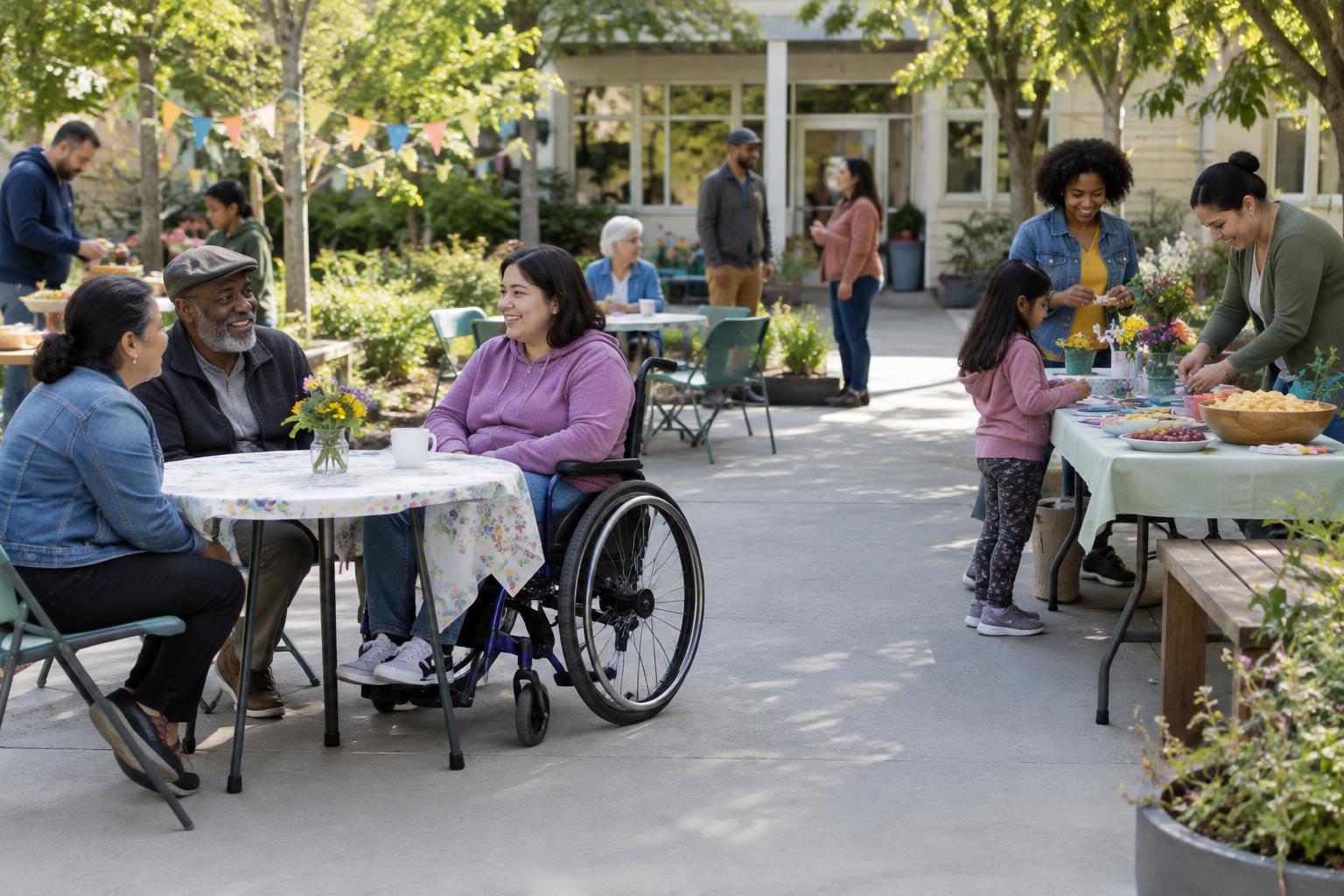
Visit the space with a guest’s experience in mind. Is the entrance easy to find? Is there a step-free route, room to move between furniture and a place to sit without having to ask? Check whether accessible toilets are available and whether signs or directions will be needed. Share relevant details in the invitation so people can decide whether the space works for them; avoid calling a venue accessible if you have not checked what that means in practice.
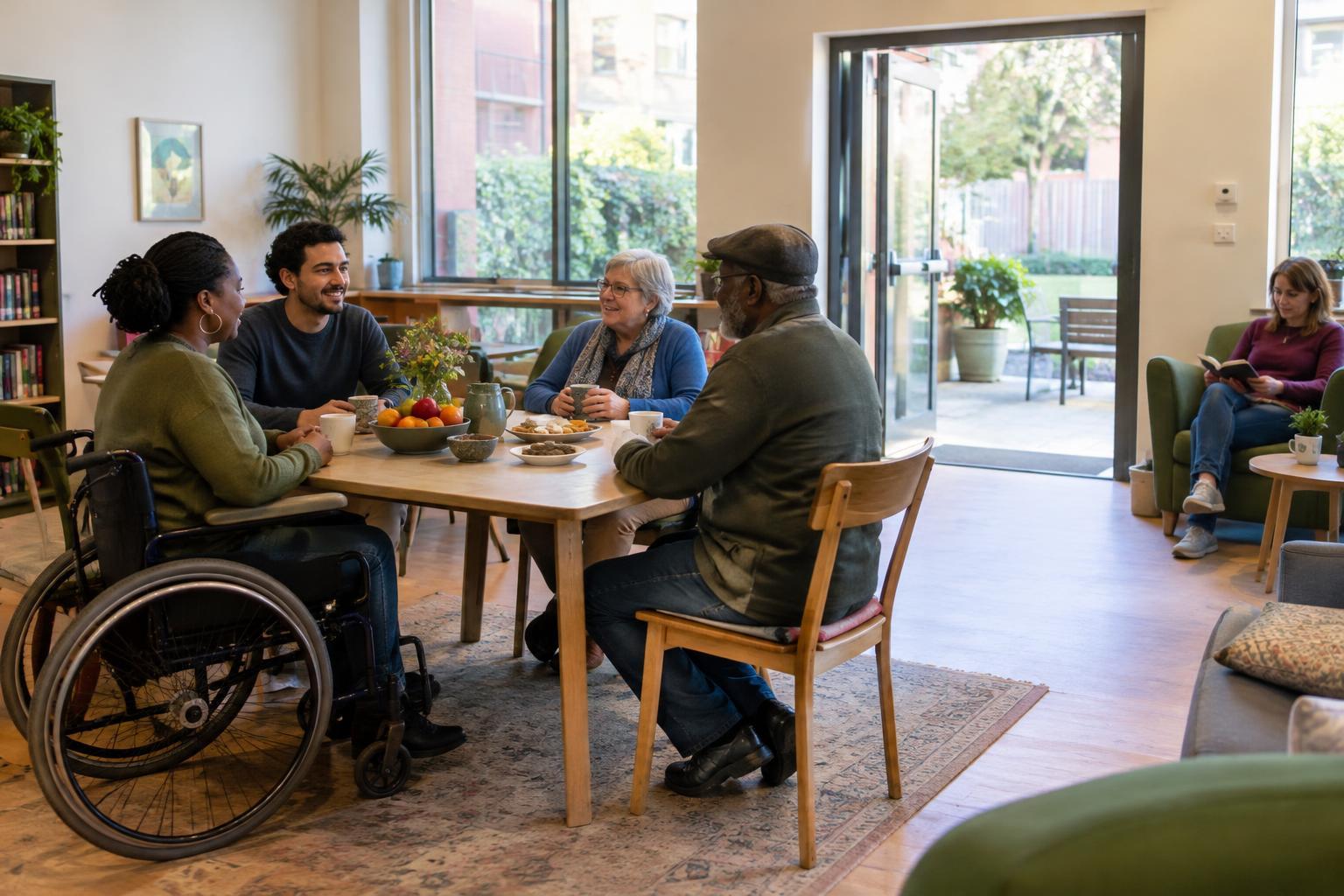
Arrange seating so conversation is possible without making one large circle feel compulsory. Leave clear paths, offer seats away from the busiest area and keep music off or low enough that people can talk comfortably. If refreshments are available, place them where guests can reach them without navigating a crowd. Labels for ingredients can help people make their own choices, but no one should feel expected to eat or explain a dietary need.
Write an invitation that removes guesswork
A useful invitation says where and when to come, how to find the entrance, what will happen and whether guests can drop in briefly. Mention any costs, or say clearly if there are none. For example, you might describe the event as a casual hour for neighbors to chat, with chairs, water and an optional shared activity. Let people know they can come alone, bring someone or simply stop by to look around.
Share the invitation through channels neighbors already use, such as a noticeboard and a building message group, if permitted. Keep the wording straightforward and avoid assuming everyone celebrates the same holidays or speaks the same first language. Offer a way to ask questions before the gathering. You can also invite people to mention an access need, while making clear that they do not have to disclose personal details to attend.
Give people choices once they arrive
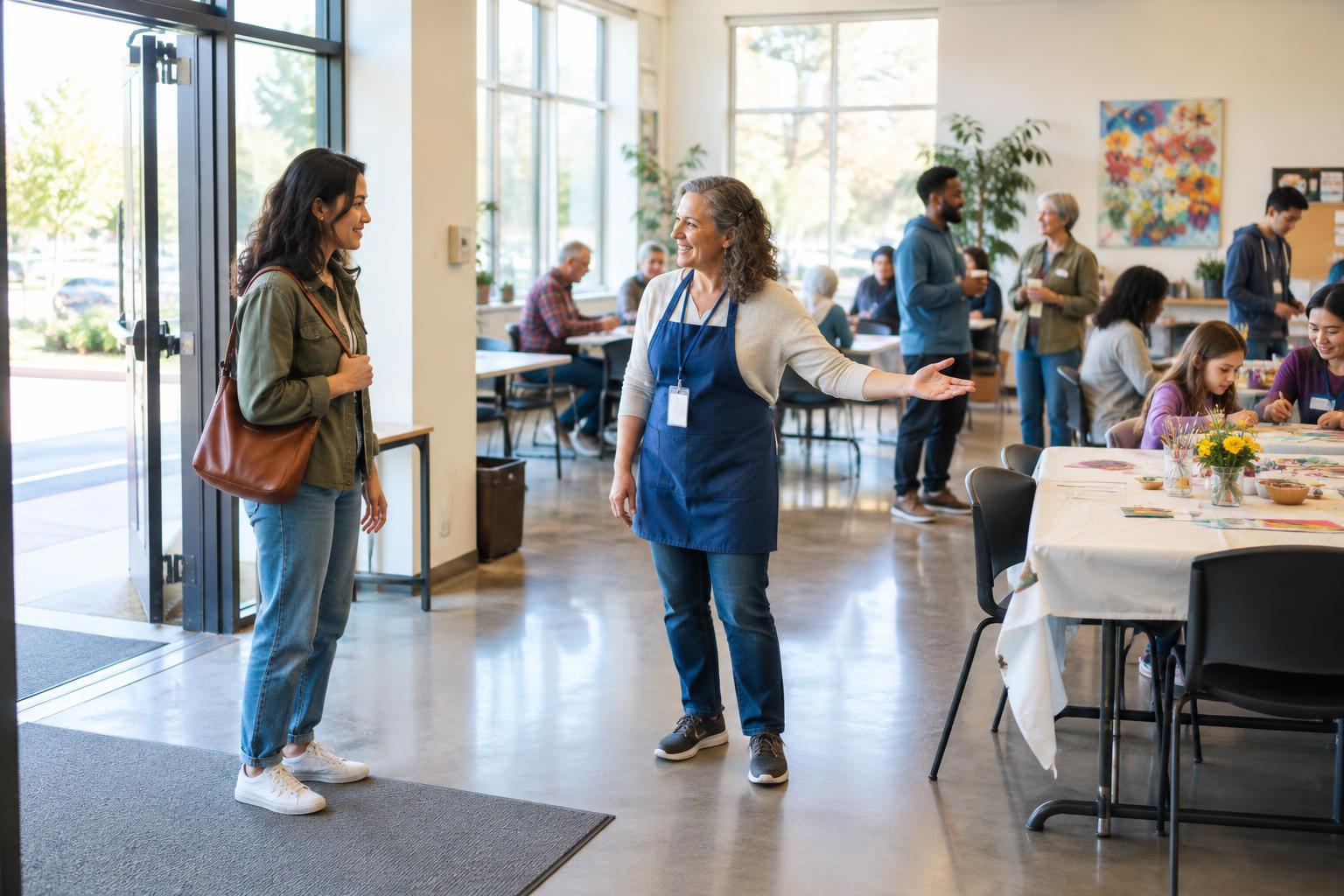
A warm welcome can be simple: greet each person, point out the seating and refreshments, then let them choose what to do. Name tags can help, but make them optional. Avoid asking newcomers to introduce themselves to the whole group or explain how long they have lived nearby. Some guests may enjoy conversation; others may prefer to listen first or stay for only a few minutes.
One optional activity can make it easier to connect without forcing conversation. Try a table with blank cards asking, “What is one thing you enjoy about this neighborhood?” or a shared map where people can mark favorite public places. Offer pens and a quiet place to sit, and make it fine to skip the activity. If a conversation becomes difficult or one person dominates, gently redirect it toward the gathering’s purpose and make space for others to speak.
End gently and leave the door open
Near the end, let guests know when the gathering will finish so departures feel natural. Thank people for coming without pressing them to sign up for anything. A small cleanup plan, agreed with any co-hosts beforehand, keeps the work from falling unexpectedly on guests or the people who manage the space.
If neighbors seem interested in meeting again, ask what kind of gathering they would actually welcome rather than assuming this one should become a regular event. Offer an optional way to stay in touch, and get permission before sharing anyone’s contact details or photos. The measure of a good gathering is not how long everyone stays or how many new friendships form. It is whether people had a comfortable opportunity to take part on their own terms.