Invite people before the design takes shape
Whether you are planning a shared room, a workplace entrance or a community event, it is easier to consider different access needs before the main decisions are fixed. Start by identifying which parts of the experience people will use: finding information, arriving, moving around, taking part and leaving. Then invite people with relevant lived experience to help you explore those steps. Do not wait until you have a nearly finished design and ask for approval.
Reach beyond the people who usually attend meetings or respond to surveys. A single participant cannot speak for everyone with a similar disability or access need. Depending on the project, you may need perspectives from people who use mobility aids, people who navigate without relying on sight, people who need clear or quiet communication, and people whose access needs change from day to day. Consider how age, language, caring responsibilities and cost may also affect participation.
Make participation accessible from the invitation onward
An invitation should say what the project is, what decisions are still open, what participation involves and how the input will be used. Give people a clear way to ask questions or request adjustments without having to explain more personal information than necessary. Offer more than one way to contribute, such as a conversation, a written response or a walk-through. No single format will suit everyone.
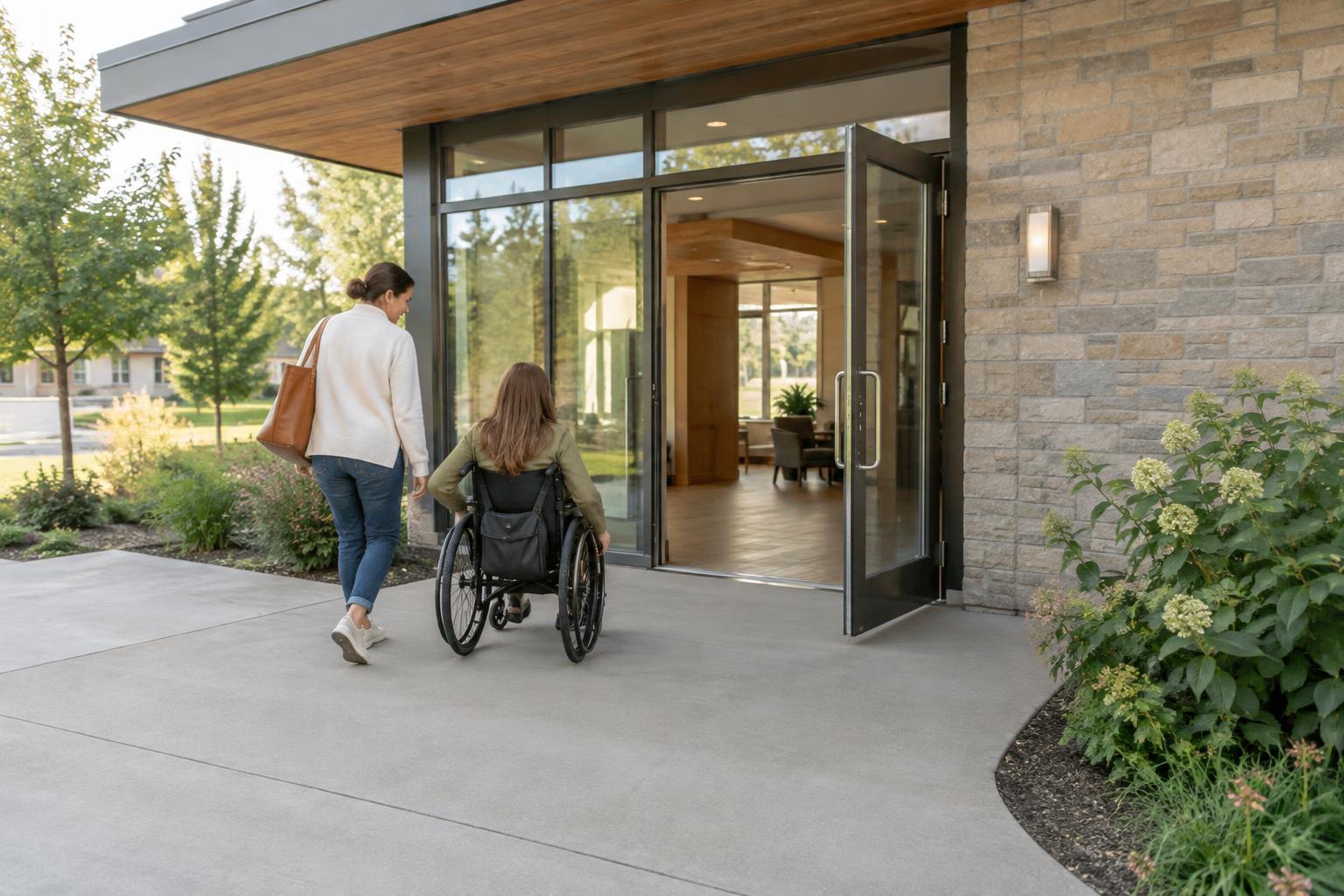
For an in-person session, check the route into the venue, seating, toilets, lighting, sound and available quiet space. For an online session, share materials in advance in usable formats and explain how people can participate by voice or text. Build in breaks and allow enough time for responses. If you can offer payment, travel support or reimbursement, explain the arrangements early; asking people to contribute expertise should not depend on their ability to absorb the costs.
Ask about experiences, not just preferences
Broad questions such as “Do you like this layout?” can hide useful detail. Instead, ask participants to describe what they would try to do, where they might hesitate and what would help them continue. A simple scenario can make this concrete: “You are visiting for the first time and need to find the meeting room. What information would you look for?” Discuss the signs, surfaces, sounds, instructions and social interactions along the way, not only the final destination.
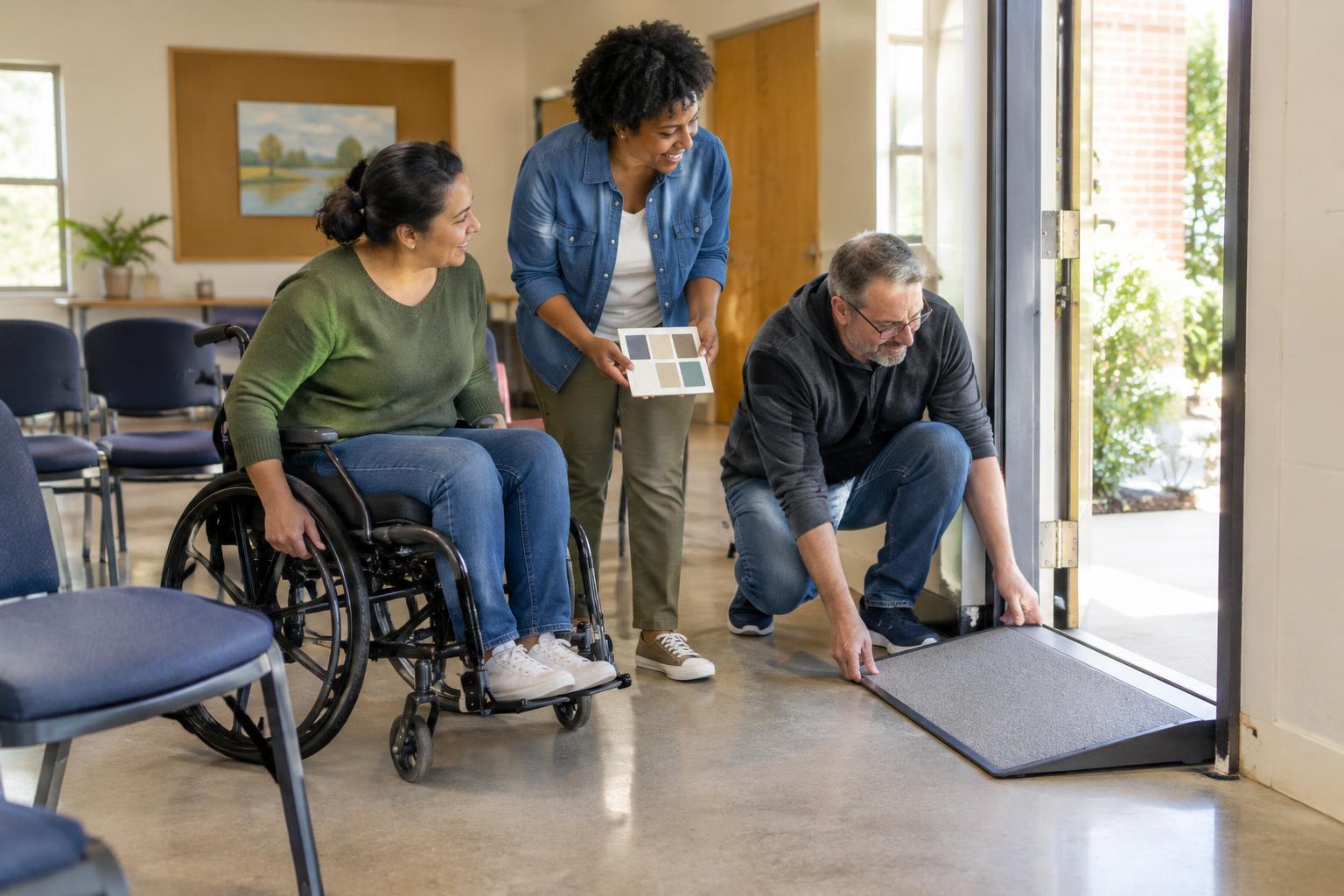
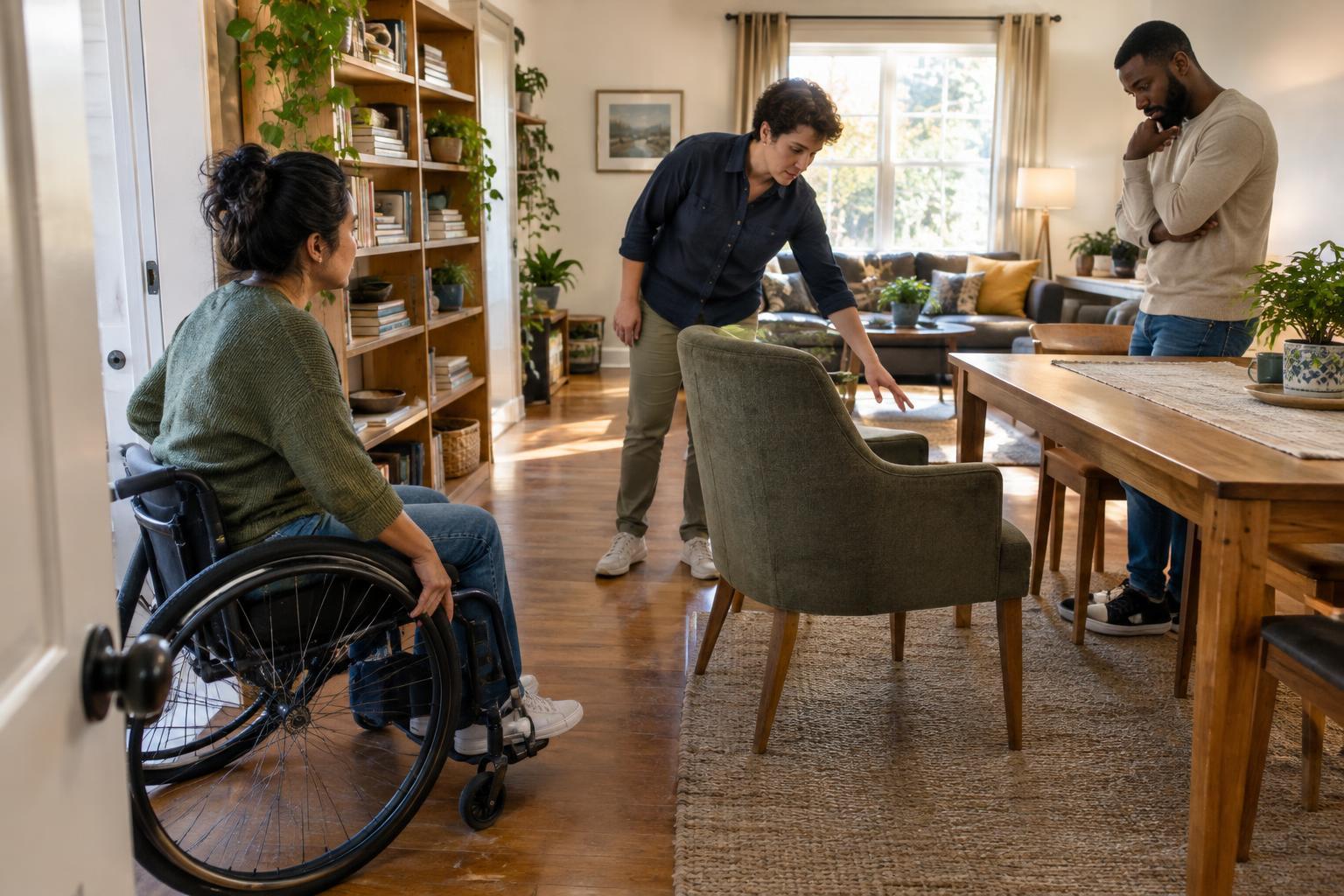
Show ideas in forms people can examine, whether that means a plain-language description, a floor plan that can be explained aloud, a sample sign or a temporary arrangement of furniture. Invite participants to point out both obstacles and features that work well. Avoid asking anyone to demonstrate a difficulty for an audience. People should be able to decline a question, take a break or suggest another way to share their experience.
Work through differences without seeking one perfect answer
Feedback may reveal competing needs. A lively social area may help some people feel welcome while making conversation difficult for others. A wide, open route may support easy movement but offer too few landmarks for someone finding their way. Treat these differences as design questions to investigate rather than reasons to dismiss a participant’s view.
Look for choices that give people more than one usable option: a clear main route alongside places to pause, information available in both visual and spoken forms, or a quieter area near a shared activity. When a compromise is unavoidable, explain the constraints and ask affected participants to review the proposed solution. Keep a record of the issue, the options considered and what still needs testing. This helps a team avoid treating the loudest or most familiar voice as the deciding one.
Close the loop and keep learning
Before a session ends, say what will happen next and when participants can expect an update. Afterwards, share a concise account of what you heard, which changes you plan to make and which suggestions you cannot take forward yet. Explain the reason for those decisions without identifying anyone who has not agreed to be named. Giving people a chance to correct your summary can prevent a misunderstanding from becoming part of the design.
If possible, invite participants back to try a prototype or review the finished space or service. A drawing cannot reveal every difficulty that appears in use. Leave a simple way for people to report barriers after launch, and assign someone responsibility for reviewing that feedback. Involving people with different access needs is not a single consultation to complete; it is a way to make better decisions throughout a project.