Start with what you need to do
An accessibility adjustment is a change that helps you book, attend or participate in an appointment. It might be a step-free route, a place to sit while waiting, information in a format you can use, an interpreter or extra time to communicate. The most useful request describes the practical change you need. You do not have to begin with a detailed account of your health or personal circumstances.
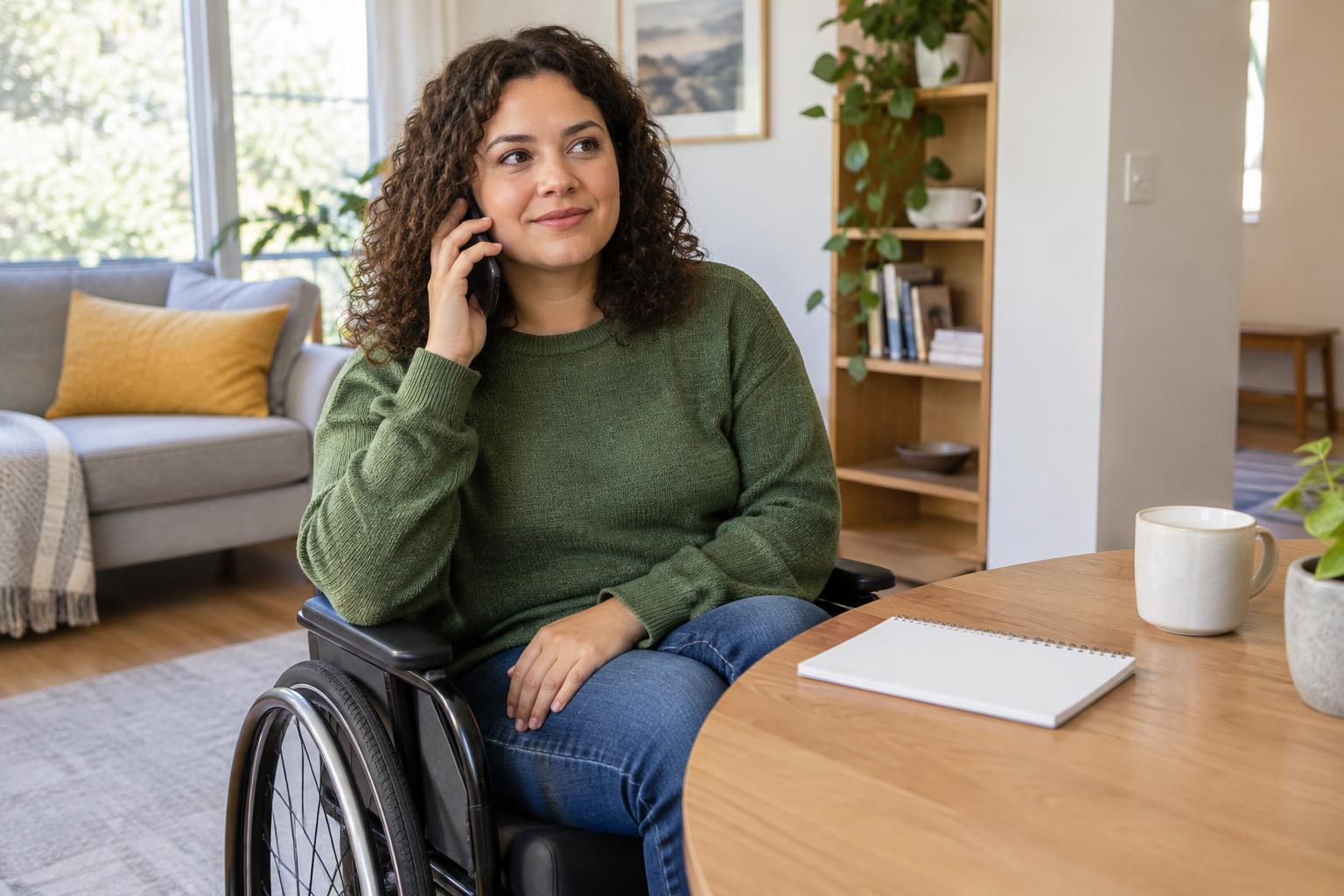
Before contacting the booking team, think through the appointment from start to finish. Can you use the booking method? Will you need directions to an accessible entrance? Is there anything about the waiting area, check-in process or conversation itself that could prevent you from taking part? Choose the points that matter most to you. A short list can make it easier to explain your needs, especially if you are booking by phone.
Make a clear request at booking
If you can, raise the request while choosing the time and location rather than waiting until you arrive. You might say, “I’d like to book an appointment, and I need step-free access from the entrance to the meeting room. Is that available at this location?” For a communication adjustment, try, “Please send the appointment details by email rather than calling me,” or “I need a little extra time to read and respond to questions.” These requests name an action the team can check.
You can also ask which booking channel works best for adjustments. If an online form has no suitable field, a phone number or email address may let you explain what you need. If someone else books on your behalf, agree beforehand what they may share. A simple description of the adjustment may be enough; you can decide whether any additional personal information is relevant.
Check the details that affect your visit
An answer such as “the building is accessible” may not tell you everything you need to know. Ask about the part of the visit that matters to you: “Which entrance has step-free access?” “Is there a lift to the appointment room?” or “Can I wait somewhere quieter and be told when it is my turn?” For a remote appointment, you might ask what platform will be used and whether captions, chat or another way to participate is available.
It is also reasonable to ask who will arrange an adjustment and whether you need to do anything else. For example, an interpreter or a particular room may need to be scheduled in advance. If the first person you speak to cannot confirm the answer, ask when and how someone will follow up. This keeps the conversation focused on a workable plan rather than an uncertain promise.
Confirm the arrangement and prepare a fallback
Before ending the booking conversation, repeat the essentials: the date, time, location or joining method, and the agreed adjustment. If possible, request written confirmation in a format you can use. A brief note such as “Your appointment is at 10:00, and the step-free entrance is on the east side” can help both you and the organisation check the same details later. Keep a copy where you can find it on the day.
Plans sometimes change. If an adjustment cannot be provided as requested, ask what alternatives are available before deciding what works for you. Another room, appointment time, location or remote option may solve the problem, but you are best placed to judge whether it meets your needs. If the arrangement is especially important, checking it again shortly before the appointment can prevent an avoidable surprise.
Keep the conversation practical and respectful
You can be direct without apologising for the request. A useful structure is: “I have an appointment to book. I need [specific adjustment] so I can [take part in the appointment]. Can you confirm whether that can be arranged?” If a question feels too personal, you can bring the conversation back to logistics: “What you need to know for the booking is that I require written instructions.”
If you are unsure what would help, describe the barrier and ask about options: “I find a busy waiting room difficult to use. Is there another place I could wait?” Booking staff may not know the answer immediately, but the question gives them something concrete to investigate. The goal is not to use perfect wording. It is to reach a shared understanding of what you need and what will be in place when the appointment begins.