Start with the people and the space
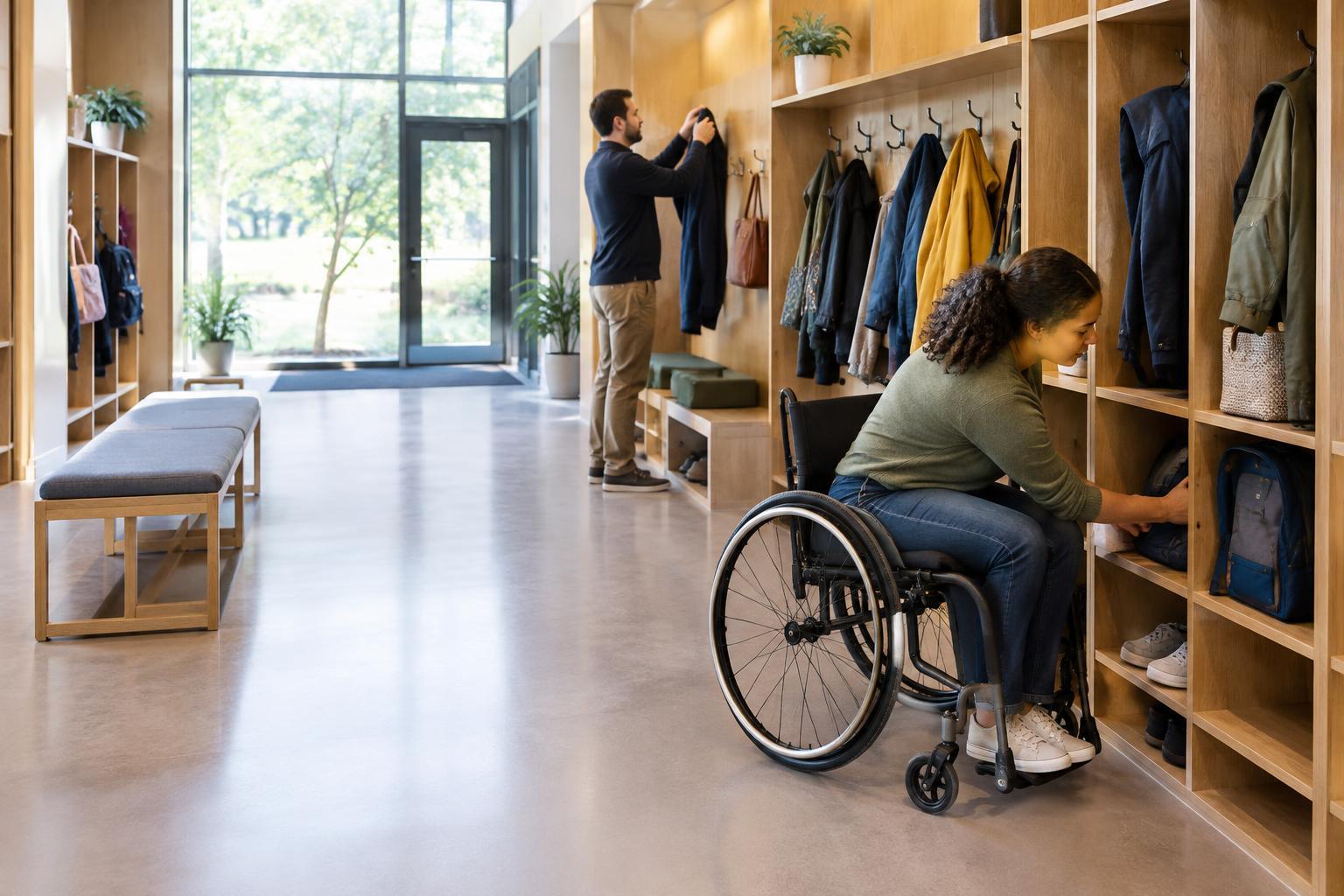
Flooring decisions are often framed as a choice between appearance and durability. In a welcoming space, the more useful question is how the floor will work for everyone who uses it. Someone using a walker may need a firm, even surface. A wheelchair user may notice how much effort it takes to roll across a room. Someone carrying a child or navigating with limited vision may benefit from predictable footing and clear changes between areas.
Walk through the space at the times and in the ways it is normally used. Where do wet shoes enter? Where are drinks prepared or spills likely? Which routes carry the most foot or wheeled traffic? A bathroom, entrance and quiet room may need different solutions. Listing those conditions before choosing a material helps prevent one appealing feature, such as softness or shine, from driving the whole decision.
Look for traction without creating resistance
Slip resistance matters most when a surface may be wet or contaminated, but more texture is not always better. A heavily textured floor can be harder to clean and may increase rolling effort. A very smooth finish may feel easy to move across when dry yet become less secure after a spill. Consider how a product performs in the conditions of the room, not just how it feels to a hand in a showroom.
Ask for a sample large enough to experience underfoot, if possible. Try it with the shoes and mobility equipment people commonly use in the space. Compare it when dry and according to the supplier’s guidance for assessing wet use. Treat any published slip rating as one piece of information rather than a guarantee: footwear, cleaning products, wear and water can all affect how a floor feels in practice.
Keep routes firm, even and easy to cross
For wheeled mobility, a firm, stable surface is usually easier to cross than a soft one that compresses. If carpet is preferred for comfort or sound, a low, dense pile with a firm backing is generally more practical for rolling than a deep or loosely laid carpet. Hard surfaces can make movement easier, but their joints and edges still deserve attention. Wide gaps, raised tiles and damaged boards can interrupt an otherwise usable route.
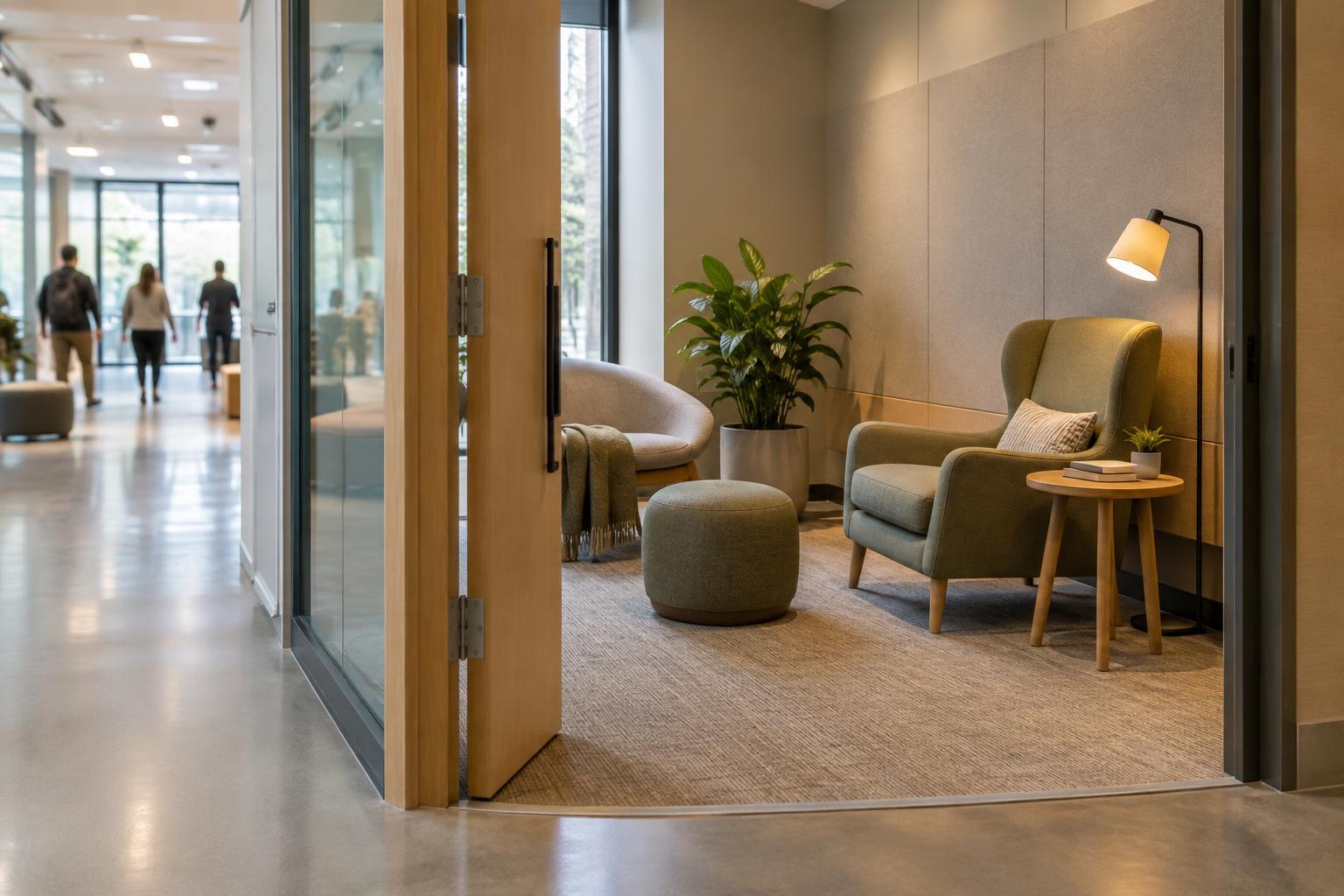
Transitions are as important as the flooring itself. A small ridge between rooms can catch a toe, cane tip or wheel. Where different materials meet, aim for a secure, smooth change and check doorways after installation rather than relying only on plans. Loose rugs and curled mat edges can introduce obstacles; entrance mats should sit securely and be suited to the traffic they receive. In shared spaces, clear contrast between a floor and nearby walls or fixtures may also help people understand the layout.
Choose maintenance the space can actually support
A floor that performs well on installation day may become less welcoming if it needs care that the household or team cannot reliably provide. Grout lines can collect dirt; some finishes need particular cleaning products; and textured surfaces may take more work to clean thoroughly. Before committing, ask what routine cleaning, stain removal and repairs involve. Consider who will do that work, what equipment is available and how long a damp floor might remain out of use.
Maintenance also affects safety. Residue from an unsuitable cleaner can change how a surface feels, while worn finishes, loose edges and cracked pieces can create new problems. Follow the flooring manufacturer’s care guidance and make regular visual checks part of normal upkeep. Choose a material that can be repaired or replaced in a manageable way, especially in entrances and other high-use areas.
Make the final choice with real use in mind
Narrow the options to a few that suit the room’s moisture levels, traffic and cleaning routine, then compare their trade-offs. One surface may offer good traction but be tiring to roll across; another may be easy to clean but require prompt attention to spills. There is rarely a single best floor for every person and every room. If several people share the space, invite them to describe what makes movement easier or harder without expecting one person to speak for everyone.
Before purchase or installation, confirm the details that samples cannot show: the condition of the subfloor, the height of adjoining surfaces and how edges will be finished. Afterward, observe how the floor works in ordinary use and address problems early. Inclusive flooring is not just a material choice. It is a combination of suitable surfaces, careful installation and upkeep that helps people move through a space with confidence.