Plan the whole trip, not just the vehicle
A route may look straightforward on a map but still include a long walk, stairs, an uneven stop or a tight connection. Before setting out, look at each part of the trip: the way to the first stop, the waiting area, boarding, any transfers and the path from the final stop to your destination. This matters whether you use a wheelchair, scooter, cane or walker, or find standing and walking difficult for other reasons.
Transit agencies may provide stop details, station maps, accessibility notices or a customer-service number. When that information is available, check the features that matter to you, such as step-free access, working lifts, places to sit and the distance between platforms. If an essential detail is unclear, ask a specific question: “Is there a step-free route between these two platforms?” is often more useful than asking whether a station is accessible.
Choose stops that work for you
The closest stop is not always the easiest one to use. A stop a little farther away may have a level approach, a better place to wait or a crossing that feels easier to navigate. Consider the surface and slope on the way there, the space available for a mobility aid and where you will be able to stand or sit while waiting. Weather can also change how manageable an otherwise familiar route feels.
If you are trying a route for the first time, allow time to find the correct side of the street or station entrance. Keep the name or number of your stop handy so you can confirm you are in the right place. When possible, identify an alternative nearby stop in advance. That gives you another option if a lift is unavailable, a stop is blocked or the usual approach does not feel workable that day.
Make boarding and riding more predictable
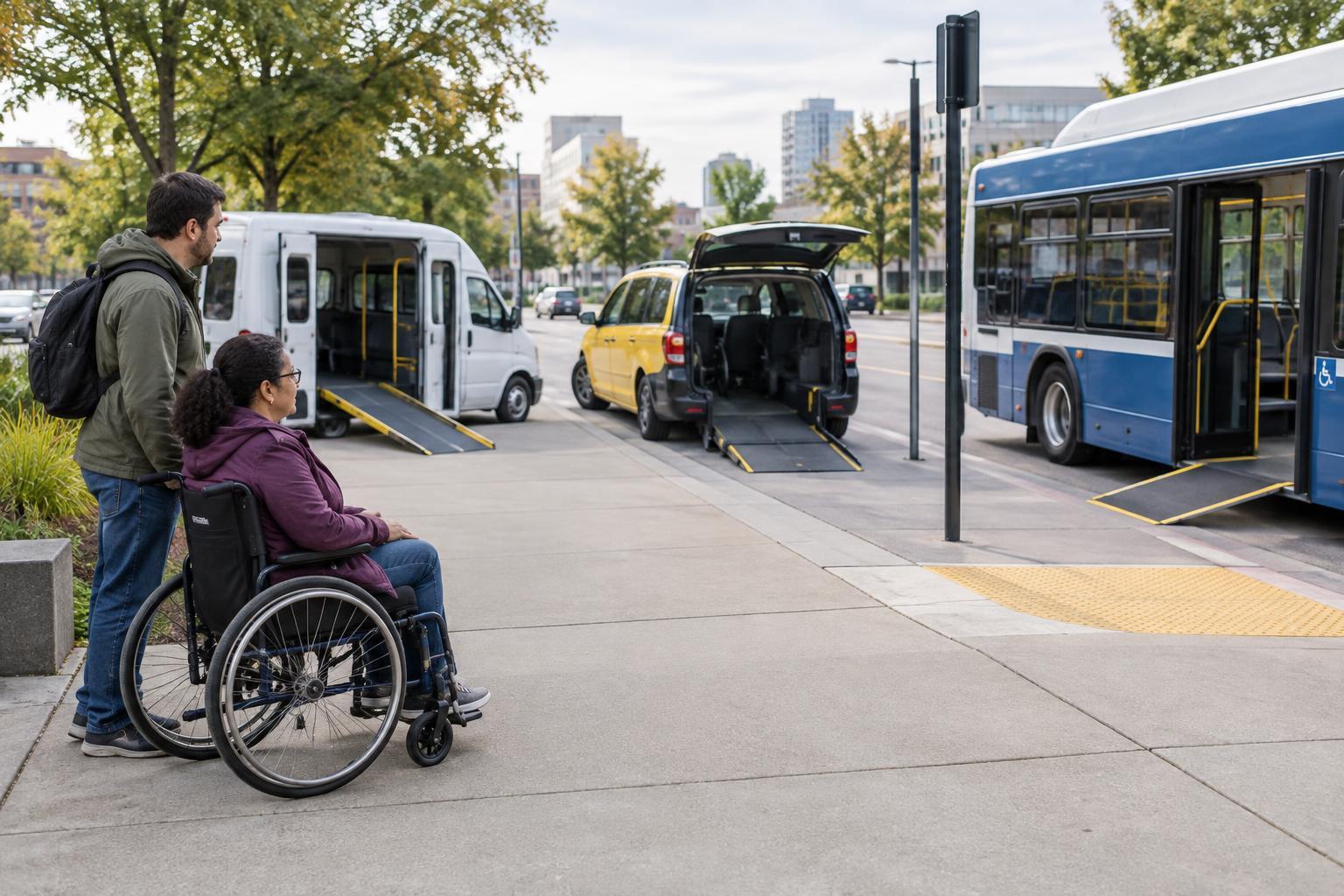
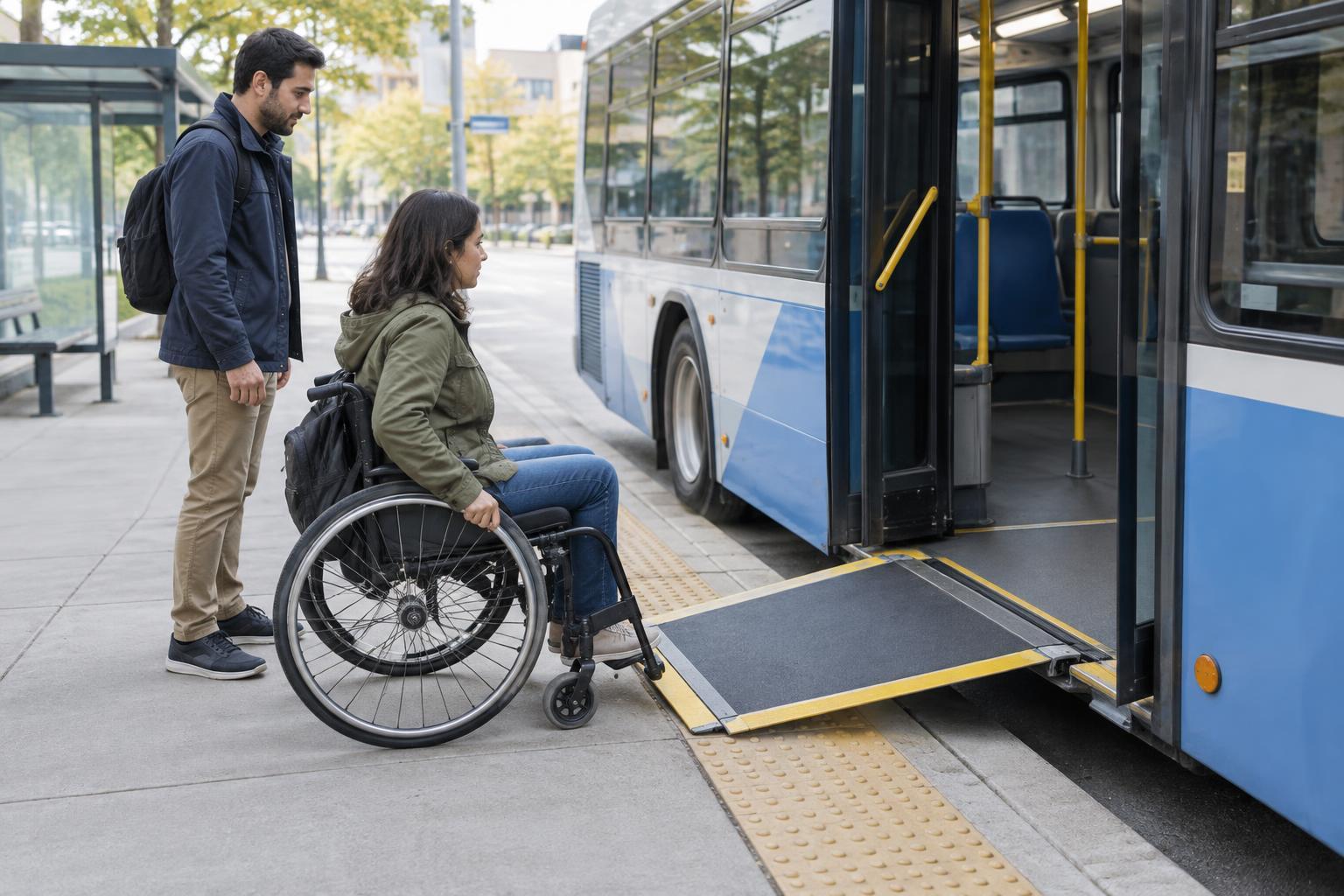
At a bus stop or platform, wait where the driver or operator is likely to see you while staying a comfortable distance from traffic or the platform edge. If you need a ramp, lift, lowered entrance or extra boarding time, signal or ask when it is safe to do so. Procedures differ among transit systems and vehicles, so it is reasonable to ask the operator where to wait or which door to use.
There is no need to hurry to match someone else’s pace. Allow passengers to exit, then take the time needed to board and settle. Once on board, use a suitable seat or designated space if one is available, and position your mobility aid according to the vehicle’s instructions. If you are unsure how a feature works, ask rather than trying to improvise while the vehicle is moving. Before your stop, give yourself time to prepare to leave, without getting up earlier than feels safe.
Build breathing room into transfers
Transfers combine several tasks: leaving one vehicle, finding the next stop or platform, waiting and boarding again. A short connection that works on paper may be stressful if you need an elevator, move at a slower pace or encounter a crowd. Where schedules allow, choose a transfer with enough time to travel comfortably rather than relying on a quick dash.
Look at how the transfer actually works. Do you need to cross a street, change levels or travel between separate stops? Is there a place to pause along the way? Save the next route number and destination so you can check signs without having to remember everything. If you miss a connection, focus first on finding a safe place to wait, then check the next service or ask staff about another route.
Prepare for changes without carrying the whole burden
A small backup plan can make a disrupted trip less overwhelming. Consider keeping your destination address, route details and a way to contact someone available in a form that works for you. A charged phone can help, but a written note may be useful if your battery runs low. If a usual route depends on one lift or entrance, knowing an alternative can help you decide what to do if it is out of service.
Preparation should not be mistaken for a requirement to solve every barrier alone. Clear information, usable stops, reliable equipment and respectful assistance are important parts of accessible transit. You can ask a driver, station worker or fellow passenger for a specific kind of help while remaining in charge of your own decisions. A workable trip is one that lets you travel at a pace and in a way that meets your needs, not one that requires you to push through avoidable risks.