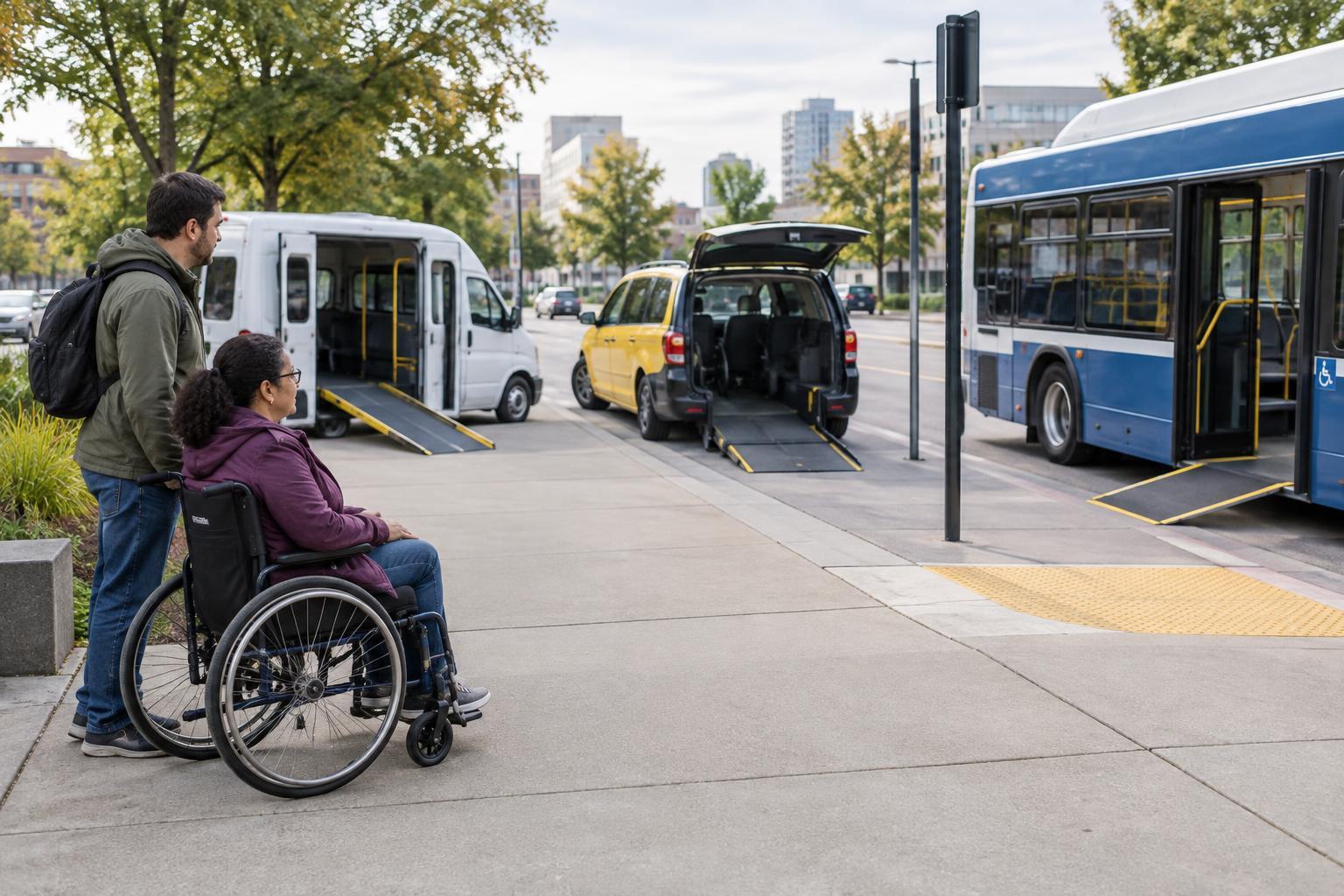
Start with the whole journey
A step-free route is more than a destination with an accessible entrance. It includes the journey from your starting point to that entrance, any crossings along the way, and the path you will take once inside. A short errand may involve a curb ramp, a narrow sidewalk, a heavy door and a checkout area that is difficult to reach. Thinking through the whole journey can reveal obstacles before they become stressful surprises.
Start by naming what you need from the route rather than relying on the label “accessible.” For one person, avoiding steps is the main concern. For another, a steep slope, uneven surface, long distance without a place to rest, or door that is hard to open may matter just as much. If you are planning with someone else, ask what would make the trip workable for them instead of guessing.
Check the entrance you will actually use
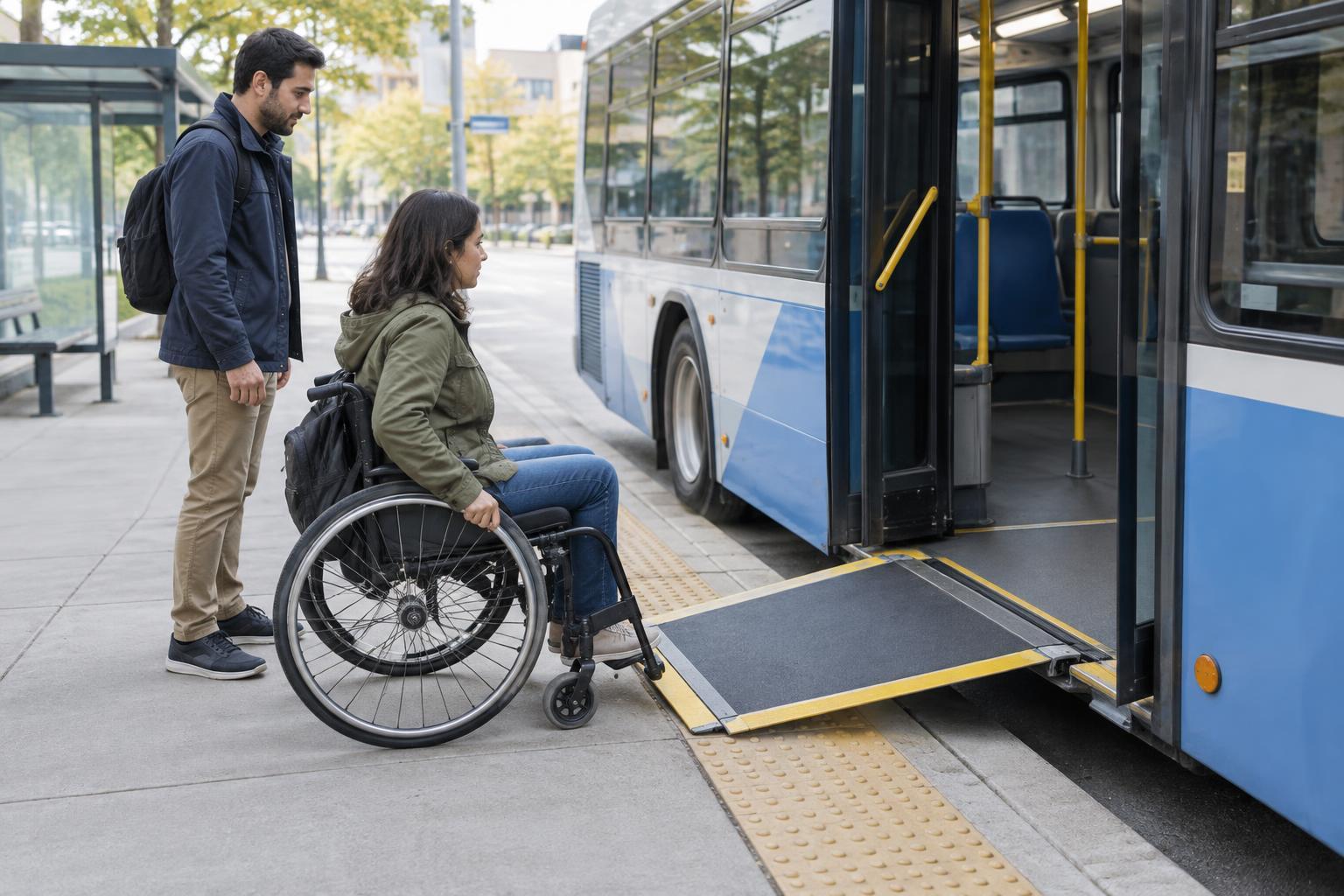
The most visible doorway is not always the step-free one. Before leaving, look for entrance details on the destination’s website or map listing, if available. Useful details include the location of the step-free door, whether it is open during the hours you intend to visit, and whether reaching it requires a ramp, lift or route around the building. Photos can offer clues, but they may not show door thresholds or changes made since they were taken.
If the entrance is unclear, a brief call or message can help. Ask a specific question such as, “Is there a step-free way in from the sidewalk, and which door should I use?” If a lift is involved, you can also ask whether there is another step-free entrance if the lift is unavailable. Clear answers are more useful than a general assurance that the building is accessible.
Look closely at sidewalks and crossings
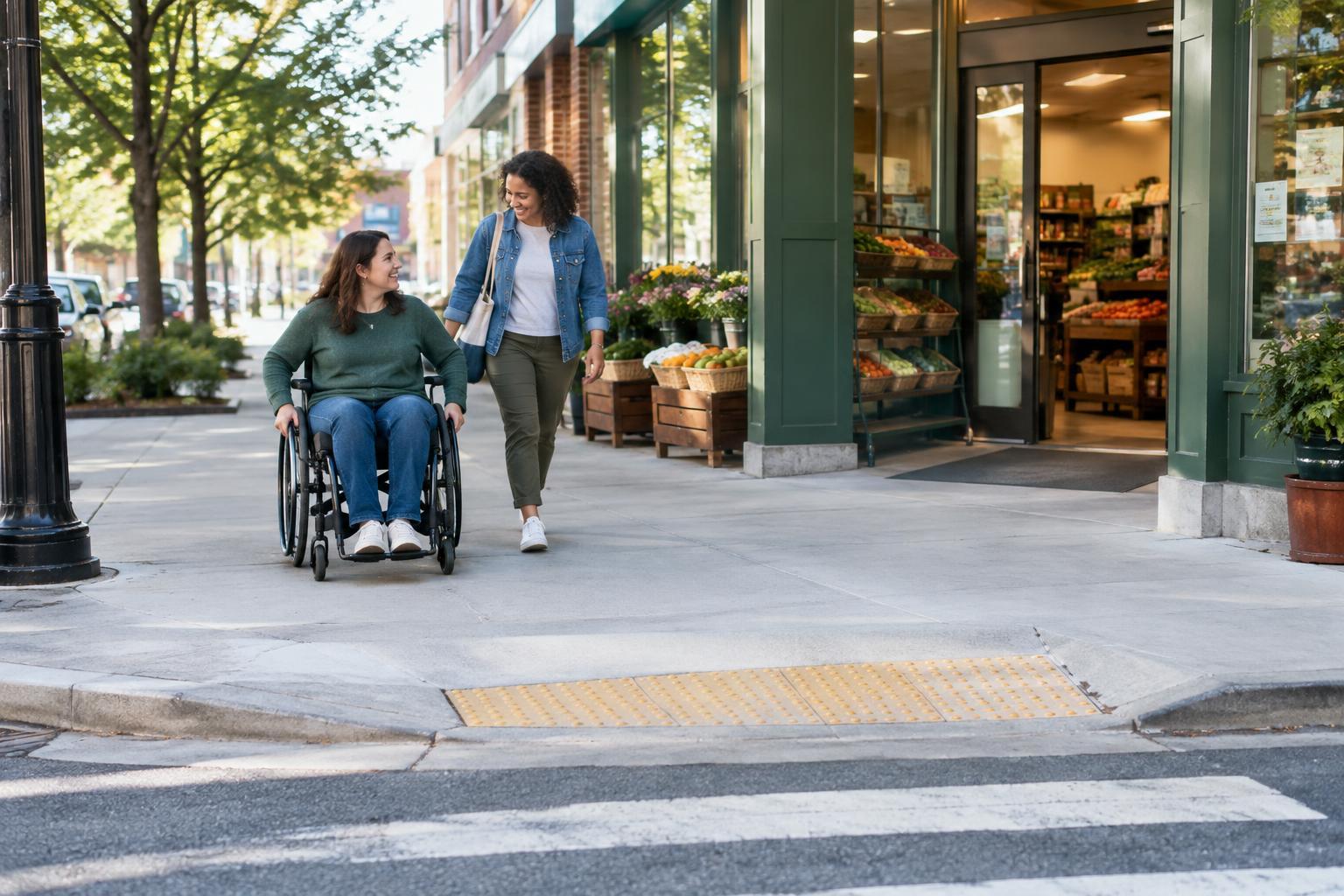
On a map, two routes may look almost identical. On the ground, one may have curb ramps at each crossing while the other ends at a curb. Check where you would cross streets, not just where the sidewalks appear to run. A crossing may be easier to use when its curb ramps connect directly to the path you need and leave enough space to turn without entering traffic.
Sidewalk width and surface also matter. Outdoor seating, bins, parked vehicles, temporary signs and construction can reduce the clear path. Broken paving, loose gravel or a pronounced slope may make a route difficult even without steps. Conditions can change, so treat any advance check as a guide rather than a guarantee. If possible, identify a nearby parallel street or another crossing before you set out.
Build in a backup that still meets your needs
A useful backup is specific. Instead of deciding that you will “find another way,” note an alternate entrance, crossing or destination that serves the same purpose. If you are visiting several places, consider which stops are flexible. You might do the most important errand first so that a blocked route later does not undo the whole trip.
Think about the effort a detour would require. A backup several blocks away may be reasonable for some people and impractical for others. Weather, fatigue, carrying purchases and the need for a restroom can change what feels manageable. It is fine to shorten the trip, use a different service or return another day. A plan is there to support your choices, not to pressure you to finish every stop.
Make the plan easy to use and improve
Keep the key details together in a form that works for you: the intended route, the correct entrance, a backup crossing and any questions still unanswered. A short note may be easier to consult during an errand than several open map pages. If you are traveling with someone, agree in advance how you will handle a blocked path so that decisions do not fall on one person in a busy or uncomfortable spot.
Afterward, note what worked and what did not. Perhaps a quieter crossing was worth the extra distance, or an entrance was harder to find than expected. These observations can make the next trip easier, while leaving room to check again when conditions might have changed. Step-free planning does not remove every obstacle, but it can give you clearer options and more control over an ordinary day out.