Notice the whole doorway task
Using a doorway involves more than fitting through the opening. A person may need to approach it, find the handle, hold the door open, cross a threshold and turn or close the door behind them. Each step can be harder when someone uses a mobility aid, has limited grip, carries a bag or needs extra time to move.
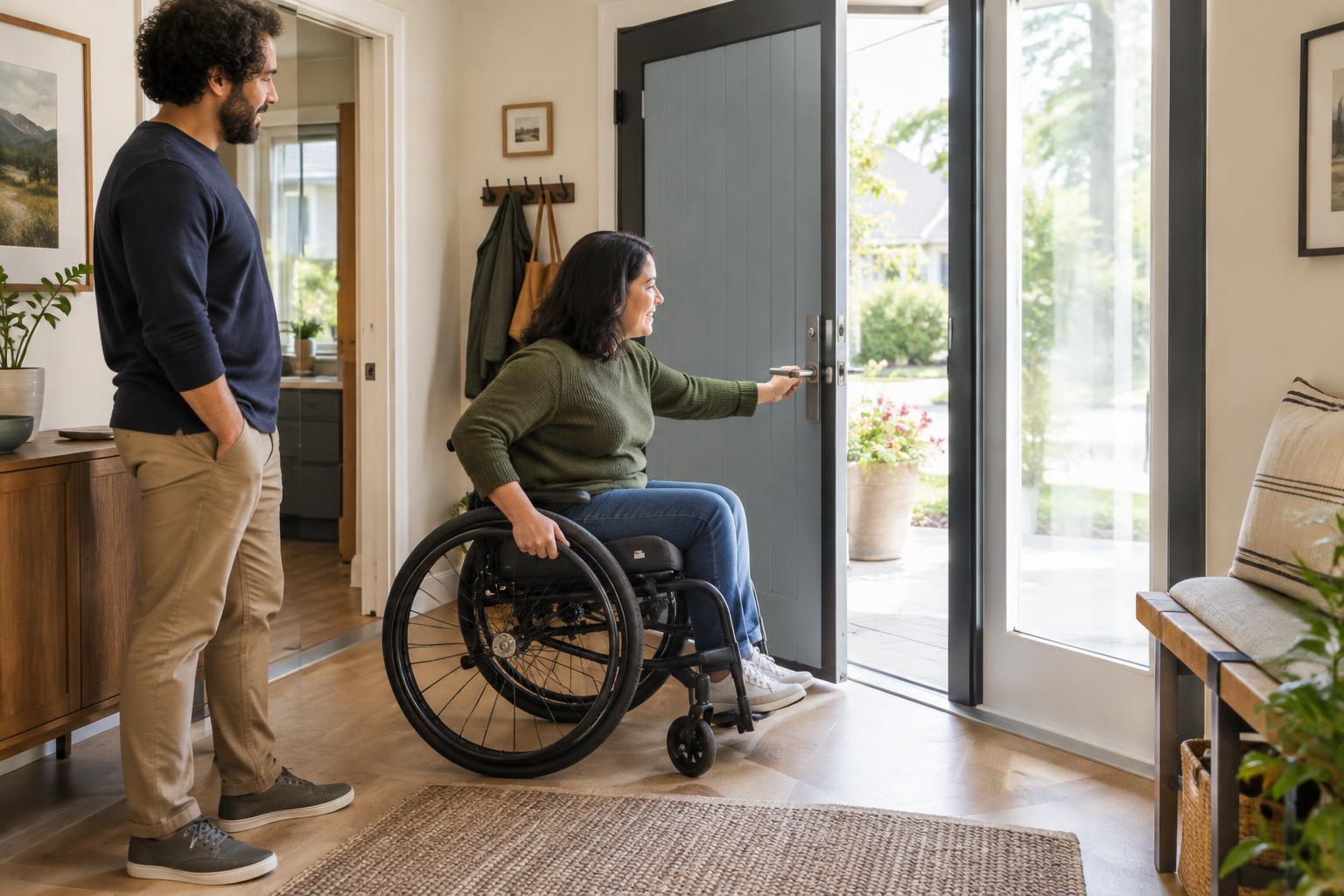
Watch how the doorway works during ordinary routines. Is there room to pause beside the door without blocking a walkway? Can someone reach the handle while seated or while holding something? Does the door swing into the space where they need to stand? Ask people who use the entrance what feels awkward rather than assuming the most visible obstacle is the main one. A change that helps one person may create a new difficulty for another.
Make approaching and opening simpler
Start with changes that do not require new hardware. Move shoes, deliveries and furniture away from both sides of the doorway. Give people somewhere nearby to set down a bag or parcel before opening the door, without placing that surface in the route. Check whether a mat slides, bunches up or catches a foot or wheel. If it does, a flatter, secure option may work better.
A round knob can be difficult to turn when gripping or twisting is painful. A lever-style handle may be easier for some people, provided it is comfortable to reach and use. A heavy door or one that closes quickly can still be difficult, whatever handle it has. If you are considering changes to a closer, lock or exterior door, check what is permitted in the building and seek appropriate installation help. Avoid holding open a door that needs to remain closed for safety or security.
Small adjustments to household habits matter too. Let someone finish passing through before stepping forward to help, and ask before taking hold of their mobility aid or belongings. If the door is hard to manage while carrying items, consider whether deliveries or shared supplies could be placed somewhere easier to reach.
Pay attention to thresholds and visibility
A raised strip, uneven flooring or a narrow gap between an open door and nearby furniture can interrupt an otherwise usable route. Notice these points from both directions: entering may feel different from leaving. A suitable threshold change depends on the doorway, the surface and the people using it. Temporary fixes should not slide, create a trip point or prevent the door from closing as intended.
It should also be easy to tell where the opening, handle and edge of the door are. Lighting near an entrance can help, especially when someone arrives with their hands full. Contrast between a door and its surroundings may make its outline easier to distinguish. If a door is partly glazed, a visible marking at a useful height can help people notice the glass. Keep signs and decorations from obscuring handles, locks or controls.
Choose changes with the people who use the space
Try one manageable improvement at a time and check it during a real arrival or departure. A bench that helps someone put down a bag may crowd another person’s turning space. A brighter light may improve visibility but cause glare. Invite feedback from residents and regular visitors, and leave room to revise a solution that does not work as expected.
For a shared entrance, agree on simple practices: keep the approach clear, return items to their storage places and report a sticking door promptly. Where physical changes are restricted, as in some rented or shared buildings, ask the responsible person what options are available before altering fixtures. The goal is not a doorway that looks accessible in isolation, but one that people can use comfortably in the course of everyday life.