Decide what the noticeboard is for
A noticeboard can help neighbors discover activities, ask for help or share useful local information. Before putting one up, decide which of those purposes matters most. A board for events may need dates and locations to stand out; a board for shared resources may need contact details and a clear way to remove outdated requests. A narrow purpose makes the board easier to use and easier to maintain.
Think about who should be able to post and who will see the notices. A board inside a residential building serves a different audience from one in a public venue. If the board belongs to a venue or shared property, ask the people responsible for the space before installing it. Agree on basic boundaries, such as whether commercial advertising, personal requests or notices from outside the immediate area belong there.
Choose a location people can reach
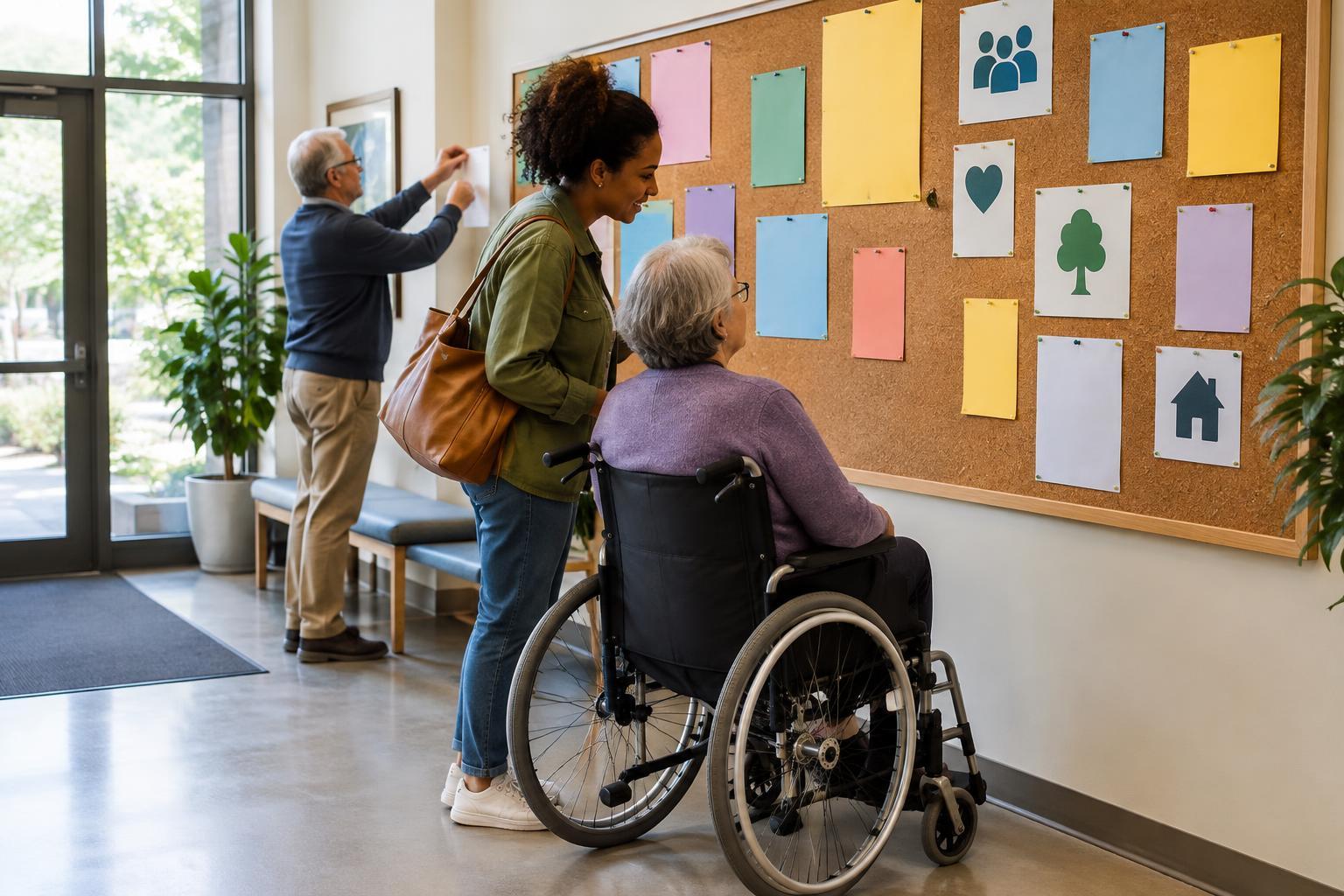
Put a physical board somewhere people already pass, but not where readers would block a doorway or narrow route. Check whether notices can be read from a comfortable position, including while seated. Good lighting, a clear heading and enough space between items can make the board easier to scan. Avoid assuming that one location works for everyone: a board beyond stairs or inside a building with limited opening hours will miss some people.
If the group also uses an online space, decide how the two versions will work together. You might post the same essential details in both places, rather than directing everyone to a website for the full notice. Some people prefer paper; others cannot easily visit the physical board. When neither option reaches everyone, a contact person or a regular printed update may help bridge the gap.
Make each notice easy to understand
Give contributors a simple format to follow: a short title, what is happening, where and when, any cost, and how to ask a question. For an activity, include details that help someone decide whether they can take part, such as whether booking is required or whether they may arrive late. If access information is not yet known, give a way to ask rather than making a broad promise that the activity is accessible to all.
Use plain language and readable text rather than fitting as many notices as possible onto the board. Dates written with the month spelled out are often easier to interpret than numbers alone. A phone number, email address or named contact can be useful, but ask permission before displaying someone’s personal details. For notices written in more than one language, keep the essential information consistent across versions and leave enough room for each to be read.
Set a light-touch routine for upkeep
A crowded board of past events soon becomes hard to trust. Assign one or two people to check it at an agreed interval and remove expired notices. A small area marked for new items can help readers spot changes. If anyone may post directly, provide a visible note about what belongs on the board and when items will be taken down. If posts need approval, explain how to submit them and who checks them.
Keep the routine realistic. Volunteers should not have to investigate every claim on every notice, but they can check that basic details are present and decline posts that expose private information or target others. Decide in advance what to do with a notice that causes concern, and give contributors a way to correct mistakes. When someone steps away from maintaining the board, a short handover note can prevent the whole system from stalling.
Find out who the board is missing
After the board has been in use for a while, ask a few practical questions: Can people find it? Are notices still current? Has anyone tried to post and found the process confusing? Invite feedback in more than one way, such as a brief written note and a conversation with the person maintaining it. Pay particular attention to people who rarely pass the board or who need information in another format.
You do not need to solve every communication gap at once. Changing the board’s position, simplifying the posting instructions or making a small number of paper copies may be enough to improve it. Treat the noticeboard as one route into community life, not the only route. Its value comes from helping people find a next step they can actually take.