Begin with the community need, not a joint project
Two local groups may both want to help people feel connected, yet a shared event is not always the best place to begin. First, ask what residents find difficult: locating a suitable activity, getting to a venue, understanding how to join, or feeling welcome once they arrive. A short conversation with participants, volunteers and nearby groups can reveal whether the gap calls for a new activity or simply a clearer route into something that already exists.
Keep the question specific. “How can more neighbors take part in existing weekend activities?” is easier to act on than “How can we improve community life?” Invite people who face barriers to participation to describe them in their own terms. Offer more than one way to respond, such as a conversation, a written note or feedback through a trusted group. Their input should shape the goal before partners decide what to deliver.
Make a simple map of what already happens
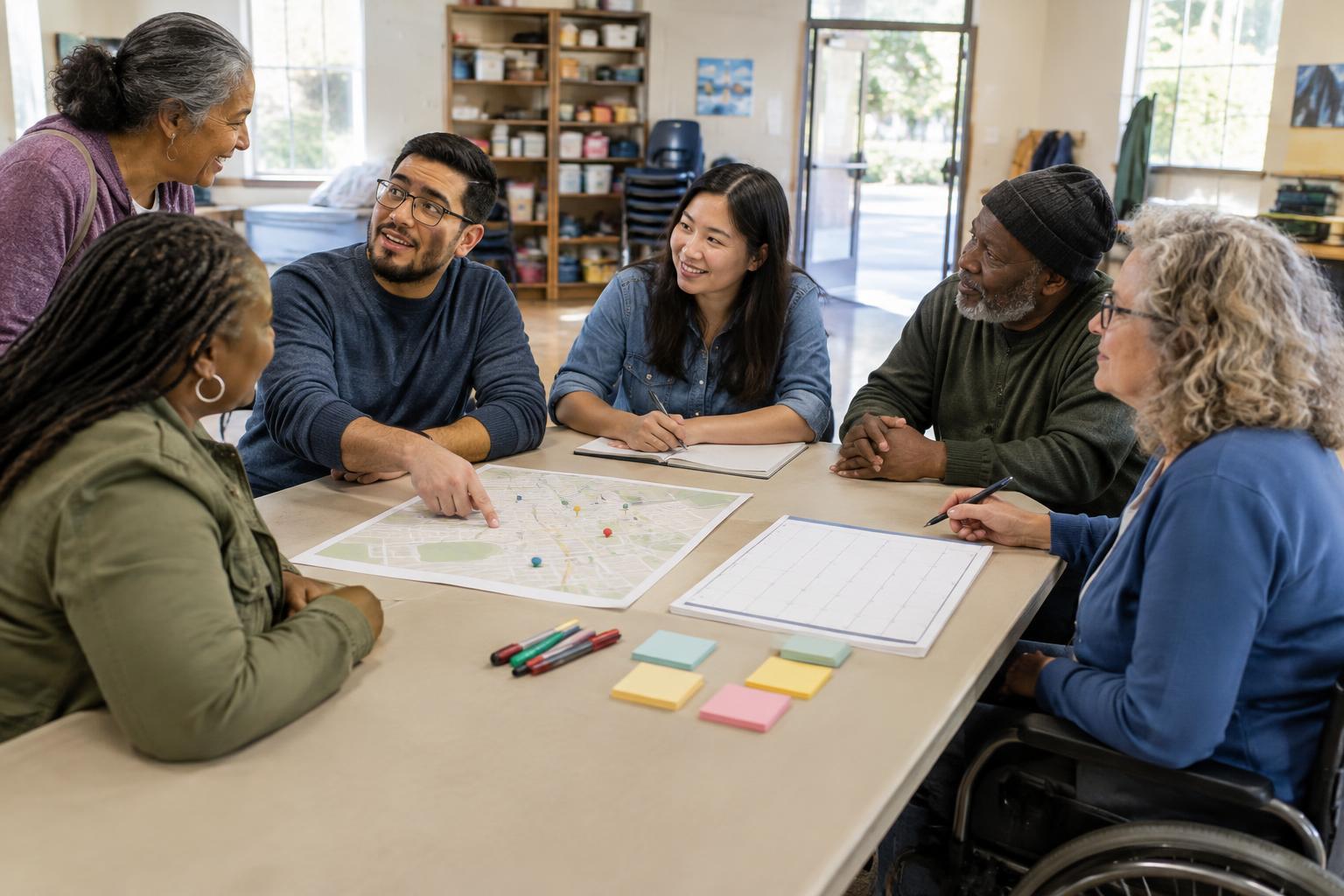
Before planning a program, list each group’s regular activities, spaces, equipment, skills and ways of reaching people. Include practical details: who can attend, whether there is a cost, when the activity runs, how to get there and whom to contact. A shared document or one-page directory may be enough. It need not become a public database or a new administrative task that nobody has time to maintain.
Look for both overlap and gaps. If three groups offer similar introductory sessions on the same evening, they could coordinate dates or help people choose the best fit. If one group has a welcoming venue and another has trained facilitators, they might contribute different strengths to a single activity. Similar work is not automatically wasteful, however: groups may serve different neighborhoods, languages or access needs. The aim is to remove avoidable confusion, not to make every service identical.
Choose a small goal and divide the work
A useful partnership has a purpose that each group can explain in one sentence. For example, partners might agree to make existing activities easier to discover over the next few months. They could start with a shared calendar, a consistent contact point for questions and a brief description of what to expect at each activity. This tests whether coordination helps before anyone commits to a larger joint program.
Decide who will do each task, when it needs to happen and who can make routine decisions. One group might update the calendar, another check venue details and a third gather participant feedback. Record these choices in plain language, along with how partners will handle changes or step back if their capacity shifts. Clear roles protect volunteers from receiving the same request from several people and make it easier to notice when essential work has no owner.
Make coordination welcoming to residents
Partnerships can look seamless to organizers while leaving residents to navigate several forms, repeated introductions or conflicting instructions. Agree on a simple way to guide someone from one group to another. With the person’s permission, a warm introduction can be more helpful than handing over a list of contacts. Avoid sharing personal details between groups just because they collaborate; ask what the person wants passed along and keep it to what is needed.
Use clear descriptions rather than assuming every group means the same thing by “accessible” or “open to all.” State relevant details about entrances, seating, transport options, language support, sensory conditions and costs where known. Give people a way to ask questions without having to explain a personal situation publicly. Partners should also check whether their meeting times and communication methods let smaller groups and residents take part in decisions, not just attend the resulting activities.
Review the partnership without creating busywork
Set a brief, regular check-in focused on decisions: What is working? Where are people still being sent from place to place? Are any tasks being repeated? What needs to change before the next activity? Feedback does not have to be elaborate. A few consistent questions for participants and volunteers can reveal whether information is easier to find and whether the arrangement feels welcoming in practice.
Be willing to stop a shared task that takes more effort than it saves. Sometimes the strongest partnership is a reliable referral, coordinated schedules or the occasional loan of a space rather than a permanent joint committee. Keep the useful arrangements, name who maintains them and revisit them when circumstances change. Working together succeeds when it makes participation simpler for residents and leaves each group enough energy to do what it does best.