Begin with people, not a calendar
In a multicultural family, traditions may come from different countries, faiths, languages or households. Even relatives who share a background may practice the same tradition differently. Rather than assuming that every holiday must be observed in a particular way, ask each person what they value about it. One person may care most about a meal; another may want time for prayer, music or a call with distant relatives.
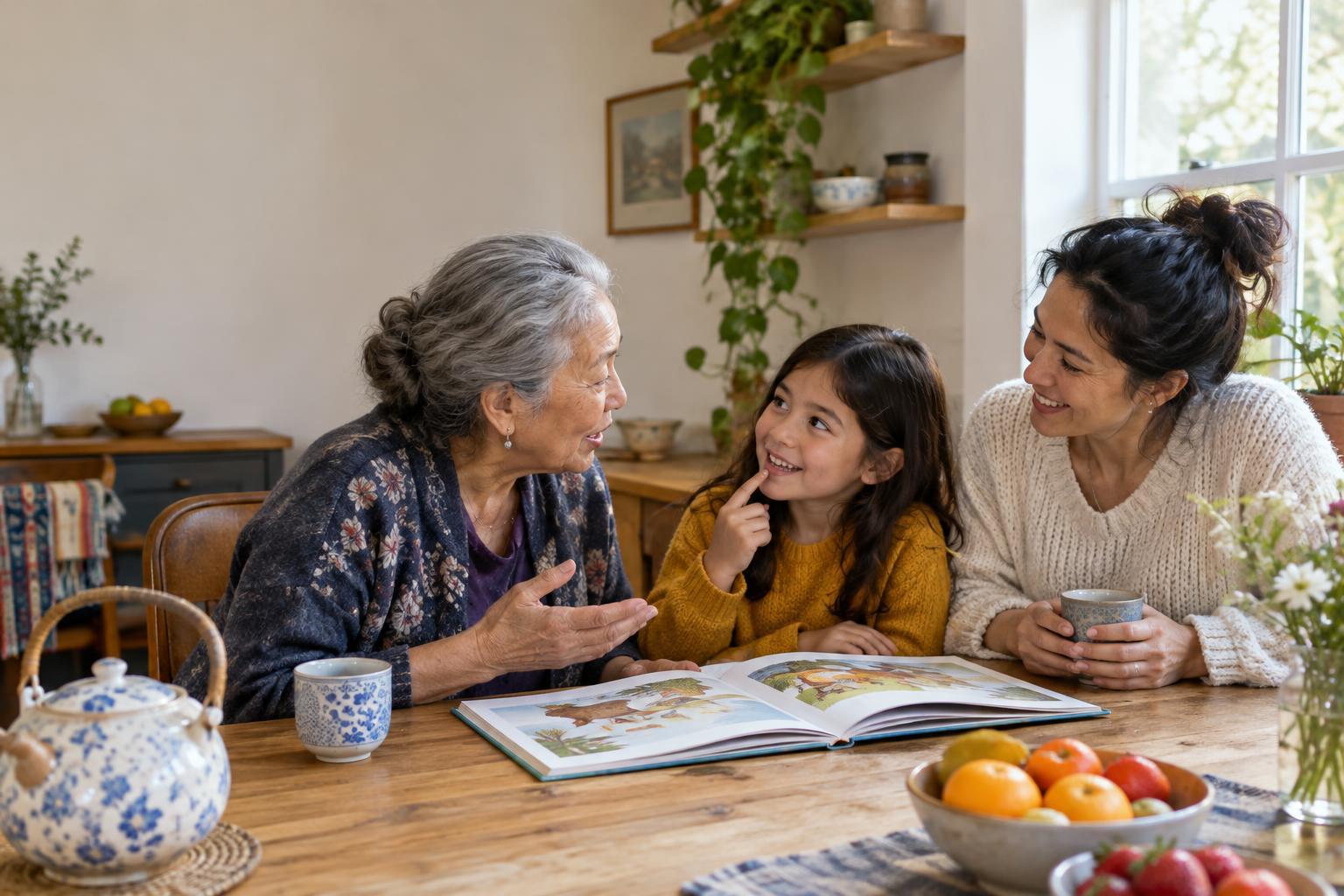
A conversation works best when everyone can name both what matters and what is flexible. Ask questions such as, “What would you miss if we skipped this?” and “Which parts would you enjoy sharing?” Children can contribute too, without being asked to represent an entire culture. The aim is not to rank traditions or make every occasion equally elaborate. It is to understand what would help each person feel included.
Plan for the whole household
A shared calendar can make busy seasons easier to navigate. Add celebrations, school events, visits and quieter observances, then look for conflicts early. Some occasions may need a full day; others might fit around a meal or a short household ritual. If several important events fall close together, spreading activities across multiple days may be more enjoyable than trying to do everything at once.
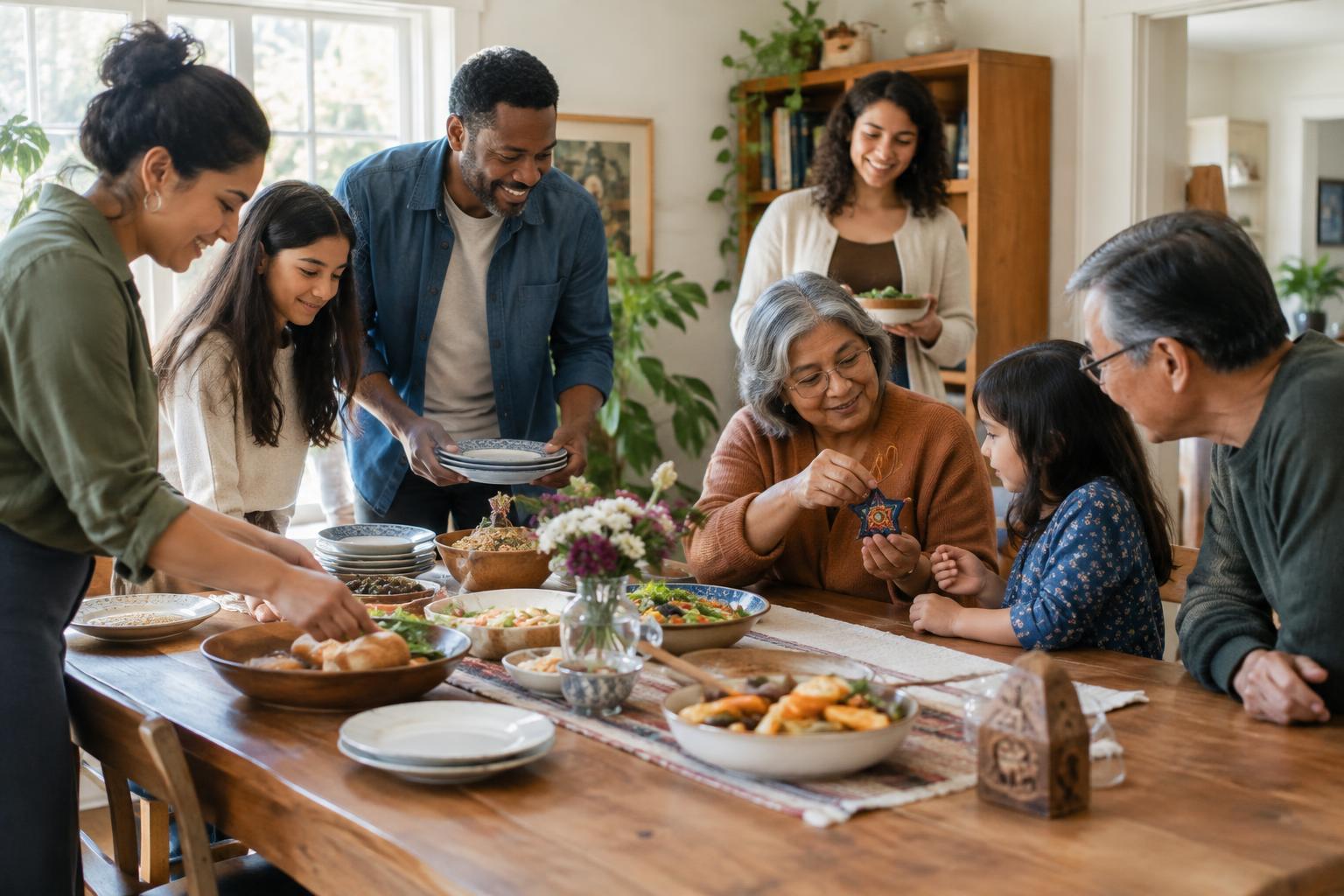
Consider the practical work behind each plan. Who shops, cooks, travels, hosts or cleans up? An invitation to share a tradition should not quietly become one person’s job to organize it every year. Agree on what the household has the time, energy and space to do, and offer simple alternatives when a large gathering is not possible. A familiar dish, a story or a video call can still make an occasion meaningful.
Share traditions without demanding participation
Sharing a custom can be generous; expecting everyone to practice it in the same way can create pressure. Explain what an activity involves before inviting people to join. Someone might enjoy helping prepare food but prefer to observe a religious ceremony rather than take part. Another person might want to attend an event but need a quiet break. Offering clear choices lets family members show interest while respecting their own beliefs and comfort.
The same care applies to food and language. Label dishes when ingredients may matter to guests, and make sure there is something suitable for people with dietary needs. If conversation moves between languages, briefly explain key moments so no one is left out. At the same time, leave space for relatives to speak comfortably in the language they know best. Inclusion does not require every moment to be identical for everyone; it asks that people can understand what is happening and find a comfortable place in it.
Handle differences with curiosity and boundaries
Differences may surface around gifts, clothing, greetings, parenting or who is invited to a gathering. When a disagreement arises, describe the specific choice rather than making a broad claim about someone’s culture. “I would like to keep this part of the evening quiet” opens a more useful conversation than “Your family is always too loud.” Ask what the practice means to the other person, explain your own concern and look for a workable arrangement.
Not every request needs to be accepted. Family members can set boundaries about their time, beliefs and personal space while remaining respectful. It may help to agree in advance on a simple explanation for guests: what will happen, what is optional and whom to ask if they are unsure. This reduces the burden on one person to explain or defend a tradition in the middle of an event.
Let family traditions grow
A family’s approach can change as children grow, relatives move or people discover new interests. After an occasion, ask what felt welcoming and what was difficult. Keep the parts people enjoyed and adjust the rest. A new shared tradition might be as simple as choosing a recipe together, displaying objects with personal stories or making time each year to hear why an occasion matters.
Making room for multiple traditions is less about fitting everything into one celebration than about building trust over time. When family members can share what they value, decline what does not fit and help shape future plans, their different histories become part of everyday family life.