What a heritage language can mean
A heritage language is often a language connected to a person’s family or community that differs from the language they use most in school, work or public life. That connection does not look the same for everyone. Someone may speak the language comfortably, understand it but rarely speak it, or know only a few familiar words. They may also have more than one heritage language.
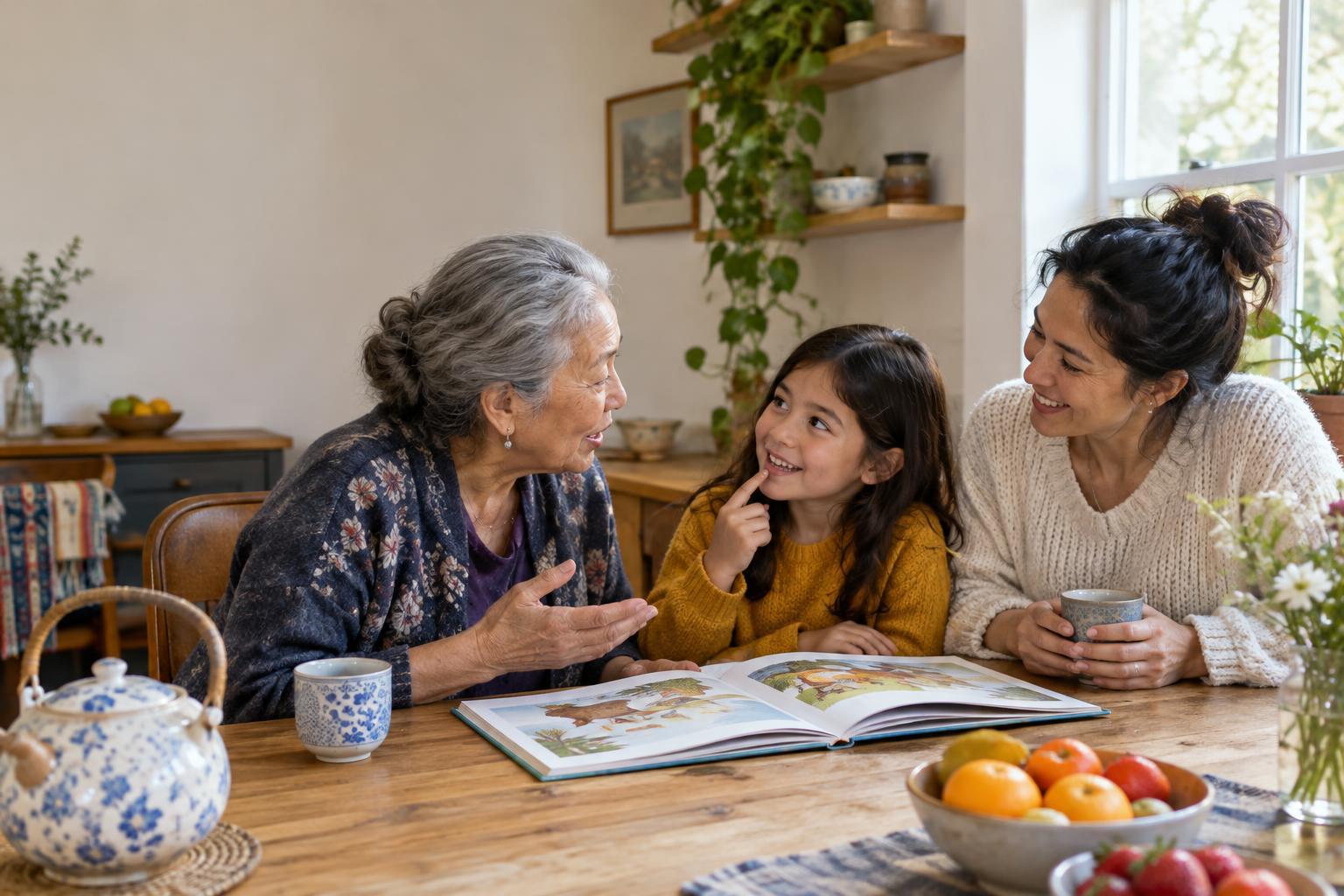
For some families, maintaining a language is a way to share ordinary life across generations: telling stories, making plans, teasing one another or asking how someone is feeling. The value is not limited to preserving formal traditions. A familiar phrase used while cooking or a grandparent’s nickname can carry meaning that is difficult to reproduce in another language. At the same time, closeness within a family does not depend on everyone speaking the same language fluently.
Why people choose to maintain or relearn it
People may keep using a heritage language because it makes conversations with relatives easier or helps younger family members take part in gatherings. It can also provide a way into songs, books, humor, community events or ways of expressing respect and affection. Learning the language may deepen someone’s understanding of those connections, even if translation and interpretation remain part of family life.
A person who did not learn the language as a child might return to it later. Their reasons could include wanting to speak with an older relative, feeling curious about family history or preparing to welcome a new child. Others may simply enjoy learning. None of these reasons is more authentic than another. Relearning is not a test of belonging, and choosing not to learn does not erase a person’s connection to their family or culture.
Why the choice is not always simple
Families make language choices within the time and resources available to them. Adults may have used a widely spoken local language at home to help children navigate school, to communicate with a partner, or because it was the language everyone shared. A child may have resisted speaking a heritage language while still listening to it closely. Later, that same person might wish they had learned more. These experiences need not be treated as anyone’s failure.
Language can also bring up sensitive feelings. A learner might worry about pronunciation, gaps in vocabulary or being corrected in front of others. Relatives may disagree about which words sound natural or how much effort someone should make. People who can understand a language but cannot readily speak it may be mistaken for unwilling participants. Patience helps: understanding, speaking, reading and writing can develop at different rates, and people have different goals.
Ways to make room for language in everyday life
Small, repeatable moments can be more welcoming than a rule that every conversation must happen in one language. A family might share a recipe while naming ingredients, exchange short voice messages, read a children’s book together or ask a relative to explain a favorite expression. If a learner wants feedback, it helps to agree on when corrections are useful. During a lively family meal, keeping the conversation going may matter more than getting every word right.
Multilingual conversations can move between languages. Someone might tell a story in one language and explain a key detail in another so more people can join in. For relatives with different levels of fluency, a brief summary or a direct invitation to ask questions can prevent people from feeling left out. The aim is not to make every exchange identical; it is to make participation possible.
Support the person, not an idea of perfect fluency
Friends, educators and community members can show interest without putting someone on display. Rather than asking a person to speak for an entire culture or perform a phrase on demand, ask whether they would like to share what the language means to them. Use the names and pronunciations people request, and accept that they may choose different languages in different settings.
Within a family, an open question often works better than pressure: “Would you like to practice together?” leaves room for a genuine answer. Some people want lessons and frequent conversation; others prefer listening, occasional words or no language project at all. Respecting those choices makes space for language to be a source of connection rather than a measure of who belongs.