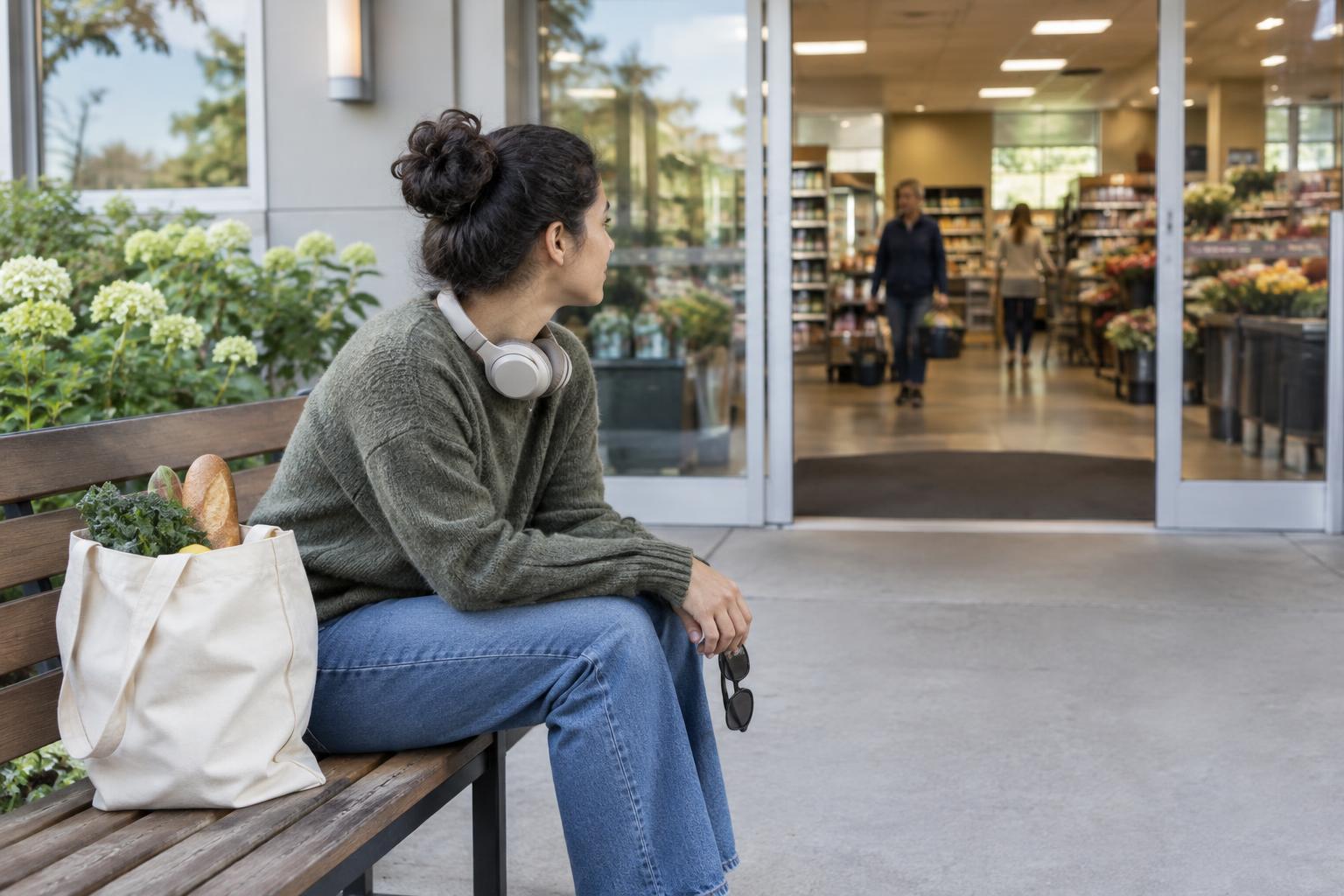
Start with the route, not the restroom sign
A restroom can have accessible fixtures and still be difficult to use if the route to it has stairs, heavy doors or obstacles. If you are planning a visit, ask where the restroom is in relation to the entrance or the area you will use. Find out whether there is a step-free route and whether it remains available whenever the venue is open. A lift is helpful only if you can reach and use it.
Once there, notice whether the route is easy to follow and wide enough for the mobility aid you use. Look for clutter, tight turns, uneven flooring and doors that take significant force to open. Good signs can reduce the need to ask for directions, but staff should also be able to explain the route clearly. If you need access to a key or code, check how to get it without a long wait.
Check entry and room layout
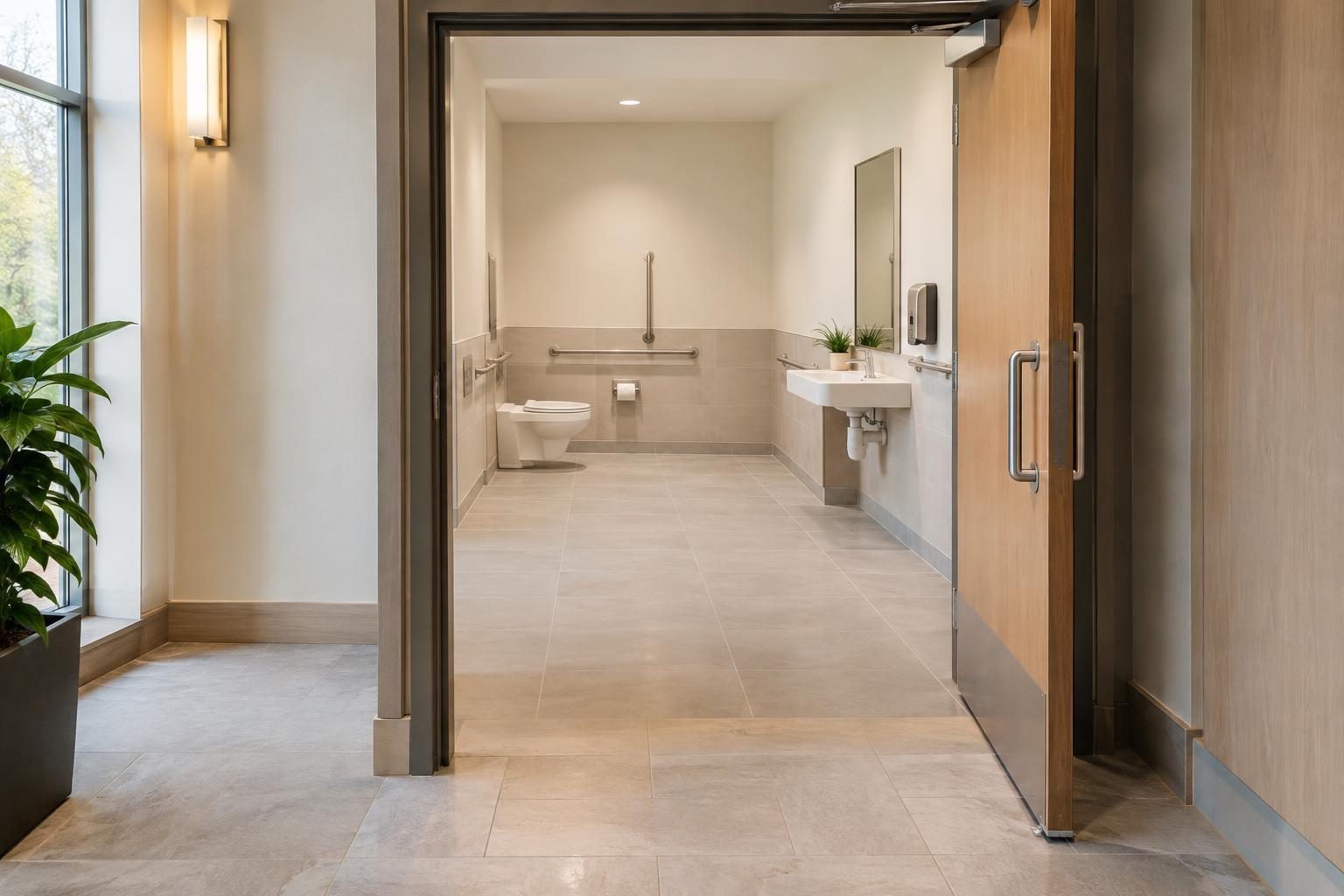
The accessible sign does not tell you whether the room will work for your body, equipment or assistance needs. Consider the doorway, threshold and space inside. Can you enter, close the door and turn or position yourself comfortably? If you use a wheelchair or another mobility aid, check whether bins, storage or cleaning supplies occupy the space you need.
The arrangement around the toilet matters as much as the room’s overall size. You may need space on a particular side to transfer, room for a support person or a layout that lets you reach the toilet without awkward maneuvering. Fixtures can vary from one restroom to another, so a room that works well for one person may not work for someone with different needs.
Look at the fixtures you will actually use
Check whether grab bars are present, securely fitted and positioned where you can use them. Notice the height and location of the toilet paper, flush control, sink, soap and drying supplies. A sink that can be reached from a seated position is less useful if the soap or towels are out of reach. Easy-to-use taps, locks and dispensers can make a difference for people with limited grip or dexterity.
Also consider lighting, contrast and sound. Clear lighting can help people navigate and locate controls, while a visually busy room or a loud hand dryer may make the space uncomfortable for some visitors. A working emergency call device may be important to someone who needs a way to request help. If a feature is essential to you, it is worth checking that it is present and usable rather than assuming the sign guarantees it.
Consider privacy, dignity and other access needs
A door should close and lock in a way the user can operate, with enough room to manage clothing and belongings. Some people need a support person to enter with them; others need a private space where they can take their time without interruption. A single-user restroom may offer that flexibility, though it can also create a wait if it is the only accessible option.
Accessibility is not limited to wheelchair access. People may need a nearby restroom because of urgency or fatigue, clear signs because of vision or cognitive differences, or a space that feels safe for their gender or family situation. If you are helping someone find a restroom, ask what features they need instead of guessing from their appearance. Respect their answer and let them decide whether a space works for them.
Plan ahead and share specific feedback
When visiting an unfamiliar place, a short question can save time: “Is there a step-free restroom, and can you describe the doorway and space beside the toilet?” Ask about the features you rely on most. If possible, identify a backup option nearby, especially when an outing will be long. Conditions can change: a restroom may be temporarily closed, used for storage or missing supplies.
If a restroom is difficult to use, specific feedback is more helpful than a general statement that it is inaccessible. You might mention that the route has a step, the door is too heavy for you to open independently or the bin blocks space beside the toilet. You do not have to disclose personal details to explain the barrier. Clear, practical observations give a venue a better starting point for making the restroom more welcoming.