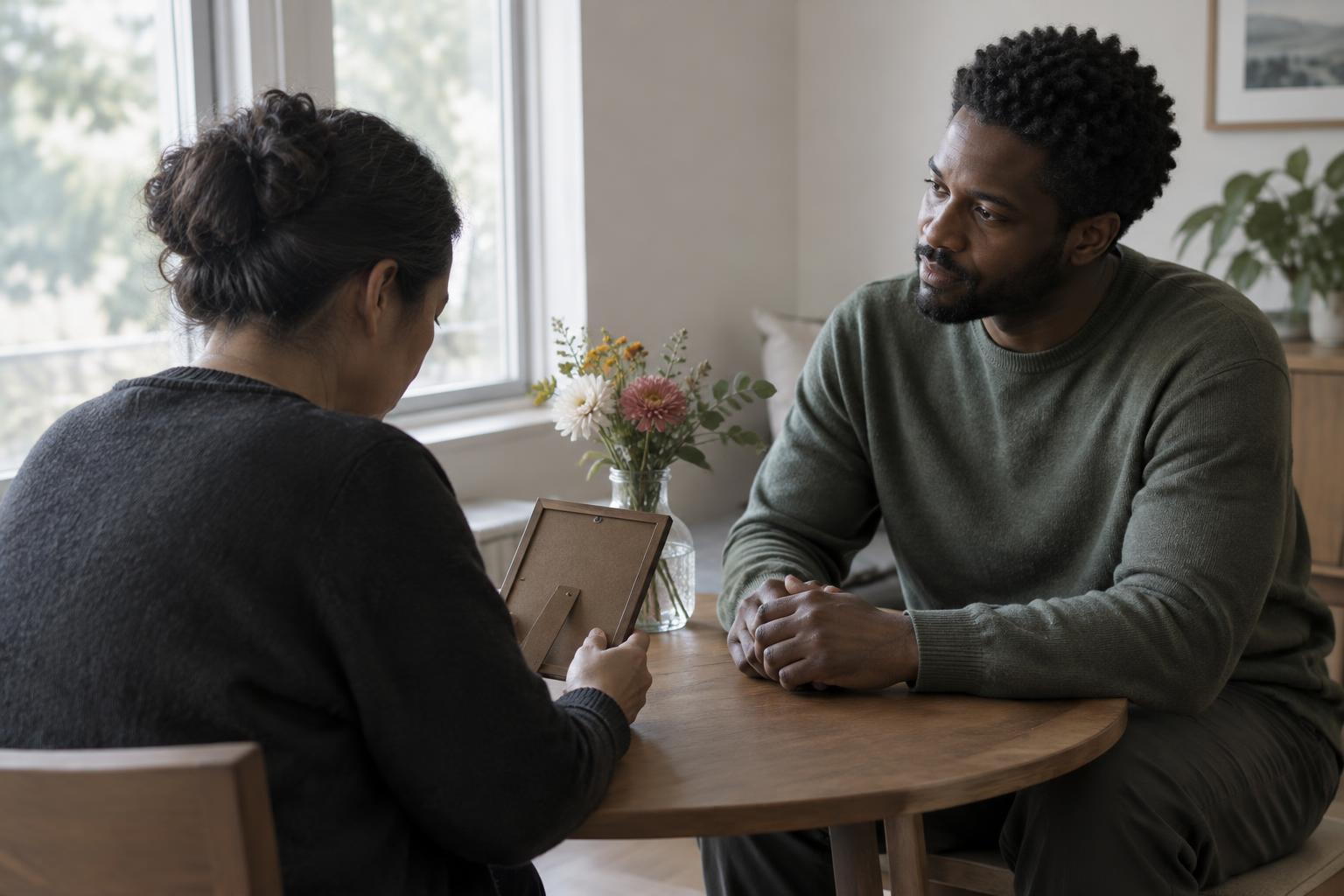
Begin with the person, not a rulebook
Mourning customs can shape what people wear, eat, say and do after a death. Some people gather with relatives and neighbors; others seek quiet or privacy. A family may welcome visitors, hold a religious observance, mark an anniversary or choose not to hold a public event. These practices can offer comfort and connection, but no custom tells you exactly what one person needs.
People who share a cultural or religious background may still grieve differently. Their wishes can reflect family traditions, personal beliefs, relationships, practical responsibilities or the wishes of the person who died. Rather than trying to identify the “right” custom from someone’s name or appearance, begin with a simple expression of care: “I’m sorry for your loss.” Then give them room to decide whether they want to talk.
Ask gently, and make questions easy to decline
If you need to know how to take part, ask a specific question without expecting a lesson. “Would visitors be welcome this week?” or “Is there anything you’d like me to know before the gathering?” is easier to answer than “What does your culture do when someone dies?” If a mutual friend is coordinating practical help, you may be able to ask that person about arrangements instead of repeatedly asking the bereaved person.
Keep questions relevant and optional. Someone may not want to describe a ceremony, explain a belief about death or discuss their relationship with the person who died. You can say, “No need to reply if now isn’t a good time.” If they share a preference, follow it without pressing for a reason. If you make a mistake, a brief apology and a change of course are usually more helpful than a long explanation of your intentions.
Offer support that leaves room for choice
Food, flowers, donations, visits and messages can all be thoughtful gestures, but none is welcome in every situation. Dietary practices, household routines, space and personal wishes may affect what is useful. Before sending or bringing something, ask if it would help. A concrete offer such as “I can pick up groceries on Thursday” lets the person accept, decline or suggest something else without having to invent a task for you.
Respect the form of contact they prefer. Some people appreciate a phone call; others would rather receive a short message they can read later. Silence does not necessarily mean your care was unwanted. Grief can make even kind messages difficult to answer. You can offer support without requiring a reply, then check in again later with the same freedom to decline.
Take your cues at gatherings and in shared spaces
If you attend a funeral, memorial or home gathering, follow any guidance from the hosts about clothing, seating, photographs and participation. When guidance is unclear, observe quietly and ask an organizer where you can sit or whether guests are invited to join an activity. You do not have to imitate a ritual you do not understand. A respectful presence, including standing aside when appropriate, can be enough.
In workplaces, schools and community groups, avoid making one person’s customs a topic of public curiosity. Ask privately what information they want shared, if any. Plans for cards, collections or a moment of remembrance should leave room for their preferences and for people who knew the deceased in different ways. Practical flexibility, such as making it easy to step away from an event, may be more useful than a highly visible gesture.
Let respect continue beyond the first days
Support often arrives immediately after a death, while grief may remain part of daily life long afterward. Some people observe particular periods of mourning or dates of remembrance; others do not. You need not keep track of a calendar to be considerate. A later message saying, “I’ve been thinking of you; would you like to meet for a walk?” can offer company without suggesting that they should feel a certain way by now.
There is no single correct phrase or gesture that works across every custom. The most dependable approach is to listen, ask only what you need to know, honor the answer and remain open to change. That makes space for traditions without treating anyone as a representative of a whole culture, and for grief without trying to manage its pace.