Start with the purpose, not the rebuttal
Before responding, ask yourself what the conversation needs to accomplish. Are you trying to correct a misunderstanding, make a shared decision, set a boundary, or simply explain why you see something differently? A clear purpose helps you choose a response that does more than win a point. In a planning meeting, for example, “I’m concerned this time may exclude people who rely on public transport” gives others something specific to consider.
It can help to name a shared aim without pretending that you agree: “I think we both want the event to feel welcoming. I see a problem with this part of the plan.” This keeps the focus on the issue while leaving room for a different view. If the discussion is moving quickly, asking for a moment to gather your thoughts is reasonable. A considered response is often more useful than an immediate one.
State your view clearly and leave room for a reply
Respectful disagreement is not the same as avoiding disagreement. Say what you think in direct, concrete language: “I don’t agree that this entrance is easy for everyone to use, because the door is heavy and there is no nearby seating.” Explaining the observation behind your view makes it easier for others to respond to the substance rather than guess at your intent.
Try to separate a person’s proposal from their character. “This schedule does not work for me” addresses a decision; “You never think about anyone else” assigns a motive. Words such as “always” and “never” can also turn one concern into an argument about someone’s entire history. If you are unsure why a person made a suggestion, ask rather than assume: “What were you hoping this approach would solve?”
Listen to understand, not just to answer
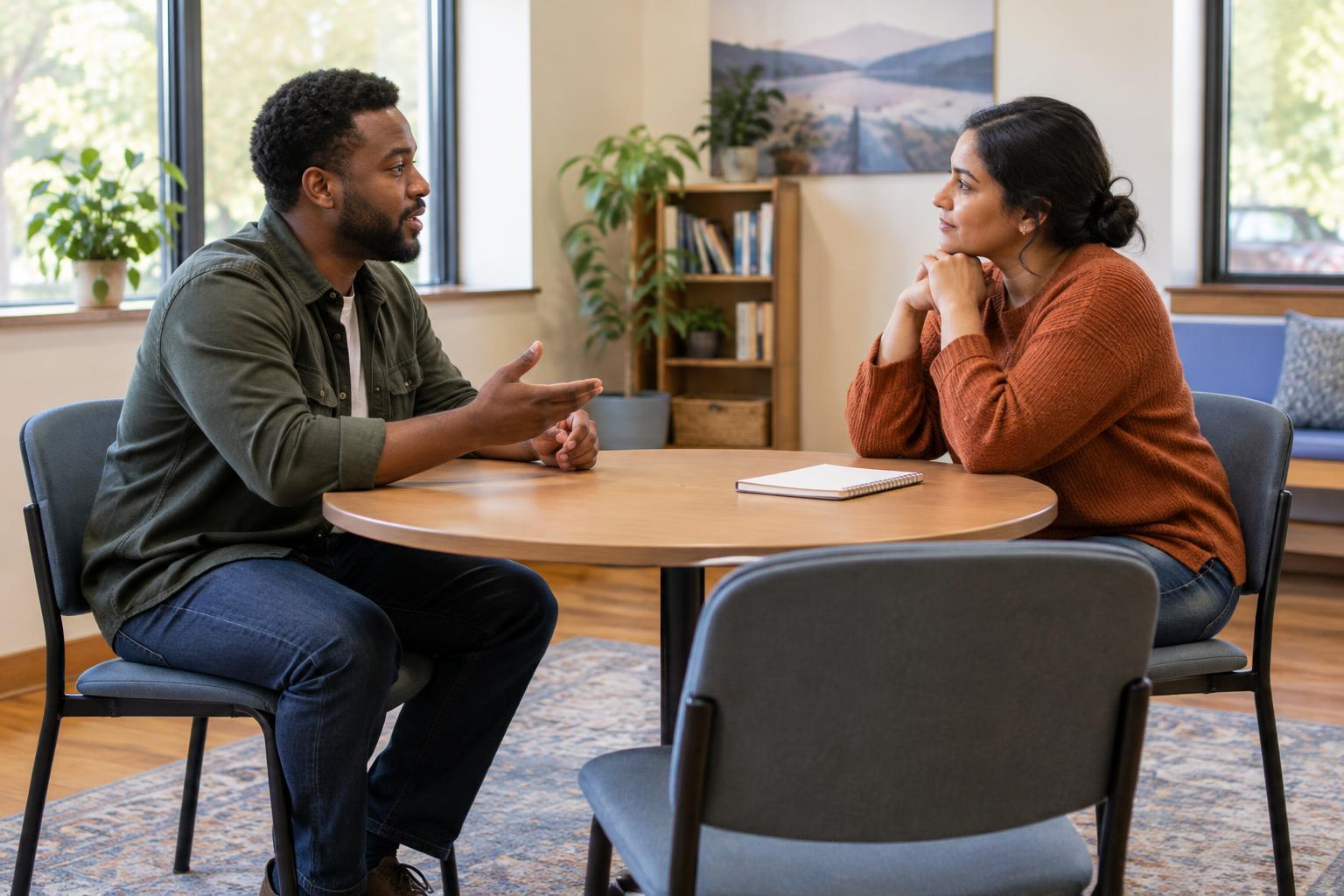
Listening does not require you to change your mind. It means giving the other person a fair chance to explain their reasoning. You might say, “I hear that keeping costs low is your main concern. Have I understood you?” A brief summary lets them correct a misunderstanding before you respond. It can also reveal that you are weighing different needs, rather than disagreeing about every part of the issue.
Make room for different ways of participating. Some people need more time to process a question, prefer a written follow-up, or find interruptions especially difficult. In a group conversation, pause before moving on and invite input without putting anyone on the spot. If you are discussing an access need or someone’s lived experience, do not demand that they prove it to the group. You can ask what would help with the decision at hand while respecting what they choose to share.
Lower the heat without dismissing the concern
When a discussion becomes tense, a slower pace can help. Describe what is happening without blaming someone: “I think we’re talking past each other,” or “I want to answer that, but I need us to take turns.” If a phrase lands badly, acknowledge the effect and clarify your meaning. “That came out more sharply than I intended. My concern is about the timeline” is more productive than insisting the other person should not be upset.
Respect also includes boundaries. You do not have to stay in a conversation where you are being insulted or pressured to disclose personal information. You can say, “I’m willing to discuss the plan, but not while we’re making personal remarks,” and suggest returning to it later. Taking a break is not a failure if it creates a better chance of discussing the issue carefully.
Finish with a useful next step
Not every disagreement ends in consensus. A productive conversation may instead produce a clearer choice, a smaller point of agreement, or a list of questions to resolve. Before closing, name what has and has not been decided: “We agree the entrance information needs to be clearer. We still disagree about whether the venue works, so let’s check the available options.” This prevents a polite ending from being mistaken for a settled decision.
For ongoing work, agree on who will do what and how others can respond. A short written recap can give people time to review details and correct misunderstandings, especially when the conversation moved fast. In personal conversations, the next step might simply be an invitation to revisit the topic when both people are ready. The goal is not to make disagreement disappear. It is to handle it in a way that protects people’s dignity and helps everyone understand what happens next.