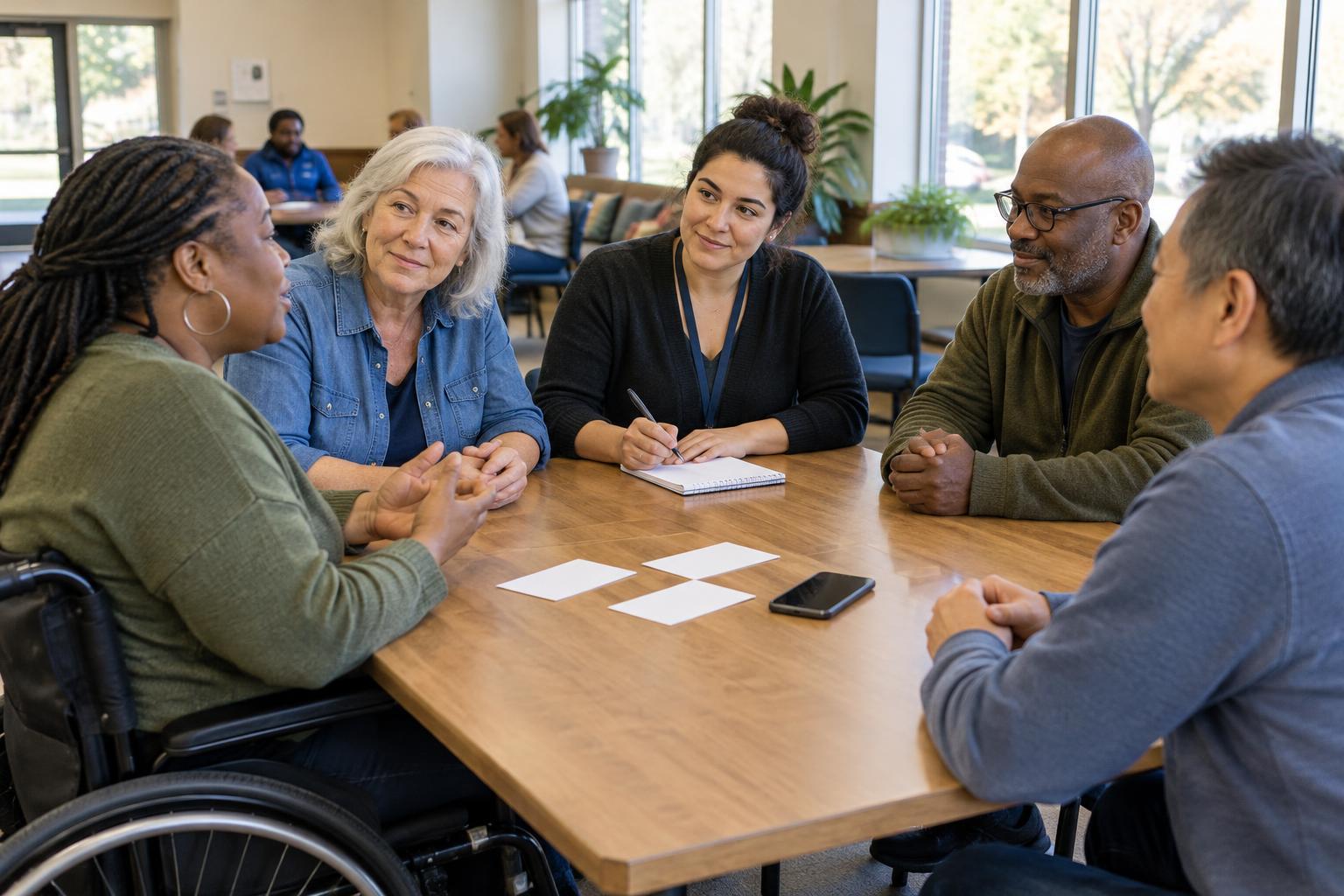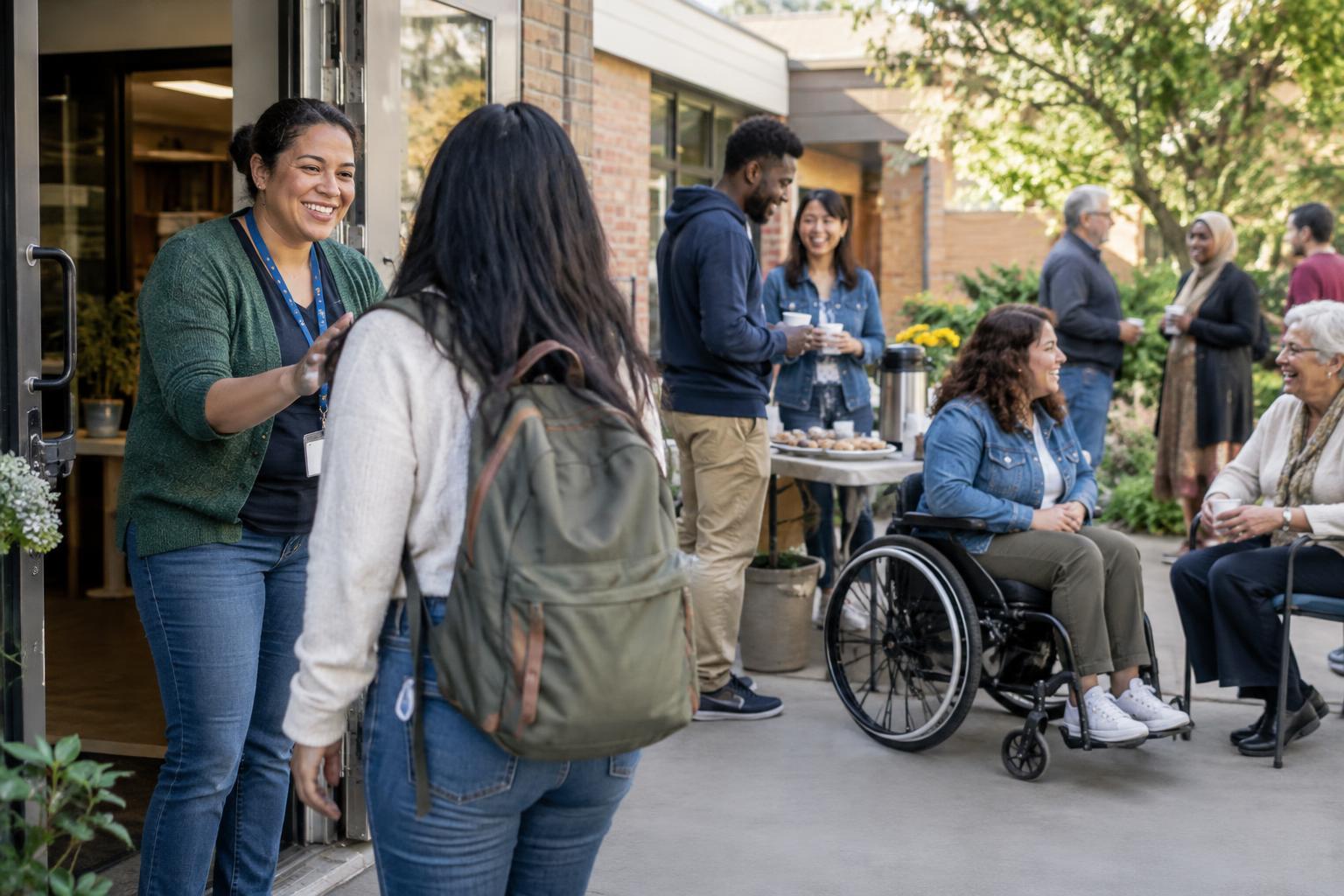
Mistake 1: Inviting “everyone” without giving useful details
A flyer that says “All welcome!” expresses a good intention, but it may leave people with important questions. Is the event suitable for someone arriving alone? Will children be comfortable there? Does it involve a meal, a discussion or an activity? People are more able to decide whether to attend when they know what will happen, what is expected of them and whom to contact with questions.
Write invitations in plain language and include the location, start and end times, cost, basic schedule and a brief description of the activities. Explain whether people can arrive late, leave early or simply observe. Share the invitation in more than one place rather than relying on a single social media group or mailing list. If a community uses several languages, ask trusted local partners which translations would be useful, and check that translated details remain accurate.
Mistake 2: Treating accessibility as a detail to sort out later
A venue may sound accessible until someone tries to get from the street to the room, find a usable toilet or follow a conversation in a noisy space. Consider the whole visit: travel and parking information, entrances, seating, lighting, sound, toilets and a place to step away from crowds. An event does not have to meet every possible need to communicate honestly about what is available.
Visit the venue before advertising it and describe access features specifically. For example, say whether the step-free entrance is the main entrance or a different one, and whether chairs will be provided. Offer a way to request adjustments without requiring people to explain personal circumstances publicly. If a barrier cannot be fixed for this event, name it clearly and use what you learn when choosing the next venue.
Mistake 3: Assuming a free event has no cost
Even without a ticket price, attending may involve transport, childcare, food or time away from paid work. A long event with no clear finish time can also be hard to fit around care responsibilities. These pressures do not affect everyone equally, so an event that feels effortless to regular attendees may be difficult for newcomers to join.
Keep costs visible from the start, including any optional purchases or materials. When possible, choose a location reachable by different transport options and schedule events at varied times across a series. Provide water, explain whether food is offered and avoid making refreshments a condition of participation. A shorter drop-in period or a way to contribute without staying for the full event can make attendance more manageable.
Mistake 4: Expecting newcomers to know the unwritten rules
Regulars may know where to put a coat, when to speak and which activities are optional. New visitors do not. They may also wonder whether they need to share a personal story, introduce themselves to a group or take part in a cultural practice they do not know. Leaving these questions unanswered can make an otherwise friendly gathering feel like a private club.
Give someone the role of welcoming arrivals and explaining the basics without pressuring them to join in immediately. Introduce activities with a few clear sentences, and offer choices such as speaking, writing, helping with a task or listening. Avoid calling on people unexpectedly. If an event includes unfamiliar traditions or terms, explain them briefly and invite questions without making any attendee responsible for speaking on behalf of a whole community.
Mistake 5: Asking for feedback only from the people who stayed
A lively room can hide problems. People who could not understand the invitation, enter the building or afford the journey are unlikely to be there to mention those barriers. Even attendees who felt uncomfortable may leave quietly rather than raise a concern in front of others.
Offer a simple, optional way to give feedback after the event, and welcome comments from people who considered attending but did not. Ask specific questions, such as whether the location was easy to find and whether the activity matched its description. Thank people for what they share, avoid promising changes you cannot make, and note one or two improvements to carry into the next event. Making a gathering more welcoming is an ongoing practice, not a single perfect checklist.